
- Open 24 Hours Mon–Sat
- contact@jkplumbingsf.com
- +1 (415) 359-4588
- CA License #1080266

San Francisco is a good city for tankless and a difficult one to install it in. The water is soft, which is the single biggest factor in whether a tankless unit thrives. The buildings are pre-war, which is the single biggest obstacle to getting one in. JK Plumbing does both tanks and conversions across the city. Call (415) 359-4588.
By Alik, Owner & Master Plumber · Last updated October 2026
Is switching from a tank to tankless worth it in a San Francisco home?
The answer here is more favourable than it is in most of the Bay Area, and for a reason that has nothing to do with the appliance.
The water is on your side. Tankless heat exchangers scale faster than tank interiors because they push water through narrow passages at high temperature. In hard water that becomes an annual descaling commitment and a shortened life. San Francisco runs on the SFPUC regional supply — Hetch Hetchy water, which is soft — so a tankless unit here faces far gentler conditions than the same unit in parts of the South Bay. Down the Peninsula the picture changes considerably, which tankless installation in Palo Alto, Los Altos and Mountain View covers.
The incoming temperature is on your side too. Tankless output depends on how much the unit has to raise the water temperature. San Francisco’s supply sits in the high 50s for most of the year, so the rise to a 120°F delivery is moderate — nothing like what a unit in a cold-winter climate has to manage. The same model delivers more usable flow here than it would in Chicago.
The building is not on your side. Gas capacity and venting in pre-war housing are where these projects get expensive, and that’s the next two sections.
Net: if your house can take the gas and vent work without drama, tankless is a sound choice in this city. If it can’t, a high-efficiency tank is not a consolation prize — it’s often the better-value answer.
Does going tankless free up usable space?
Yes, and in a small San Francisco home that can be the deciding factor rather than a bonus.
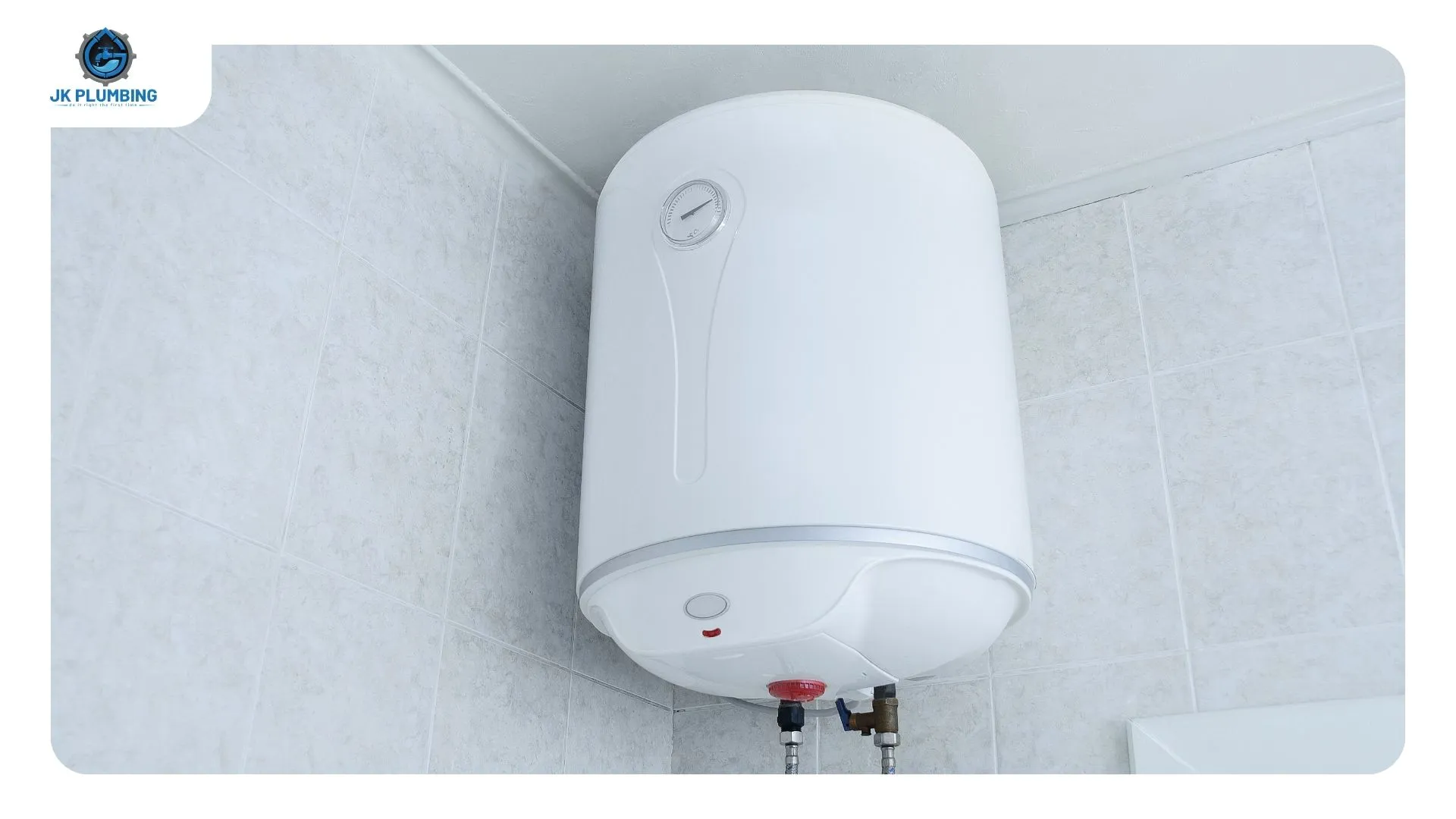
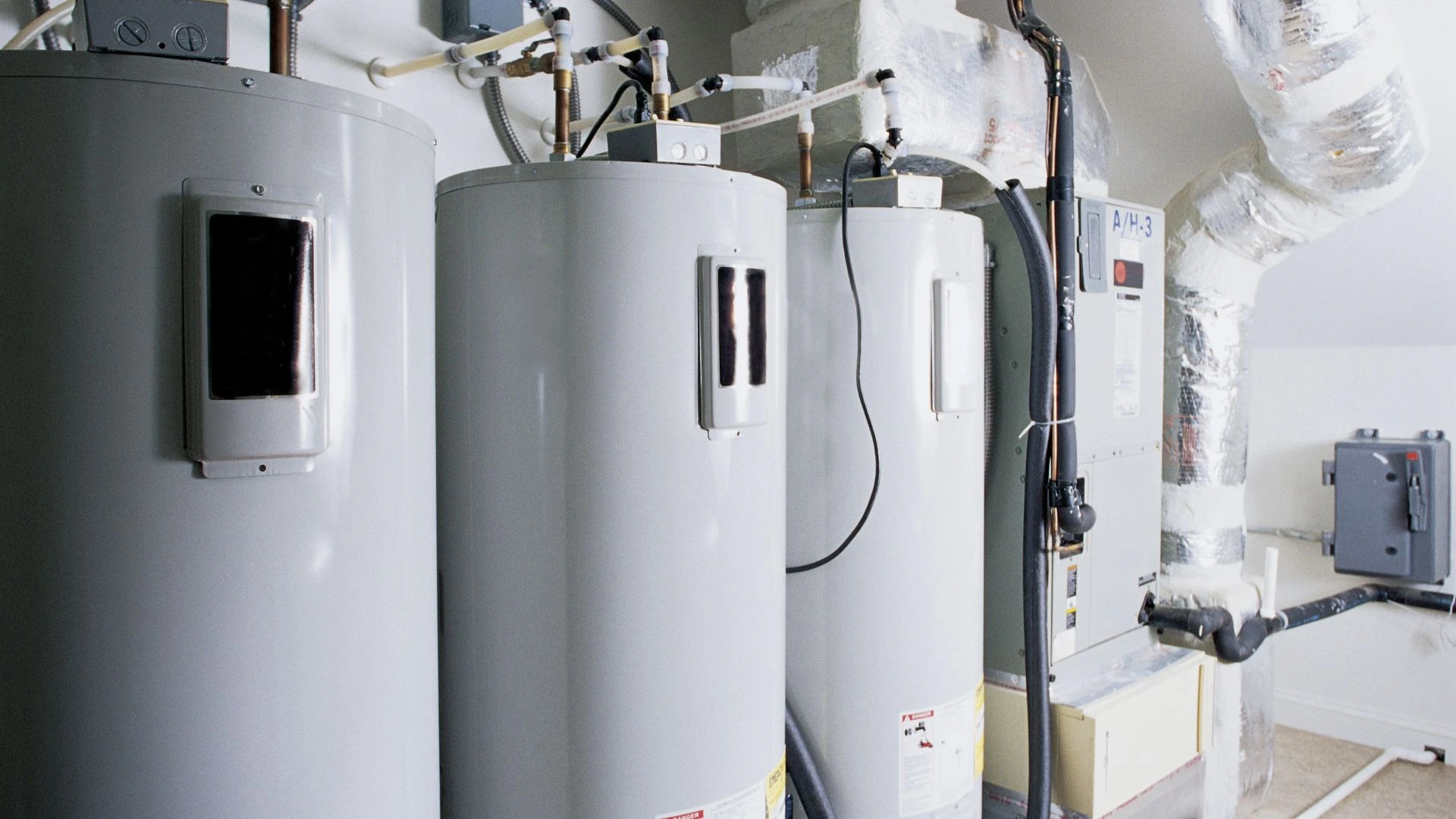
A 50-gallon tank is roughly 20 to 22 inches across and five feet tall, and it needs clearance around it for service. A tankless unit is a wall-mounted box closer to 14 by 24 inches and under a foot deep. In practice:
- A hall closet that currently holds nothing but a water heater becomes a closet again.
- A basement corner opens up, which matters in the shallow basements under a lot of Edwardians where every square foot is already spoken for.
- A garage gains back floor area that was lost to the tank and its standoff.
Two honest caveats. The tankless unit still needs its own clearances — you can’t bury it behind shelving — and the venting route may force it onto a different wall than the one the tank stood against, which occasionally means the space you free up isn’t the space you wanted. We work that out on the quote visit rather than on the day.
The gas line and venting problem in pre-war buildings
This is where San Francisco conversions get difficult, and it’s the part most quotes understate.
Gas capacity. A 50-gallon tank burns around 40,000 BTU per hour. A whole-house tankless unit runs 150,000 to 199,000 — four to five times the demand, delivered all at once. Older San Francisco homes frequently have gas piping sized for an era of smaller appliances, sometimes with legacy galvanized sections still in place. Upsizing means running a larger line from the meter to the unit, and in a narrow house with finished walls and a long run from a street-side meter, that’s real work. Occasionally the meter itself needs upgrading, which runs on PG&E’s timetable rather than ours.
Venting. A tankless unit cannot reuse the old atmospheric flue. It needs dedicated sealed venting — PVC or polypropylene for condensing models, stainless for non-condensing — and frequently that means a sidewall termination rather than the old chimney route. On lots where buildings sit close to the property line, termination clearances from windows, doors and air intakes can rule out the obvious wall.
Condensate and power. Condensing units produce acidic condensate needing a drain and often neutralisation, and every tankless unit needs 120V power for its controls, even gas models.
None of this is exotic. It’s just that the sum of it is what separates a conversion from a swap, and it should be priced before you commit, not discovered.
What size unit suits a flat versus a full house?
Tankless sizing works on flow rate at a given temperature rise, not on gallons.
Work out the simultaneous demand you actually want. A shower runs roughly 1.8 to 2.5 gallons per minute, a kitchen tap around 1.5. One shower plus a kitchen tap is about 4 gpm; two showers at once is closer to 5.
Then apply the temperature rise. With San Francisco’s supply in the high 50s and a 120°F target, you’re asking for a rise of about 60 to 65 degrees. At that rise, a 199,000 BTU condensing unit delivers somewhere around 5 gallons per minute — enough for two simultaneous showers in most homes.
For a flat or a one-bathroom home, simultaneous demand is usually one shower plus maybe a tap. A smaller unit in the 140,000 to 150,000 BTU range is generally sufficient, and it asks less of the gas line — which in a pre-war building can be the difference between a straightforward job and an expensive one.
For a full house with two or more bathrooms, size for the realistic worst case rather than the theoretical one. Two showers running at the same time is a normal morning; four fixtures at once usually isn’t.
If you’re staying with a tank instead, sizing works differently — on first-hour rating rather than flow — and when to replace a water heater in South San Francisco covers that.
Does a newer unit cut energy bills noticeably?
Depends entirely on what you’re replacing and with what.
Old tank to new tank: modest. Storage efficiency hasn’t moved much, though a unit predating the 2015 federal standards does gain something from better insulation and lower standby loss.
Tank to condensing tankless: a real improvement. A standard gas tank converts roughly 60 to 70 percent of its fuel into delivered hot water. A condensing tankless unit runs considerably higher, and it eliminates standby loss entirely — no keeping fifty gallons hot overnight for nobody. For a household with intermittent demand, that standby saving is the larger half of the benefit.
Tank to heat pump: the largest drop in energy use, because a heat pump moves heat rather than making it, delivering roughly three to four units of heat per unit of electricity. Whether that lowers your bill depends on the ratio between your electricity and gas rates — San Francisco is on PG&E, and the arithmetic is worth doing against your own statement. One therm of gas holds about 29.3 kWh of energy; divide your gas rate by around 0.65 for a tank burner and your electricity rate by around 3.5 for a heat pump, and compare. Our heat pump water heater page covers that route.
What an upgrade costs against a like-for-like swap
We quote in writing after seeing the property, with no phone estimates. The gap between a swap and an upgrade comes down to a predictable list:
- The unit, which is the smaller part of the difference than people expect.
- Gas line upsizing, which is usually the largest single item in a tankless conversion, driven by run length and what it passes through.
- New venting, since the old flue can’t be reused.
- Condensate drainage and neutralisation on condensing units.
- Electrical, for controls on a tankless unit or a full 240V circuit on a heat pump.
- Code items the existing installation lacks — strapping, expansion tank, pan, earthquake-rated connector.
- The permit, and access to wherever the unit sits.
A like-for-like tank swap carries almost none of that. That’s the real comparison: not unit against unit, but one afternoon against a day or two of infrastructure.
Where we work
Across San Francisco — the Sunset, the Richmond, Noe Valley, Bernal Heights, the Mission, Potrero Hill and Glen Park — plus Daly City, Brisbane, South San Francisco and down the Peninsula to Burlingame.
Our water heater replacement page covers the service, and if the current unit is misbehaving rather than finished, what each water heater symptom means is the diagnostic guide.
Frequently asked questions
Is switching from a tank to tankless worth it in a San Francisco home?
More often than elsewhere in the Bay Area. San Francisco’s soft Hetch Hetchy water means far less scaling, and the supply temperature in the high 50s keeps the required temperature rise moderate, so units deliver well here. The obstacle is the building rather than the appliance — gas capacity and venting in pre-war housing are what decide whether it’s straightforward or expensive.
What does an upgrade cost against a like-for-like swap?
The unit itself is a smaller part of the difference than most expect. The gap is gas line upsizing, new venting, condensate drainage, electrical work, and any code items the existing installation is missing. A tank-for-tank swap carries almost none of that. We quote in writing after seeing the property.
Does going tankless free up usable space in a small home?
Yes. A 50-gallon tank occupies roughly 20 to 22 inches of diameter and five feet of height plus service clearance, while a tankless unit is a wall-mounted box around 14 by 24 inches. A hall closet or a basement corner becomes usable again. The caveats are that the tankless unit needs its own clearances, and the venting route may require a different wall than the tank stood against.
What size unit suits a flat versus a full house?
Size by flow rate at the required temperature rise, not by gallons. A shower is about 1.8 to 2.5 gallons per minute. For a flat or one-bathroom home, one shower plus a tap means a unit around 140,000 to 150,000 BTU is usually sufficient and asks less of the gas line. For a house with two or more bathrooms, size for two simultaneous showers — around 5 gallons per minute at San Francisco’s typical 60 to 65 degree rise.
Does a newer unit cut energy bills noticeably?
Tank to tank, modestly. Tank to condensing tankless, meaningfully — higher combustion efficiency plus no standby loss from keeping fifty gallons hot for nobody. Tank to heat pump gives the largest reduction in energy use, though whether it lowers the bill depends on your electricity rate relative to gas, which is worth calculating against your own PG&E statement.
Visit or Call Us
JK Plumbing
Adress:1008 Edwards Rd Burlingame, CA 94010
Phone: (415) 359-4588
Hours: Open 24 hours, seven days a week.
Serving San Francisco, South San Francisco, Daly City, Brisbane and the Peninsula.
CA License #1080266
RECENT POSTS
Hot Water Heater Replacement in San Francisco: Tank, Tankless or Upgrade?
October 29, 2026
No Comments
Read More »
Water Heater Replacement Near Me: San Francisco and Pacifica
October 28, 2026
No Comments
Read More »