
- Open 24 Hours Mon–Sat
- contact@jkplumbingsf.com
- +1 (415) 359-4588
- CA License #1080266

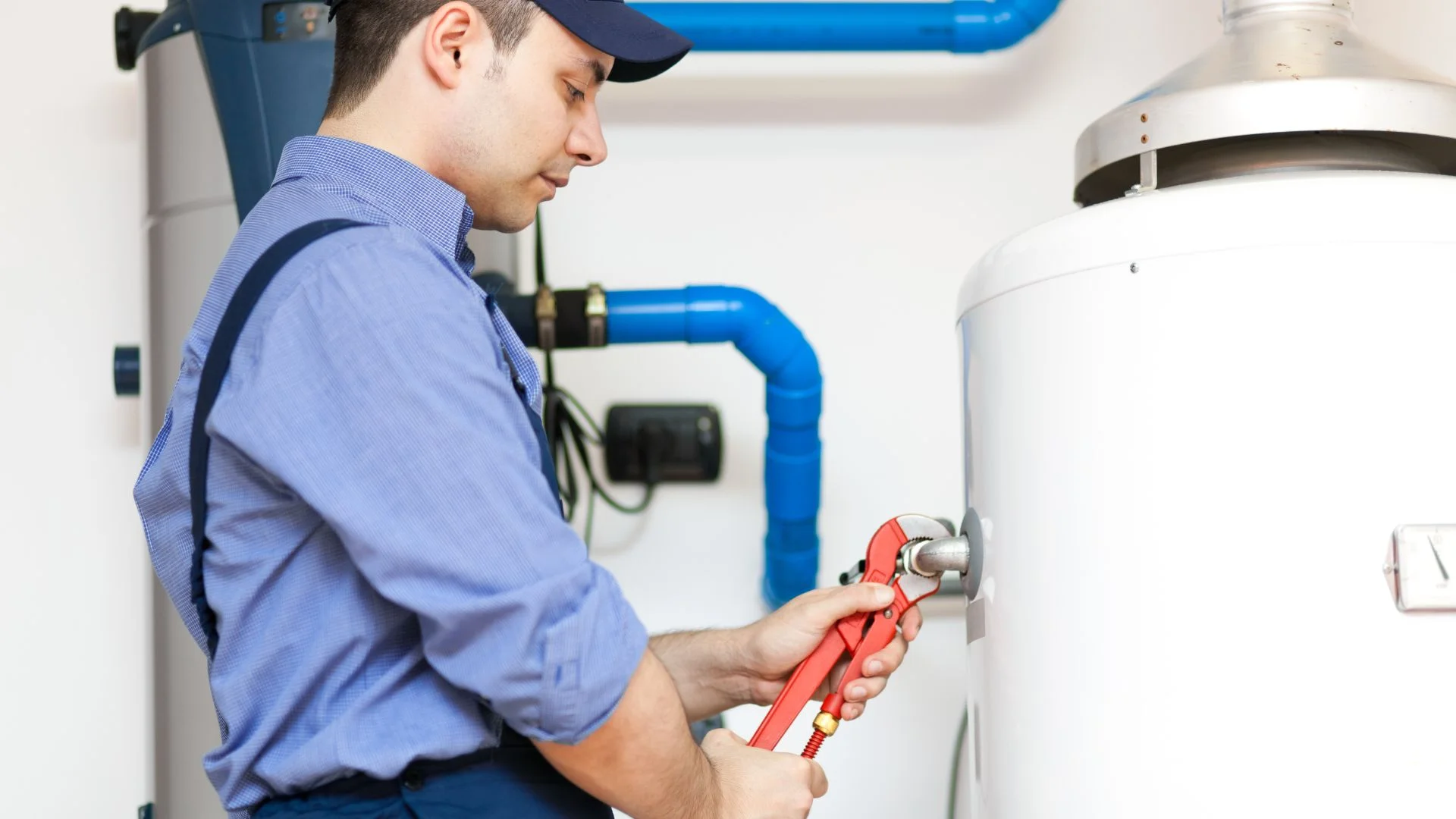
Most water heater faults announce themselves before they fail outright. No hot water, hot water running out early, rumbling from the tank, rust-coloured water, and moisture at the base each point to different causes — and only some need a replacement. JK Plumbing diagnoses and repairs water heaters across San Francisco. Call (415) 359-4588.
By Alik, Owner & Master Plumber · Last updated October 2026
Why is there no hot water at all?
Complete loss of hot water is usually one of a short list of things, and the fuel type narrows it immediately.
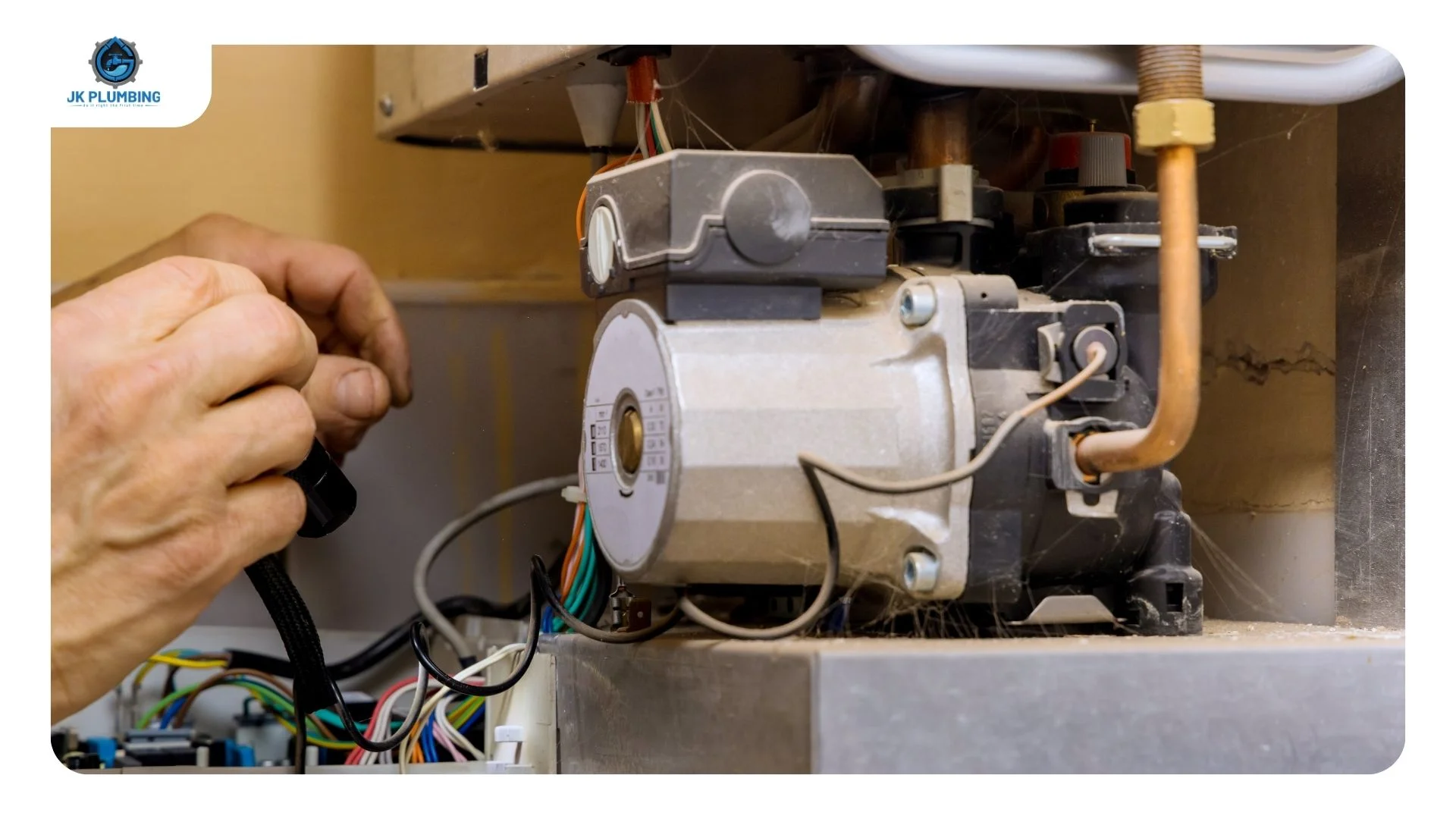
On a gas unit, we check in this order: whether the pilot or igniter is lit, whether the thermocouple is reading properly, whether the gas control valve has failed, and whether gas is reaching the unit at all. A thermocouple is a small, inexpensive part that fails fairly often and is a straightforward repair. A failed gas control valve is a bigger job, and on an older tank it’s the point where repair economics start to tip.
On an electric unit, the usual culprits are a tripped high-limit switch — the red reset button on the upper thermostat — a failed heating element, or a failed thermostat. Electric heaters have two elements, and when the upper one goes you typically get no hot water at all rather than a reduced supply.
On either, check your breaker and gas supply before calling anyone. We’d rather you find a tripped breaker yourself than pay us to find it. If the reset button trips again shortly after you press it, stop pressing it — something is causing it, and repeatedly resetting a high-limit switch on a unit that keeps overheating is how a minor fault becomes a dangerous one.
One San Francisco-specific note: in flats and multi-unit buildings, we’re occasionally called to “no hot water” that turns out to be a shared or mislabelled shutoff valve, or a neighbour’s work on a common line. Worth ruling out in a two- to four-unit building before assuming the heater has failed.
Why does the hot water run out so quickly?
Reduced capacity rather than zero capacity points somewhere different. In rough order of how often we find each:
- A failed lower heating element on an electric unit. The upper element still heats the top of the tank, so you get hot water — just much less of it. This is one of the most common and most repairable faults we see.
- A broken dip tube. The dip tube carries incoming cold water to the bottom of the tank. When it cracks or disintegrates, cold water mixes in at the top and dilutes your hot supply immediately.
- Sediment occupying tank volume. A tank with an inch of accumulated sediment in the bottom simply holds less water.
- A thermostat reading or set incorrectly, including someone having turned it down.
- Genuine demand outgrowing the tank. A 40-gallon unit that was adequate for two people is not adequate for four. That isn’t a fault, and no repair fixes it.
- A failed mixing valve on systems that have one.
The diagnostic that separates these is usually simple: how fast the hot water goes from hot to lukewarm versus hot to cold, and whether recovery between uses is normal.
What does rumbling or popping from the tank mean?
That sound is water boiling underneath a layer of hardened sediment on the tank floor. The burner heats the steel, the sediment insulates it, and water trapped below flashes to steam and forces its way up through the layer. The popping is that steam escaping.
Here’s where San Francisco differs from most of the Bay Area, and from most of what you’ll read about this symptom. The city’s water is soft. SFPUC’s 2025 water quality report puts San Francisco’s hardness at an average of 62 ppm as calcium carbonate — roughly 3.6 grains per gallon — across a range of 8.1 to 112 ppm depending on how much Hetch Hetchy versus treated blend is in the supply at the time. That is soft to moderately soft water, nothing like the South Bay or Tri-Valley.
The practical consequence: heavy mineral scale is a much smaller factor in San Francisco tanks than plumbers in harder-water areas will tell you. So when we do find significant sediment in an SF water heater, it usually means one of two things — the tank has gone many years without a flush, or the sediment isn’t mineral scale at all but corrosion products from a spent anode rod and a tank that’s rusting internally. The second is considerably more serious than the first.
A tank that rumbles can often be flushed successfully once. A tank that rumbles again within a year of a flush is usually telling you the problem is the tank itself.
Why has the hot water turned rusty or discoloured?
First, isolate it. Run the cold tap. If only the hot side is discoloured, the problem is in the water heater or the hot water piping. If both are discoloured, it’s a supply or service line issue and the heater isn’t the cause.
If it’s hot-side only, there are two realistic explanations:
A depleted anode rod. The anode is a sacrificial metal rod that corrodes so the tank lining doesn’t. Once it’s consumed, the tank starts corroding instead. Caught early — rust tint but no leaking — replacing the anode is a real repair that can add years to the unit.
A failed glass lining. Once the lining goes, the steel tank is corroding and there is no repair. The rust is coming from the tank wall itself. This is a replacement, and usually not an urgent-today one, but not one to sit on either.
The honest difficulty is that these present identically from the tap. Age is the strongest tiebreaker: on a six-year-old unit we’d pull and inspect the anode first. On a twelve-year-old unit showing rust, we’re generally having the replacement conversation.
There’s moisture around the base — is that urgent?
It depends entirely on where the moisture is coming from, and in San Francisco it also depends on what’s underneath.
Usually not an emergency: condensation on the tank exterior during heavy use in a cold garage, a drip from the temperature and pressure relief valve discharge, or a weeping fitting or union at the top of the unit. Each of those is a real repair, but a scheduled one.
Treat as urgent: water emerging from the seam or the bottom of the tank itself. A tank that has opened at a seam does not reseal, and the failure mode from a slow weep to a full release can be quick.
The San Francisco variable: a great many water heaters in this city sit in a garage or basement directly beneath living space, or in a closet inside a flat with another unit below. If yours is one of those, a leak that would be a nuisance in a detached house with a floor drain becomes a damage claim involving your downstairs neighbour. We treat moisture in a stacked flat as more urgent than the same moisture in a ground-floor garage with a drain, and we’d rather look at it the same day.
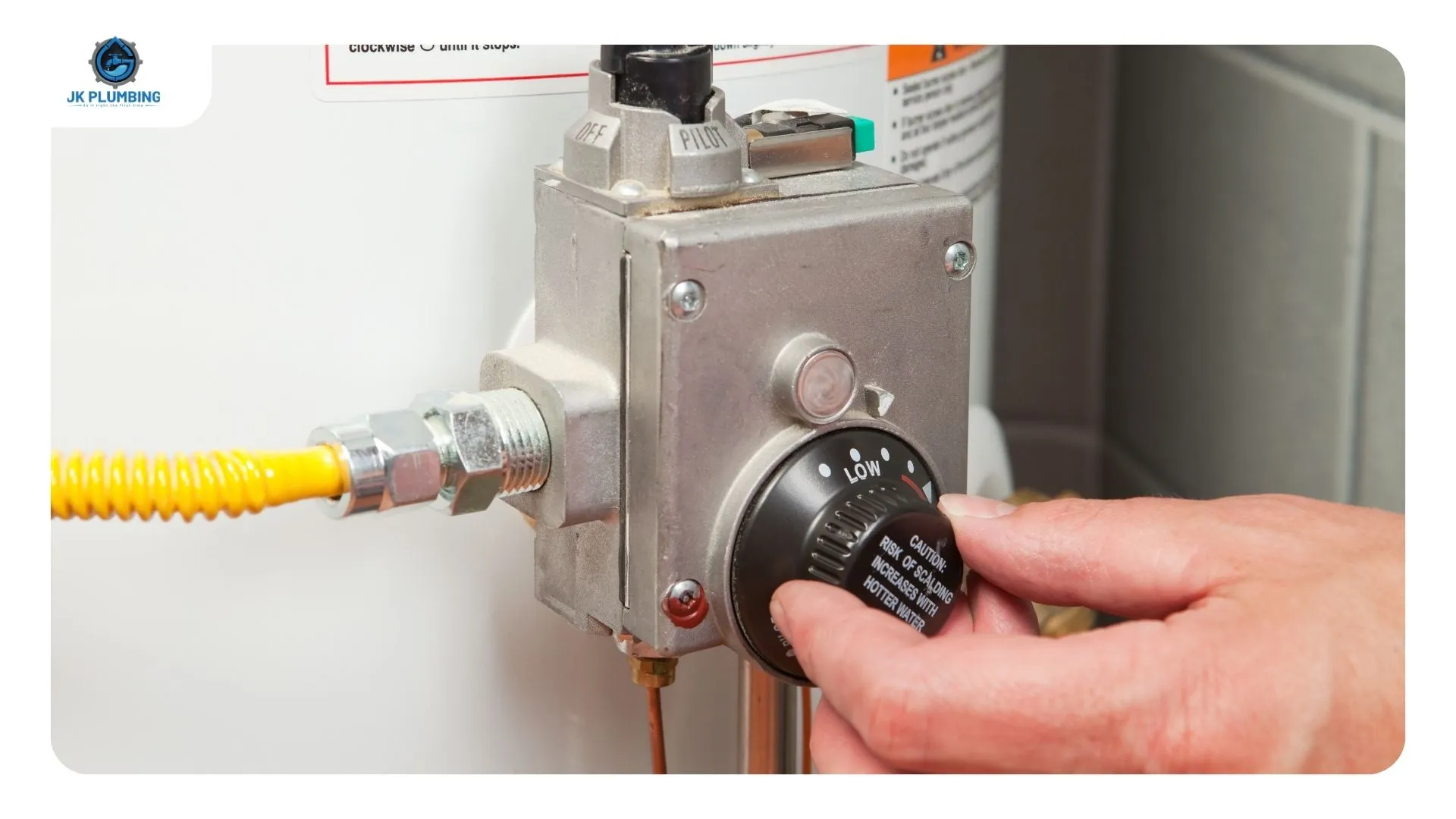
If you’re seeing active water and want to limit it now: close the cold inlet valve at the top of the tank, and turn the gas control to OFF or switch off the breaker.
Which faults are repairable, and which mean replacement?
A fair rule: everything attached to the outside of the tank is repairable. The tank itself is not.
Routinely repairable:
- Thermocouples, igniters, and pilot assemblies
- Heating elements and thermostats
- Gas control valves (on a unit young enough to justify it)
- Dip tubes
- T&P relief valves
- Anode rods, if replaced before the lining is compromised
- Sediment, via flushing — at least the first time
Not repairable:
- A tank leaking from a seam or the tank body
- A failed glass lining, which is what rust-coloured hot water on an older unit usually indicates
- Widespread external corrosion at the tank base
Between those two lists sits the real decision, which is economic rather than technical. A $200 part on a 6-year-old tank is obviously worth it. The same part on an 11-year-old tank buys you an unknown amount of time on a unit that’s near the end of its service life regardless. Our rough working line: under 8 years, repair. Over 10, any repair that touches the tank or costs a meaningful share of replacement is usually money better spent on the replacement. Between 8 and 10, it depends on the specific fault and what’s beneath the unit.
How do you know when water heater repair is worth it goes deeper on that calculation, and how much water heater repair costs in San Francisco covers what the common repairs actually involve.
Where we handle water heater repair in San Francisco
We work across the city — the Sunset and Richmond, Noe Valley, Bernal Heights, the Mission, Glen Park, Potrero Hill, the Excelsior, and the northern neighbourhoods — with the particular quirks that come with San Francisco housing: heaters in garages under living space, in basements down narrow stairs, and in closets inside flats where access is half the job.
Dispatch is from Burlingame, and our emergency line answers 24 hours Monday through Saturday. For the repair service itself, see our water heater repair page; if the diagnosis points the other way, water heater replacement and heat pump water heater cover those paths.
Frequently asked questions
Why is there no hot water, or not enough of it?
No hot water at all usually means a pilot, thermocouple, or gas control valve fault on a gas unit, or a tripped high-limit switch, failed upper element, or failed thermostat on an electric one. Hot water that runs out early points instead to a failed lower element, a broken dip tube, sediment taking up tank volume, or demand that has simply outgrown the tank size.
What does rumbling or popping from the tank actually mean?
Water is boiling beneath hardened sediment on the tank floor and forcing steam up through it. Because San Francisco’s water is soft, heavy mineral scale is less common here than in harder-water parts of the Bay Area — so significant sediment in an SF tank often means either years without a flush or internal corrosion rather than scale. A flush frequently resolves it once; a tank that rumbles again within a year usually needs replacing.
Why has the hot water turned rusty or discoloured?
Run the cold tap first. If both sides are discoloured, it’s a supply issue, not the heater. If only the hot side is, it’s either a depleted anode rod — repairable, and worth doing promptly — or a failed glass lining, which means the steel tank is corroding and the unit needs replacing. Age is the best indicator of which.
There is moisture around the base — is that urgent?
Condensation, a T&P discharge drip, or a weeping fitting at the top are repairs, not emergencies. Water coming from the tank seam or body is urgent, because that failure does not reverse. In San Francisco it also matters what’s below: a heater sitting above another flat gets treated as urgent regardless of the volume.
Can most faults be repaired, or does the unit usually need replacing?
Most individual faults are genuinely repairable — thermocouples, elements, thermostats, dip tubes, T&P valves, anode rods, and gas control valves are all serviceable parts. What can’t be repaired is the tank itself: a leaking seam or a failed glass lining ends the conversation. So the question is usually less about the fault than the age. Under 8 years we repair. Over 10, a repair touching the tank rarely makes sense. We give you the diagnosis and the honest recommendation in writing, and you decide.
Visit or Call Us
JK Plumbing
Adress:1008 Edwards Rd Burlingame, CA 94010
Phone: (415) 359-4588
Hours: Monday–Saturday, open 24 hours. Closed Sunday. Serving San Francisco and the Peninsula, including the Sunset, Richmond, Noe Valley, Bernal Heights, the Mission, and Daly City.
CA License #1080266
RECENT POSTS
Where to Install a Water Heater in a South San Francisco Home: What’s Allowed?
October 12, 2026
No Comments
Read More »
Who Can Change a Water Heater Quickly in South San Francisco?
October 9, 2026
No Comments
Read More »