
- Open 24 Hours Mon–Sat
- contact@jkplumbingsf.com
- +1 (415) 359-4588
- CA License #1080266

If your tank is leaking right now, shut the cold water inlet on top of it first, then turn the gas control to OFF or switch off the breaker. Water before heat, in that order — the reason is below. JK Plumbing replaces failed water heaters across San Francisco and Pacifica, usually same day. Call (415) 359-4588.
By Alik, Owner & Master Plumber · Last updated October 2026
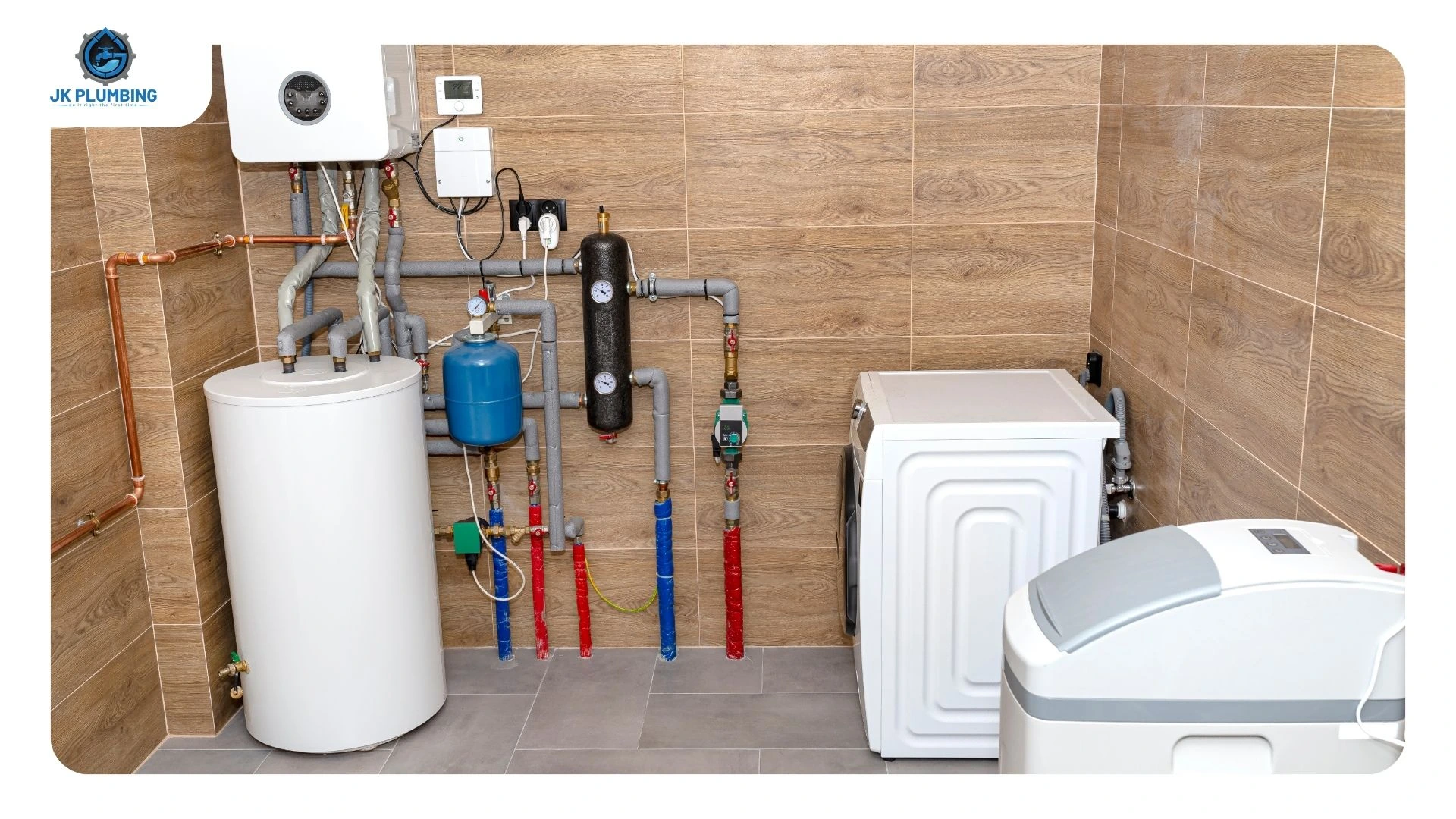
Do you shut off the water or the gas first?
It depends on what you’re doing, and the two cases have opposite answers. This is worth two minutes of reading before you need it.
If the tank is leaking: water first. Close the cold water inlet valve on top of the heater — the handle on the pipe entering the top, turned clockwise. That stops the supply feeding the leak, which is the thing actively causing damage. The tank stays full, so there’s no risk in closing it. Then turn the gas control knob to OFF, or switch off the breaker on an electric unit.
If you’re draining the tank: heat first. Kill the gas or the power before you let the water out, because a burner or an element firing in an empty tank will damage itself quickly. This is the version most general advice gives, and applying it to a leak wastes the minutes that matter.
If you smell gas: neither. Leave the building, don’t touch any switch or valve, and call your gas utility from outside. In San Francisco and Pacifica that’s PG&E on 1-800-743-5000. Immediate danger, 911 first.
If the inlet valve won’t turn — common on older San Francisco homes where it hasn’t moved in fifteen years — go to the main shutoff at the meter instead. Finding that valve on a calm afternoon is one of the better twenty minutes a homeowner can spend.
What a failed unit actually damages in a garage or basement
The honest answer is that it depends almost entirely on whether there’s a floor drain, and what’s sitting on the floor.
A garage with a drain is close to the best case. Forty to fifty gallons goes where it’s supposed to, and the loss is whatever was stored at floor level — which in most San Francisco and Pacifica garages means boxes, tools, sports gear, and the things that got put down “temporarily” years ago. Cardboard wicks instantly. Anything with a motor sitting on the slab is at risk.
A basement without a drain is the expensive version. Water spreads across the floor, soaks into the bottom of drywall and the sill plate, and wicks upward. Framing holds that moisture for weeks in a climate like this one — fog, cool temperatures and limited sun mean a wet San Francisco basement dries slowly, and mould becomes a realistic problem inside a couple of days.
A unit above finished space is the worst case and the most common in older flats and converted homes. The ceiling below takes it, the flooring takes it, and insulation in between holds water long after the surface looks dry.
Electrical at floor level deserves a separate mention: outlets, extension leads, a chest freezer, EV charging equipment. If water is reaching any of those, kill the circuit before you go near it.
One point about insurance that’s worth knowing before it matters. Policies generally treat a sudden discharge differently from gradual seepage. A tank that bursts is usually a covered event. A tank that has been weeping quietly for months, with the damage accumulating slowly, frequently isn’t. That’s the practical argument for acting on a small amount of moisture at the base rather than watching it — the difference isn’t just repair cost, it can be whether the claim is paid at all. Check your own policy; they vary.
How quickly can a failed unit be replaced?
Same day, for a like-for-like swap. Call in the morning and you generally have hot water that evening. The work is three to four hours on site, plus roughly 30 to 40 minutes after commissioning before a 50-gallon gas tank delivers usable hot water.
What pushes it past one day:
- A gas-to-heat-pump conversion, which adds a 240V circuit and a condensate drain.
- A panel that can’t carry the load, which gets dealt with first.
- Venting that doesn’t match between the old unit and the new one.
- An unusual size or specification needing a supplier run. Standard 40s and 50s are on the truck.
We dispatch from Burlingame, which puts San Francisco up the 101 and Pacifica over Highway 1 — both well within same-day range. Changing a water heater covers what the swap itself involves in more detail.
Pacifica and the coast: why tanks fail earlier out there
This is the part that gets left out of generic advice, and it matters if you live west of the hills.
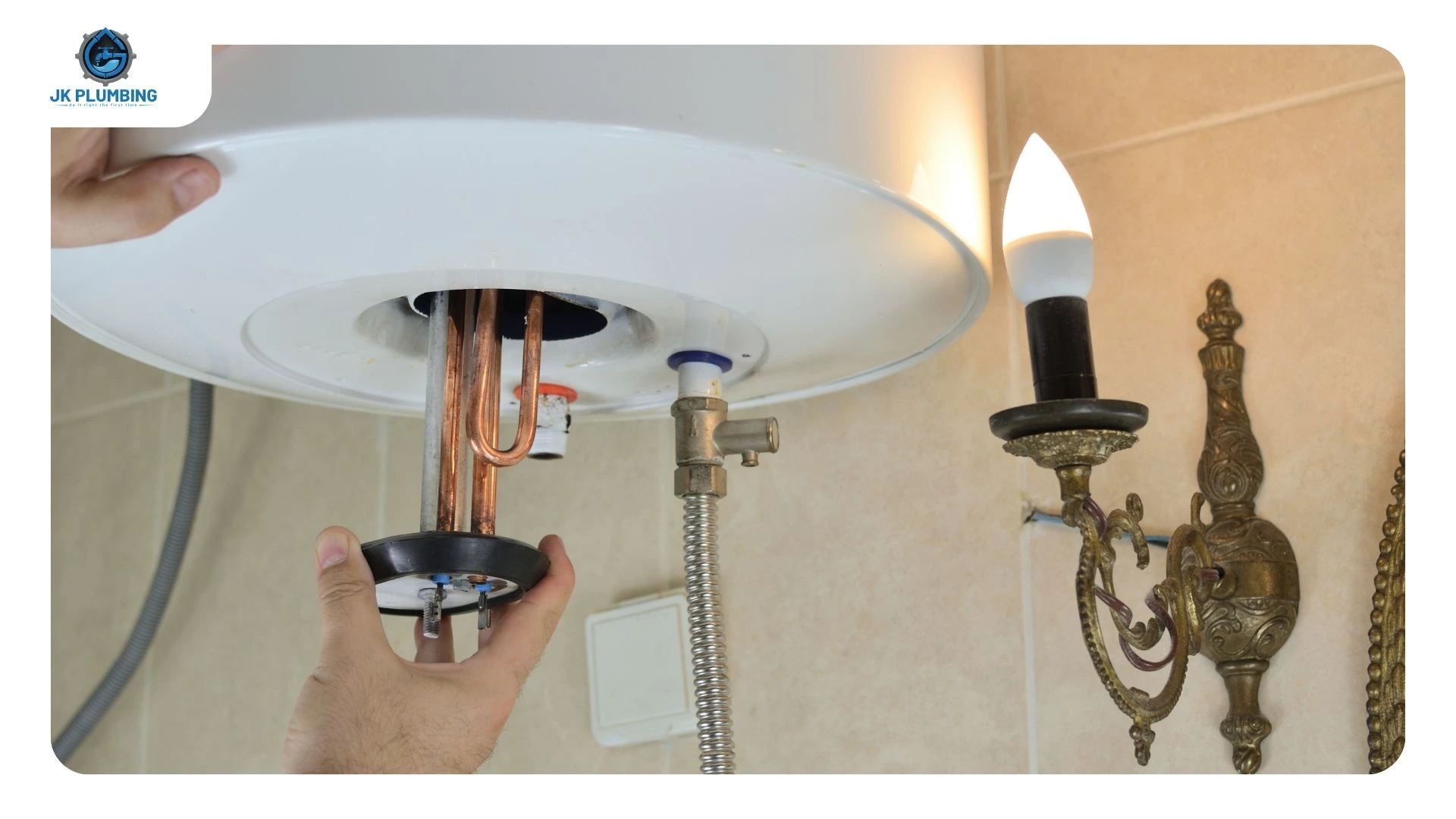
Salt air corrodes. Persistent fog and damp keep surfaces wet. A water heater in a Pacifica garage, or in an exterior enclosure anywhere along the coast, lives in conditions that are measurably harder on metal than the same unit in Burlingame or Millbrae. The same applies to the ocean-facing edges of the Sunset and Richmond.
What we see going first in those installations: the tank jacket and base showing surface rust earlier, corrosion at fittings and unions, the gas flex connector degrading, T&P valves seizing, and vent components deteriorating from the outside in. None of that is the tank lining failing — it’s everything around it aging faster than the schedule anyone expects.
Two practical consequences. First, a coastal unit deserves a look more often than an inland one, particularly at the connections rather than the tank. Second, when replacing out there, the small components are worth specifying properly rather than accepting whatever comes in the box, because they are what will fail next.
Before we arrive
Shut the water as described above, then the heat. After that:
- Photograph everything before you move anything. Insurers ask, and the scene changes fast once cleanup starts.
- Move what you can out of the water, starting with cardboard and anything electrical.
- Clear a path to the unit, and if a car sits in front of the garage door, pull it out. A tank comes out the way it went in.
- Text us the data plate — the label on the side with brand, model and capacity. That’s what lets us bring the right unit on the first trip.
If you’re not certain the unit has actually failed, what each water heater symptom means separates the faults that are repairable from the ones that aren’t.
Where we work
San Francisco — the Sunset, the Richmond, Noe Valley, Bernal Heights, the Mission and across the city — plus Pacifica, Daly City, Brisbane, South San Francisco, Millbrae and down the Peninsula to Burlingame.
Our water heater replacement page covers the service itself. The emergency line answers around the clock, every day.
Frequently asked questions
What do you do first when a water heater starts leaking?
Close the cold water inlet valve on top of the tank, turning clockwise. That stops the supply feeding the leak. Then turn the gas control to OFF or switch off the breaker. If the inlet valve won’t turn, use the main shutoff at the meter. Photograph everything before cleanup begins.
Do you shut off the water or the gas first?
For a leak, water first — it’s what’s causing the damage, and the tank stays full so nothing is at risk. For draining a tank, the opposite: kill the gas or power first, because a burner or element firing dry damages itself quickly. If you smell gas, do neither — leave the building and call PG&E on 1-800-743-5000 from outside.
How quickly can a failed unit be replaced?
A like-for-like swap is usually same day: three to four hours on site, plus about 30 to 40 minutes before a 50-gallon gas tank gives usable hot water. Heat pump conversions, panel upgrades, venting changes and unusual sizes are what push a job past a single day.
Can a replacement realistically happen the same day?
Yes for standard tank-for-tank work, which is most emergency calls. We stock common sizes and dispatch from Burlingame, covering San Francisco and Pacifica within same-day range. Texting a photo of the old unit’s data plate before we leave is the single biggest thing that keeps it to one visit.
What does a failed unit damage in a garage or basement?
In a garage with a floor drain, usually just whatever was stored at floor level. In a basement without one, water soaks the bottom of drywall and the sill plate and wicks upward, and in San Francisco’s damp climate framing stays wet long enough for mould to become a real risk. A unit above finished space damages the ceiling, flooring and insulation below. Note that insurers often treat a sudden burst and a long slow weep very differently.
Visit or Call Us
JK Plumbing
Adress:1008 Edwards Rd Burlingame, CA 94010
Phone: (415) 359-4588
Hours: Open 24 hours, seven days a week.
Serving San Francisco, South San Francisco, Daly City, Brisbane and the Peninsula.
CA License #1080266
RECENT POSTS
Hot Water Heater Replacement in San Francisco: Tank, Tankless or Upgrade?
October 29, 2026
No Comments
Read More »
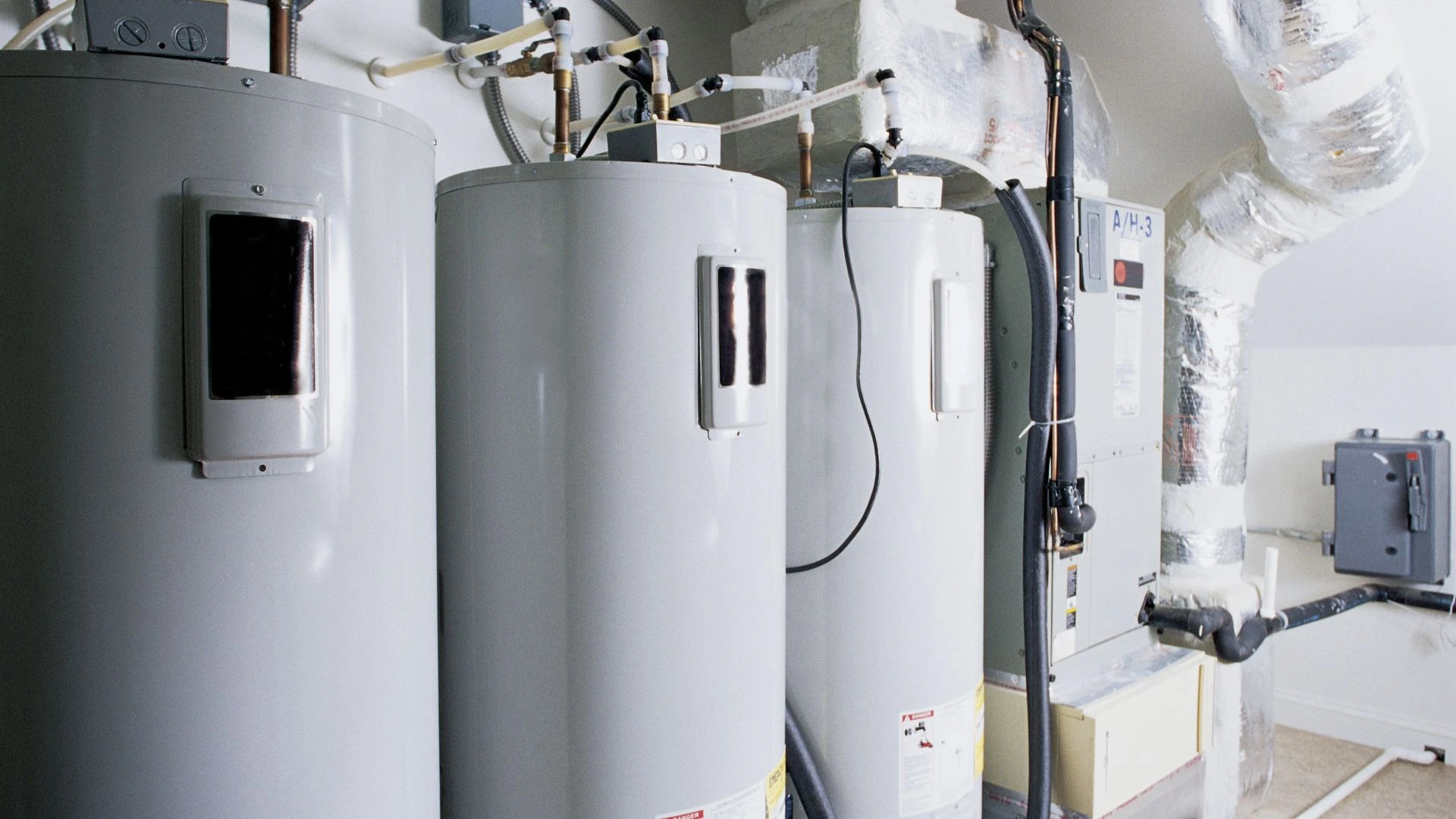
Water Heater Replacement Near Me: San Francisco and Pacifica
October 28, 2026
No Comments
Read More »