
- Open 24 Hours Mon–Sat
- contact@jkplumbingsf.com
- +1 (415) 359-4588
- CA License #1080266

Comparing two quotes is only useful if they cover the same work. Most of the time they don’t — and the gap sits in the items nobody thinks to ask about. Here’s what a complete quote contains and what to check before signing one. JK Plumbing is based in Burlingame, next door to San Mateo. Call (415) 359-4588.
By Alik, Owner & Master Plumber · Last updated November 2026
The line items a complete quote should show
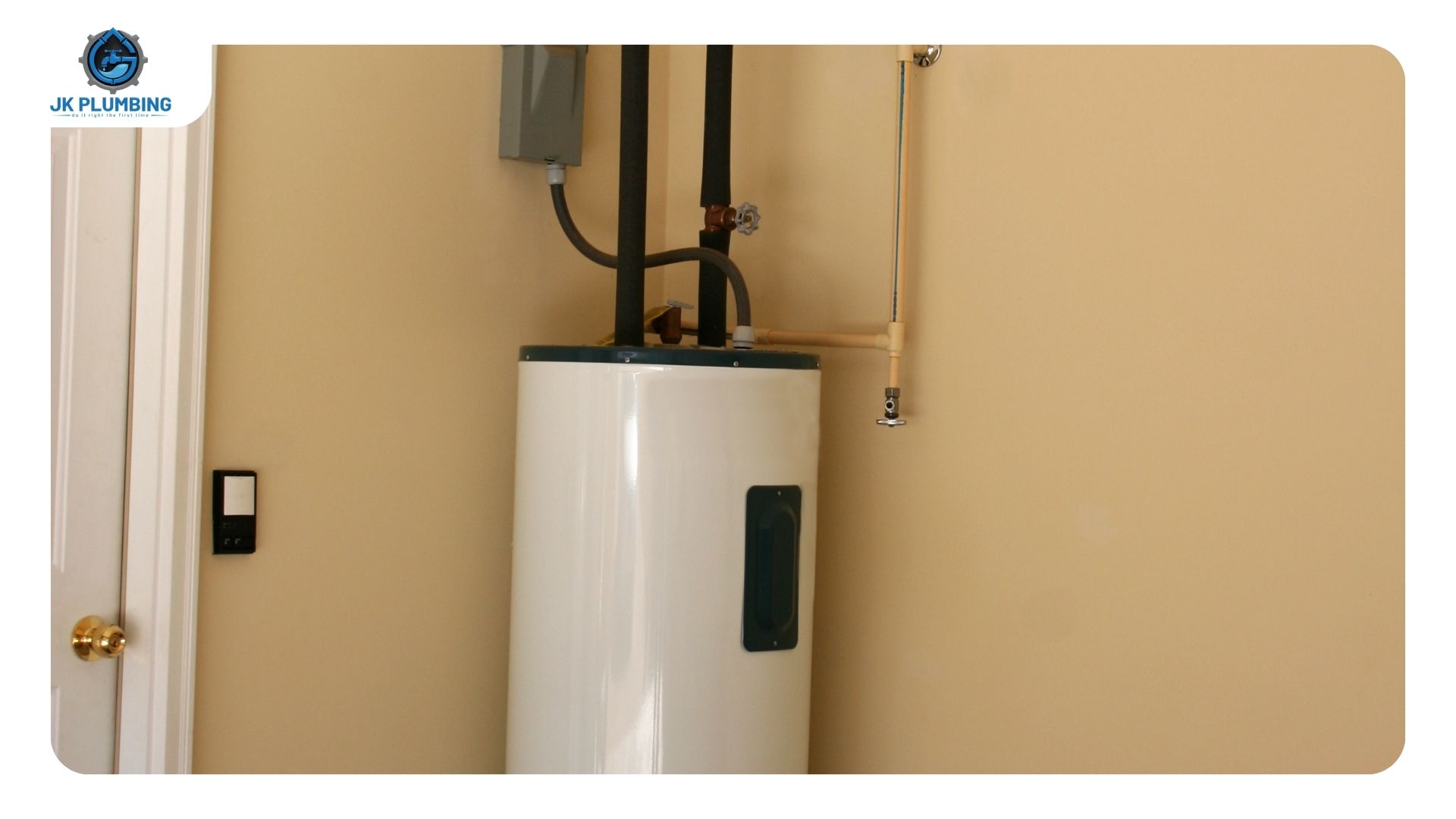
The unit. Make, model and capacity, not just “50 gallon gas.” The model number is what tells you the warranty tier and the efficiency, and two units of the same capacity can differ considerably on both.
Labour. The installation itself, stated separately from the unit, so you can see what you’re paying for rather than a single lump figure.
The permit. Whether it’s included and who pulls it. This is the most common omission, and the one with the longest tail.
Code items. Seismic straps, an expansion tank where the system is closed, a drain pan and discharge where required, an earthquake-rated gas connector, and any venting corrections. These should be itemised rather than assumed — a quote that excludes them isn’t cheaper, it’s smaller.
Removal and disposal of the old unit.
Any conditional work, flagged as conditional. Gas line upsizing on a tankless conversion, electrical work on a heat pump, or a panel upgrade should appear as a known possibility with a stated price, not as a surprise on the day.
If one quote is materially lower than another, the difference is usually in these items rather than in the plumber’s hourly rate. What a code-compliant install includes covers the technical side of that list.
Who pulls the permit and handles the inspection?
We do. It should be part of the job, and if a quote doesn’t mention a permit it’s worth asking directly whether one is being pulled.
A water heater replacement in California requires a permit, including a straight like-for-like swap. In San Mateo that goes through the city’s building division, and the inspection verifies the life-safety items — strapping, the relief valve and its discharge, the gas or electrical connection, venting and combustion air.
Why it matters later. Unpermitted work tends to stay invisible until you sell, at which point a home inspector flags it and you’re either retroactively permitting at the worst moment or negotiating a credit. There’s also an insurance angle: if an unpermitted installation causes damage, a carrier has grounds to ask questions.
Permits, DIY and what happens on the day goes further into the permitting side, including what’s involved if you want to do the work yourself.
Warranty: what covers the unit, and what covers the labour
These are two separate things, and conflating them is how people end up disappointed.
The manufacturer’s warranty covers the unit. Typically six, nine, ten or twelve years depending on the model tier, and often with different terms for the tank than for the components — a tank might carry twelve years while the parts carry six. What it almost never covers is labour. A warranty tank replacement usually means the manufacturer supplies a tank and you pay for the removal, installation and any code work.
The contractor’s warranty covers the installation. That’s a separate commitment from whoever did the work — the connections, the fittings, the workmanship. Terms vary between companies, and it’s a fair question to ask before you book rather than after.
Two things worth confirming on any quote: that the unit’s warranty term is stated, and that the labour warranty is stated separately with its own duration. A quote that says “warranty included” without distinguishing them hasn’t told you anything.
Registration can also matter. Some manufacturers require it, and some require proof of professional installation, which is one more reason the permit and the paperwork are worth keeping together.
Checking the company is actually licensed
Straightforward, and worth two minutes.
California contractors are licensed through the Contractors State License Board, and the licence number should appear on the quote. You can look it up on the CSLB website to confirm it’s active, see the classification, and check the bond and workers’ compensation status.
JK Plumbing holds CA Licence #1080266, active since 2007, with general liability and workers’ compensation coverage. We’ll send certificates of insurance to an HOA or property manager on request.
The reason this matters beyond box-ticking: if an unlicensed or uninsured installer damages your property or is injured on it, the exposure can land on you.
Financing
We offer financing on water heater replacements, and we’ll go through the options at the quote stage rather than making you ask.
Separately, if you’re replacing a gas unit with a heat pump, Peninsula Clean Energy runs a zero-interest loan programme for San Mateo County homeowners alongside its rebates. The two are different routes and worth comparing — the rebate position often moves the net cost of a heat pump conversion more than the financing terms do, so it’s worth establishing eligibility before committing to a unit.
How long the installation takes
A like-for-like tank swap: three to four hours on site, then roughly 30 to 40 minutes after commissioning before a 50-gallon gas tank delivers usable hot water, and about an hour to full temperature. Electric tanks take closer to two hours to come up.
A gas-to-heat-pump conversion: more than one day, because of the electrical and condensate work, and longer again if the panel needs upgrading first.
A tankless conversion: typically a full day, sometimes two, with the gas line and venting work being the time rather than the unit.
A morning start on a standard swap generally means hot water by mid-afternoon.
Where we work
San Mateo — Baywood, San Mateo Park, Hillsdale, Shoreview, Sunnybrae and Bay Meadows — plus Burlingame, Millbrae, Foster City, San Carlos, Belmont and north through the Peninsula to South San Francisco and San Francisco.
Our water heater replacement page covers the service itself.
Frequently asked questions
How much does installation cost in San Mateo, CA?
It depends on the unit and what the existing installation needs — code items that are missing, venting changes, gas line upsizing on a tankless conversion, electrical work on a heat pump, the permit and access. We quote in writing on site rather than over the phone, because the variation is in the existing setup rather than the appliance.
What is in the quote: unit, labour, permit, disposal?
All four, plus itemised code items such as seismic straps, an expansion tank on a closed system, and a drain pan where required. Conditional work like gas line upsizing or a panel upgrade should be flagged with a stated price rather than appearing later. A quote materially cheaper than another usually differs on these items rather than on the labour rate.
Do you pull the permit and handle the inspection?
Yes. A permit is required in California for a water heater replacement, including a like-for-like swap, and in San Mateo it goes through the city’s building division. The inspection checks strapping, the relief valve and discharge, the gas or electrical connection, and venting and combustion air.
What warranty covers the unit versus the labour?
They’re separate. The manufacturer’s warranty covers the unit — commonly six to twelve years depending on tier, often with different terms for the tank and the components — and almost never covers labour, so a warranty replacement still carries installation costs. The contractor’s warranty covers the workmanship and is a separate commitment with its own duration. Ask for both to be stated on the quote.
Do you offer financing for installation?
Yes, we offer financing on water heater replacements and go through the options at the quote stage. Separately, Peninsula Clean Energy runs a zero-interest loan programme for San Mateo County homeowners doing electric upgrades, which can be combined with its heat pump rebates.
Visit or Call Us
JK Plumbing
Adress:1008 Edwards Rd Burlingame, CA 94010
Phone: (415) 359-4588
Hours: Open 24 hours, seven days a week.
Serving San Francisco, South San Francisco, Daly City, Brisbane and the Peninsula.
CA License #1080266
RECENT POSTS
Water Heater Services in San Francisco: Do You Need Repair, Replacement or Installation?
November 13, 2026
No Comments
Read More »
Water Heater Replacement in San Francisco: How Much Space Do You Actually Get Back?
November 12, 2026
No Comments
Read More »