Learning how to clean a drain that’s running slow comes down to order of operations. Lift the strainer and clear the hair and soap scum sitting in it. Plunge with the basin part-filled so the cup seals. Flush with hot water. Only then, if the level still climbs, work a snake past the trap — or hand it to someone who owns a drain machine.
Sequence matters because the fix depends on where the blockage sits. Most of the homes JK Plumbing works on from Burlingame to San Mateo were plumbed long before plastic pipe was standard, and their drains fail in ways a bottle of gel can’t reach. The plunging was never the hard part. The hard part is standing over a sink that won’t clear, wondering whether to pour chemicals down it or pick up the phone.
By Alik, Owner & Master Plumber · Last updated November 2026
Should you pour chemical drain cleaner down the drain?
Usually not, and the reason is the bottle’s own chemistry. Consumer Reports sorts store-bought cleaners into three groups: caustic (sodium hydroxide, or lye), oxidizing (bleach-based), and acid (sulfuric acid). All three clear a clog by attacking it, and two of them cause damage on the way through.
Caustic and oxidizing cleaners release heat as they work. Enough heat to soften PVC and to warp the fittings the liquid passes through, which is why trade sources warn about solvent-welded joints in plastic drain lines. Acid cleaners go further and corrode the inside of cast iron pipe, permanently. Consumer Reports also flags the label’s own warning: caustic cleaners cause chemical burns, and the burns get worse when the drain is already full of standing water.
The pantry version isn’t the answer either. Baking soda and vinegar produce a satisfying fizz, and the fizz is carbon dioxide, not cleaning power. Chemists at the American Chemical Society point out that in an open drain the gas simply escapes, and more than 99% of the baking soda is still sitting in the pipe when the bubbling stops — the reaction, in their words, is largely a visual placebo. Poison Control reaches the same verdict from the safety side: because drains aren’t airtight, the gas has nothing to push against, and the mixture isn’t strong enough to shift grease or oil.
Sensible habits for how to clean drains without chemicals look like this: a hair trap in every shower, no coffee grounds or cooking fat down the kitchen sink, and an enzymatic treatment dosed before bed once a month on a line that’s still flowing. None of that opens a clog that’s already there, and all of it slows the next one down. And if you’d rather compare products properly, our walkthrough on choosing a drain cleaner in Burlingame sorts what’s worth buying from what’s worth avoiding.
How do you clean a sink drain?
Ask how to clean sink drain and you’ll get a dozen methods, most of them starting halfway down the pipe. Start at the top instead, because that’s where it usually begins. Pop the stopper, pull the strainer, and clear what’s caught on it — hair, food, that grey film on the underside of the basket. Run hot tap water for a minute and watch how fast it falls. If it drains freely now, you’re done, no tools required.
If it’s still slow, plunge. Fill the basin a couple of inches so the rubber cup sits in water, seal it over the drain, and push down firmly, then pull up without breaking the seal. A dozen strokes. The pressure that moves is the pressure that clears a soft blockage in the trap or the branch line under the sink.
Then flush with hot water — not boiling. Water straight off the stove is a different animal; it can soften PVC and stress the solvent-welded joints in a plastic trap, so let the kettle cool first. If hot water brings the level back up, the clog is past the trap, where a plunger can’t reach. That’s the point to reach for a hand snake, or to stop.
How do you clear a shower drain full of hair?
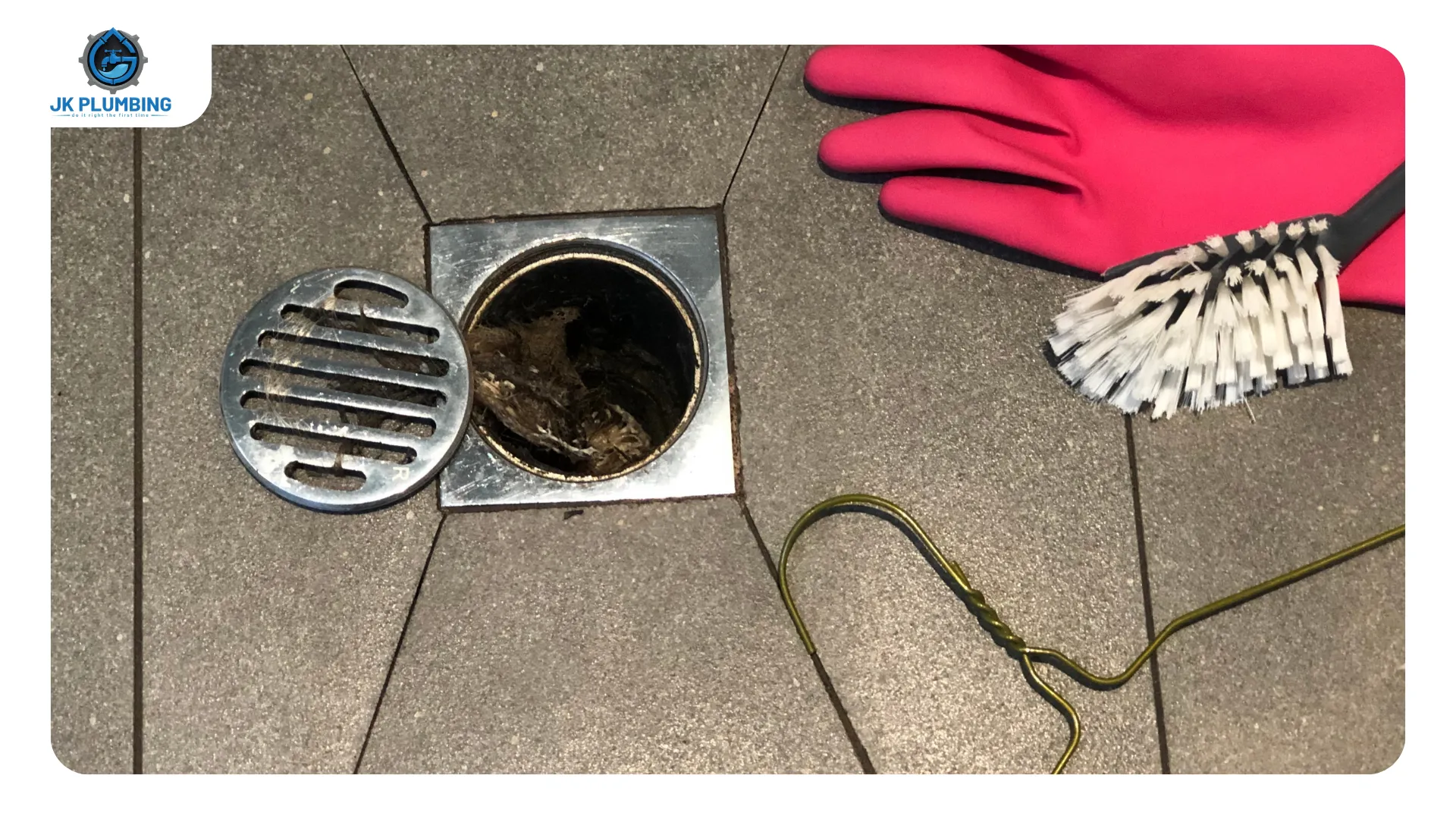
Hair is the entire story in a shower, and it’s the clog most homeowners can clear themselves. Guides on how to clean shower drain usually open with a chemical; skip that. Take the cover off first — two screws on most, or a pop-up assembly you lift straight out. Shine a light down and you’ll usually see the hair matted around the top of the trap.
Reach in with a plastic hair snake or a bent wire and pull it out. Wear gloves. It’s the least pleasant part of the job and also the most effective. Once the visible hair is gone, plunge the same way you would a sink — water in the tray, good seal, firm strokes — and finish with hot tap water.
What you shouldn’t do is stand in the shower and let the water pool while you decide. A slow shower drain you keep using just packs more hair and soap scum onto the clog, which is how a ten-minute fix turns into a weekend of standing water.
Why does a drain in an older Burlingame home keep coming back?
Because the pipe itself has narrowed. Homes across this part of the Peninsula were largely plumbed in cast iron, and cast iron corrodes from the inside out. The rough layer that builds up — tuberculation — can take a four-inch drain and leave it flowing like a two-inch one. Industry figures put cast iron drain pipe at 50 to 100 years of service life, and plenty of local houses sit inside that window.
That figure is a national range, not a Burlingame measurement, but the local version shows up on the calendar. Once a cast-iron drain has scaled up, it clogs more often every year, and the same call comes back. A cleared drain on a tuberculated pipe isn’t fixed. It’s re-opened.
The sewer lateral underneath has its own problem. Older laterals were laid in clay, and clay joints separate. Tree roots find the gap and the root hair grows into the pipe. This is the part of a home’s drainage Burlingame keeps an eye on: under Municipal Code 15.12.110, the City can require a sewer lateral test to check whether a lateral is letting groundwater into the main system. A lateral that passes is excused from retesting for 10 years. One that was replaced end to end is excused for 25. The rule exists because root intrusion and broken joints are common enough to matter citywide.
Blockages aren’t only a homeowner’s headache, either. The EPA names blockages the largest single cause of sanitary sewer overflows, and an overflow on a shared line sends sewage somewhere nobody wants it.
How can you tell a single clog from a main-line problem?
Count the fixtures. One slow sink, or one shower that pools, is a branch line — the pipe serving that single fixture. Two or more backing up at once, or water rising in a tub when you flush a toilet, points to the main line under the house or out to the street.
The second tell is sound. A gurgling trap, a toilet that bubbles when the washer drains, a smell that turns up in a room you haven’t used — all symptoms of a blockage downstream of the fixture you’re looking at. Snaking the sink won’t touch it.
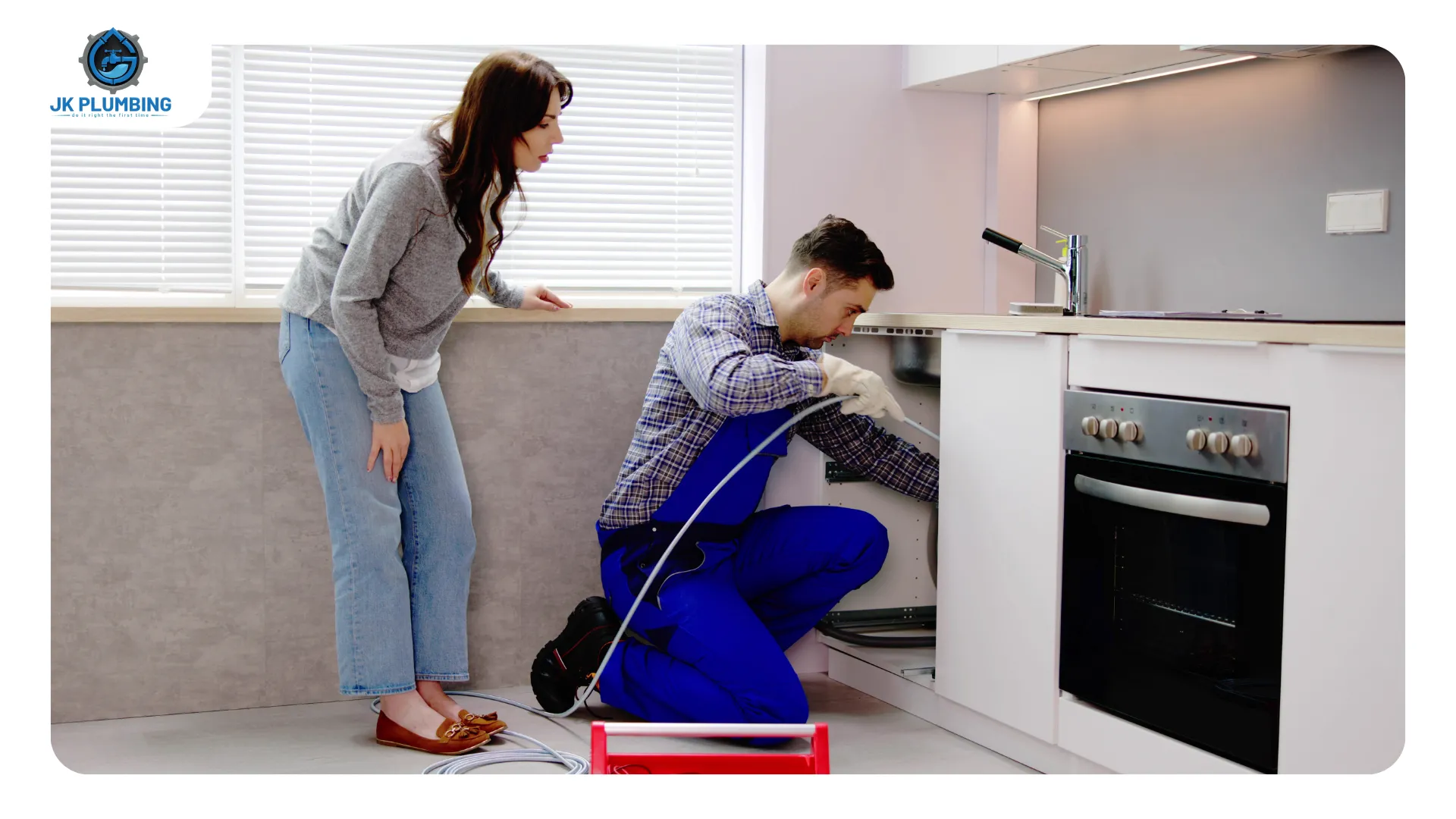
Main-line clogs are where a drain machine does work a hand snake can’t. Our hydro jet drain cleaning in Burlingame uses water pressure to scour the full pipe wall instead of punching a hole through the middle, which is what clears a scaled-up or root-invaded line. That’s a different job from a standard drain cleaning service on a single kitchen or bathroom drain, and the two shouldn’t be quoted the same. If you want the machine rather than the hand tool, the hydro jet service page covers what it involves.
When should you stop and call a plumber?
Stop when any of these is true. Water is rising in more than one fixture. You’ve plunged and snaked, and the same drain is slow again within a week. There’s standing water in a floor drain or a shower you never use. Or the slow drain arrived alongside the smell of sewage anywhere in the house.
Stop sooner if the drain serves a rental or a commercial kitchen, or if the pipe is visibly rusted at a joint. Pushing a snake through corroded cast iron can open a hole you’d rather not have. And don’t reach for lye on an old pipe: the burn risk is real, and the pipe damage never reverses.
A plumber with a camera and a drain machine can tell you where the clog is, what the pipe is made of, and whether the line needs cleaning or replacing — three answers a bottle can’t give you. What that visit costs, and what moves the number, is set out on our page about drain cleaning cost in San Francisco.
Frequently asked questions
Does baking soda and vinegar actually unclog a drain?
No, not a real clog. The fizz is carbon dioxide escaping from a reaction that leaves more than 99% of the baking soda in the pipe, according to chemists at the American Chemical Society, and Poison Control notes a drain isn’t airtight, so the gas has nothing to push against. It’s harmless, and it may loosen light surface film. It won’t move grease or hair.
Can I use Drano or another chemical drain cleaner instead?
It’s a trade, not a fix. Caustic and oxidizing cleaners generate heat that can soften PVC and warp fittings, and acid cleaners corrode older cast iron. Consumer Reports also warns that caustic cleaners cause chemical burns, worse when the sink is full of standing water. On the cast iron common in pre-1970s Peninsula homes, that corrosion is permanent.
How do I know if the clog is in the main line?
Count how many fixtures are affected. One slow sink is a branch-line clog. Two or more backing up together, water rising in a tub when you flush, or a gurgling trap elsewhere in the house means the blockage is in the main line. Hand-snaking the fixture you can see won’t reach it. That job needs a drain machine or a camera survey.
Is it safe to pour boiling water down a drain?
Hot tap water, yes. Boiling water, be careful. Water straight off the stove can soften PVC and stress the solvent-welded joints in a plastic trap or an older fitting. If your drain is cast iron, heat is less of a concern than the fact it does nothing for a scaled-up pipe. Flush with hot tap water and let the kettle cool.
Why does my drain clog again a week after I clear it?
Usually because the pipe narrowed, not because you missed some debris. Cast iron corrodes from the inside, and the layer it leaves — tuberculation — can turn a four-inch drain into something that flows like a two-inch one. Industry figures put cast iron at 50 to 100 years of service life. Clearing it re-opens the pipe; it doesn’t restore the diameter.
How much does drain cleaning cost in Burlingame?
It depends on the line and the method. A single fixture is one job, and a main-line or root-invaded lateral is another, so quoting them as one price misleads people. JK Plumbing publishes its Bay Area figures and explains what moves them on the drain cleaning cost page linked above. You get a written price before anyone starts.
Book a drain cleaning visit in Burlingame
If the drain is slow for the second time this season, or more than one fixture is backing up, get it looked at before it becomes a flood on a Saturday night. JK Plumbing finds the blockage, tells you what the pipe is made of and whether it needs cleaning or replacing, and gives you the price before any work starts.
Call (415) 359-4588, email contact@jkplumbingsf.com, or find us at 1008 Edwards Road, Burlingame, CA 94010.