
- Open 24 Hours Mon–Sat
- contact@jkplumbingsf.com
- +1 (415) 359-4588
- CA License #1080266

Two quotes for the same job can differ by a lot, and the difference is usually not the unit — it’s which of these items the cheaper quote left out. Here’s what should be on the list, component by component. JK Plumbing is based in Burlingame, next door to San Mateo. Call (415) 359-4588.
By Alik, Owner & Master Plumber · Last updated November 2026
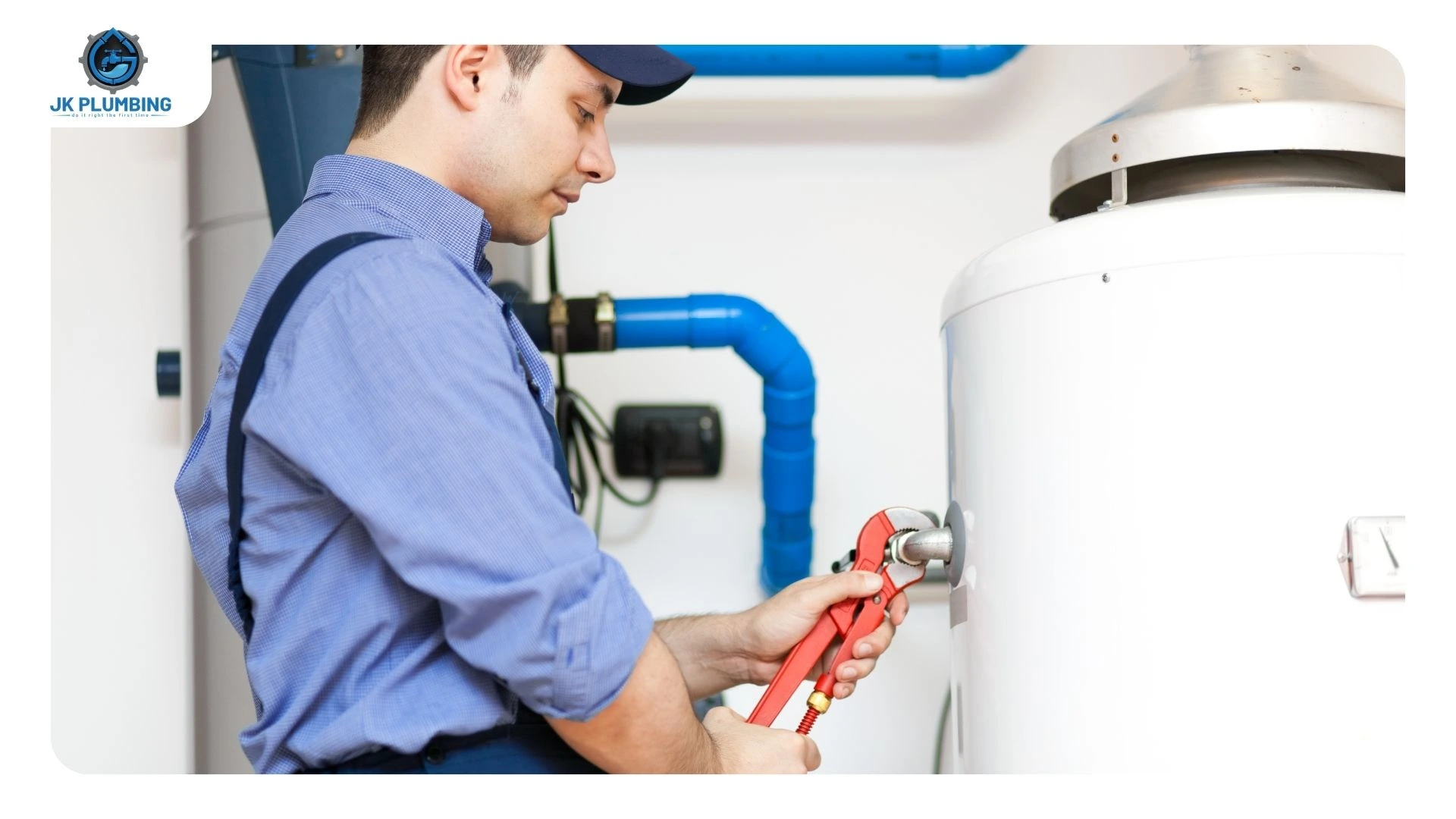
The components a compliant install actually includes
Seismic restraint. Two straps, one in the upper third of the tank and one in the lower third, with the lower strap set at least four inches above the controls. California Plumbing Code 507.2 sets the method; Health and Safety Code 19211 makes it a statewide requirement for new, replacement and existing residential water heaters, with no seismic-zone exception.
A temperature and pressure relief valve, and its discharge pipe. The valve is the device that stops a tank becoming a pressure vessel. The discharge piping has to run full size, in approved material, with no threads at the end, no trap, and a downward slope to an approved termination — typically outside, six to twenty-four inches above grade. A T&P discharge that terminates somewhere nobody would notice it running defeats the purpose of having one.
An expansion tank, where the system is closed. A pressure regulator or backflow device on the supply creates a closed system, and heated water then has nowhere to expand to. Most of the Peninsula has a PRV, so this applies more often than not.
A drain pan and its discharge, where a leak would damage the structure — attics, upper floors, anywhere above finished space. At least an inch and a half deep, plumbed to an approved location. In a garage with a floor drain it’s frequently not required by code, though we’ll usually suggest one anyway.
An earthquake-rated flexible gas connector, on gas units.
Correct venting. Proper rise, correct connector slope, and clearances to combustibles for the vent type in use.
Combustion air, where the unit sits in a confined space. A gas unit in a closet needs two openings, one near the top of the enclosure and one near the bottom.
Pipe insulation on the first several feet of hot and cold piping, per the California Energy Code.
The permit and inspection. Worth noting the 2025 California Plumbing Code took effect on 1 January 2026, so an install permitted now is inspected against a newer edition than one done a few years ago.
If a quote doesn’t mention the items that apply to your installation, it’s worth asking whether they’re included or assumed away.
Garage installs: clearances and protection
Most San Mateo water heaters sit in an attached garage, and two rules apply there specifically.
The elevation rule, and its exemption. California Plumbing Code 507.13 requires appliances in garages to be installed so burners and ignition devices sit at least 18 inches above the floor — the logic being that gasoline vapour pools low. The same section exempts units listed as Flammable Vapor Ignition Resistant, and FVIR has been standard on residential gas water heaters sold in the US since 2003. So an FVIR-listed heater can generally sit on the garage floor. Local inspectors vary on this, and we confirm the city’s current position before setting a unit rather than after.
Vehicle impact protection. Separately, CPC 507.13.1 requires the appliance to be located or protected so a vehicle can’t damage it. If the tank sits where a bumper ends up, that means a bollard or barrier. This matters in San Mateo, where garages are genuinely used for parking rather than storage.
Electric units have no burner, so the elevation question doesn’t arise. Impact protection still does.
Where a water heater can be installed goes further into placement options, closets and attic installs.
Can the unit be relocated, or moved outside?
Often yes, and a replacement is the sensible moment to do it, because the old unit is coming out anyway.
What relocation involves: extending or rerouting the water lines, the gas line if applicable, the venting and the T&P discharge, plus a permit covering the new location rather than the old one. How hard that is depends mostly on which way the joists run and what’s above and below the route.
When it’s worth it: when the current position means a long indirect flue run, an awkward service route that will cost you on every future visit, or a tank sitting above finished space with no drain. Moving a unit into a garage with a floor drain materially changes what a future leak costs you.
Moving it outside is possible with an approved enclosure and a level base sitting at least three inches above grade. It frees interior space, but it exposes the unit and its fittings to weather, which shortens the life of the components around the tank rather than the tank itself.
What we’d advise against: relocating into a space that only just satisfies minimum clearances, to free up storage. Code minimums are minimums, not design targets, and you’ll be servicing that unit for the next fifteen years.
Does a tankless install need a larger gas line or new venting?
Usually both, and this is where tankless quotes diverge most.
Gas. A 50-gallon tank burns roughly 40,000 BTU per hour. A whole-house tankless unit runs 150,000 to 199,000 — four to five times the demand, delivered all at once rather than across a recovery cycle. Existing piping frequently can’t carry that, so upsizing from the meter is common, and occasionally the meter itself needs upgrading, which runs on PG&E’s timetable.
Venting. A tankless unit can’t reuse the old atmospheric flue. It needs dedicated sealed venting — PVC or polypropylene on condensing models, stainless rated for temperature on non-condensing — frequently terminating through a sidewall rather than up the existing chimney. Termination clearances from windows, doors and air intakes decide which wall is available.
Also required: a condensate drain, with neutralisation on many condensing installs, and 120V power for the controls even on gas units.
Tank, tankless or upgrade compares the options in more detail.
Will a heat pump unit need an electrical panel upgrade?
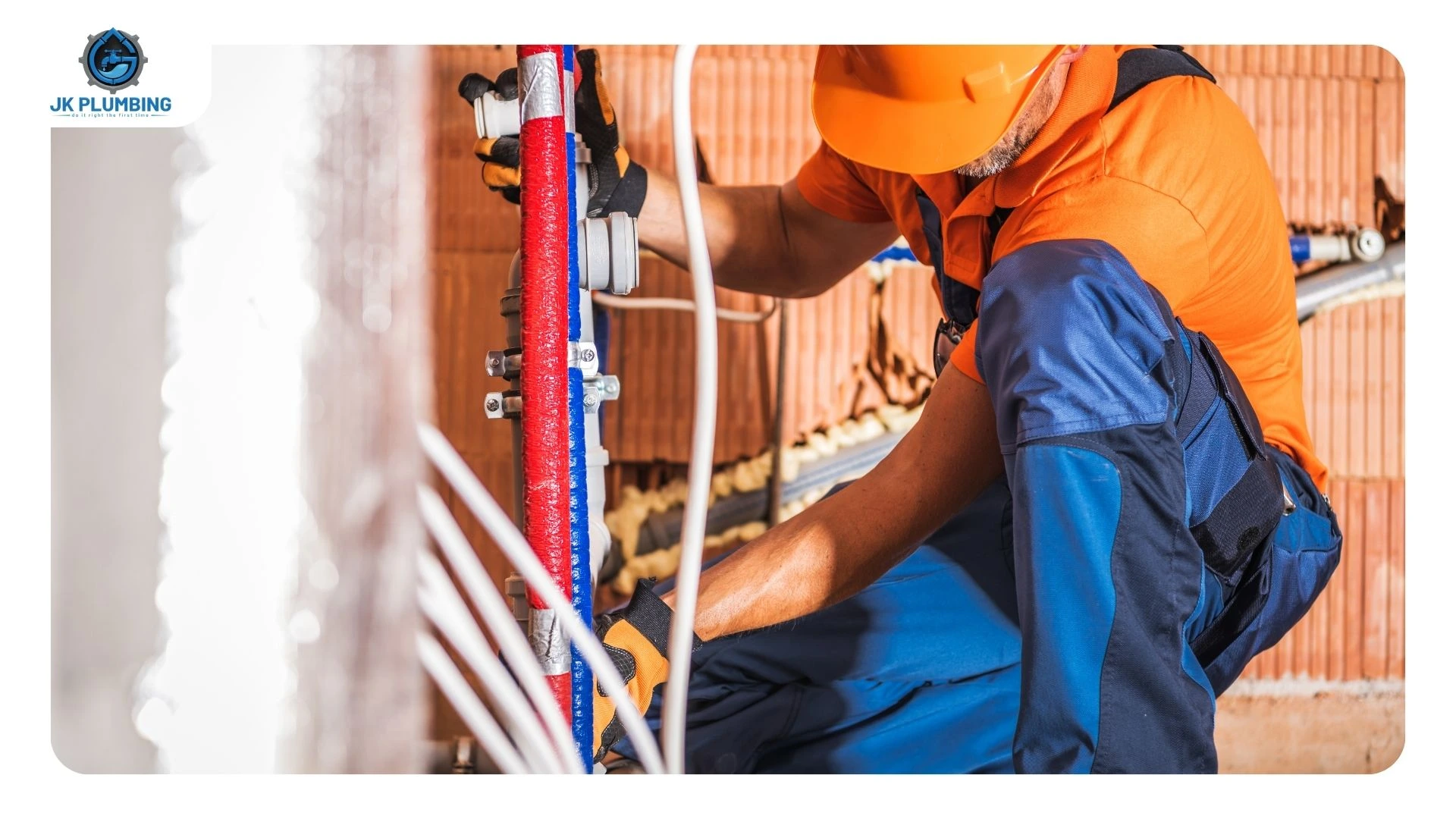
Sometimes, and it should be established before you choose the unit rather than after.
A heat pump water heater needs a dedicated 240V circuit. Plenty of San Mateo’s post-war housing — much of Shoreview, Sunnybrae and Laurelwood — is still on its original electrical service, and a panel already at capacity means an upgrade first. That’s a separate scheduling item, not something added to install day.
Two other checks that belong at the same time: whether the space has the air volume a heat pump needs to draw from, and whether a condensate drain is within reach. A garage usually has both; a tight interior closet often has neither.
And one sizing note — recovery is slower on a heat pump, so a household comfortable on a 50-gallon gas tank generally wants a 65 or 80-gallon heat pump unit. Matching gallons like-for-like is the most common mistake on these conversions. Our heat pump water heater page covers what the installs involve.
Where we work
San Mateo — Baywood, San Mateo Park, Hillsdale, Shoreview, Sunnybrae and Bay Meadows — plus Burlingame, Millbrae, Foster City, San Carlos, Belmont and north through the Peninsula to South San Francisco and San Francisco.
Our water heater replacement page covers the service itself.
Frequently asked questions
What does a code-compliant install include in California?
Two seismic straps positioned in the upper and lower thirds of the tank, a temperature and pressure relief valve with correctly routed full-size discharge piping, an expansion tank where a regulator has created a closed system, a drain pan and discharge where a leak would cause damage, an earthquake-rated gas connector, correct venting and combustion air, pipe insulation, and a permit with inspection. Which items apply depends on the installation.
Are seismic straps and an expansion tank required?
Straps always. California Plumbing Code 507.2 sets the method — two straps, upper and lower third, the lower one at least four inches above the controls — and Health and Safety Code 19211 makes it a statewide requirement with no seismic-zone exception. An expansion tank is required where a pressure regulator or backflow device has created a closed system, which covers most Peninsula homes.
Can the unit be relocated, or moved outside?
Usually. Relocation means rerouting water, gas, venting and the T&P discharge, with a permit covering the new position. It’s worth doing where the current location means a long flue run, poor service access, or a tank above finished space with no drain. Outdoor installation is possible with an approved enclosure and a level base at least three inches above grade, though weather shortens the life of the fittings around the tank.
Does tankless need a larger gas line or new venting?
Usually both. A tankless unit draws 150,000 to 199,000 BTU per hour against roughly 40,000 for a tank, so the gas line typically needs upsizing from the meter. It also can’t reuse the old atmospheric flue, requiring dedicated sealed venting, frequently through a sidewall. A condensate drain and 120V power for the controls are needed as well.
Will a heat pump unit need an electrical panel upgrade?
Sometimes. A heat pump water heater needs a dedicated 240V circuit, and much of San Mateo’s post-war housing is still on original electrical service. Whether the panel can carry it should be established before choosing the unit, along with whether the space has sufficient air volume and a condensate drain within reach.
Visit or Call Us
JK Plumbing
Adress:1008 Edwards Rd Burlingame, CA 94010
Phone: (415) 359-4588
Hours: Open 24 hours, seven days a week.
Serving San Francisco, South San Francisco, Daly City, Brisbane and the Peninsula.
CA License #1080266
RECENT POSTS
Water Heater Services in San Francisco: Do You Need Repair, Replacement or Installation?
November 13, 2026
No Comments
Read More »
Water Heater Replacement in San Francisco: How Much Space Do You Actually Get Back?
November 12, 2026
No Comments
Read More »