- Open 24 Hours Mon–Sat
- contact@jkplumbingsf.com
- +1 (415) 359-4588
- CA License #1080266

You can legally change your own water heater in California as the owner of the property. You still need a permit, it still has to pass inspection, and there’s a document at resale that makes unpermitted work awkward. Here’s the honest version. JK Plumbing is based in Burlingame, next door to San Mateo. Call (415) 359-4588.
By Alik, Owner & Master Plumber · Last updated October 2026
Can you change a water heater yourself in California?
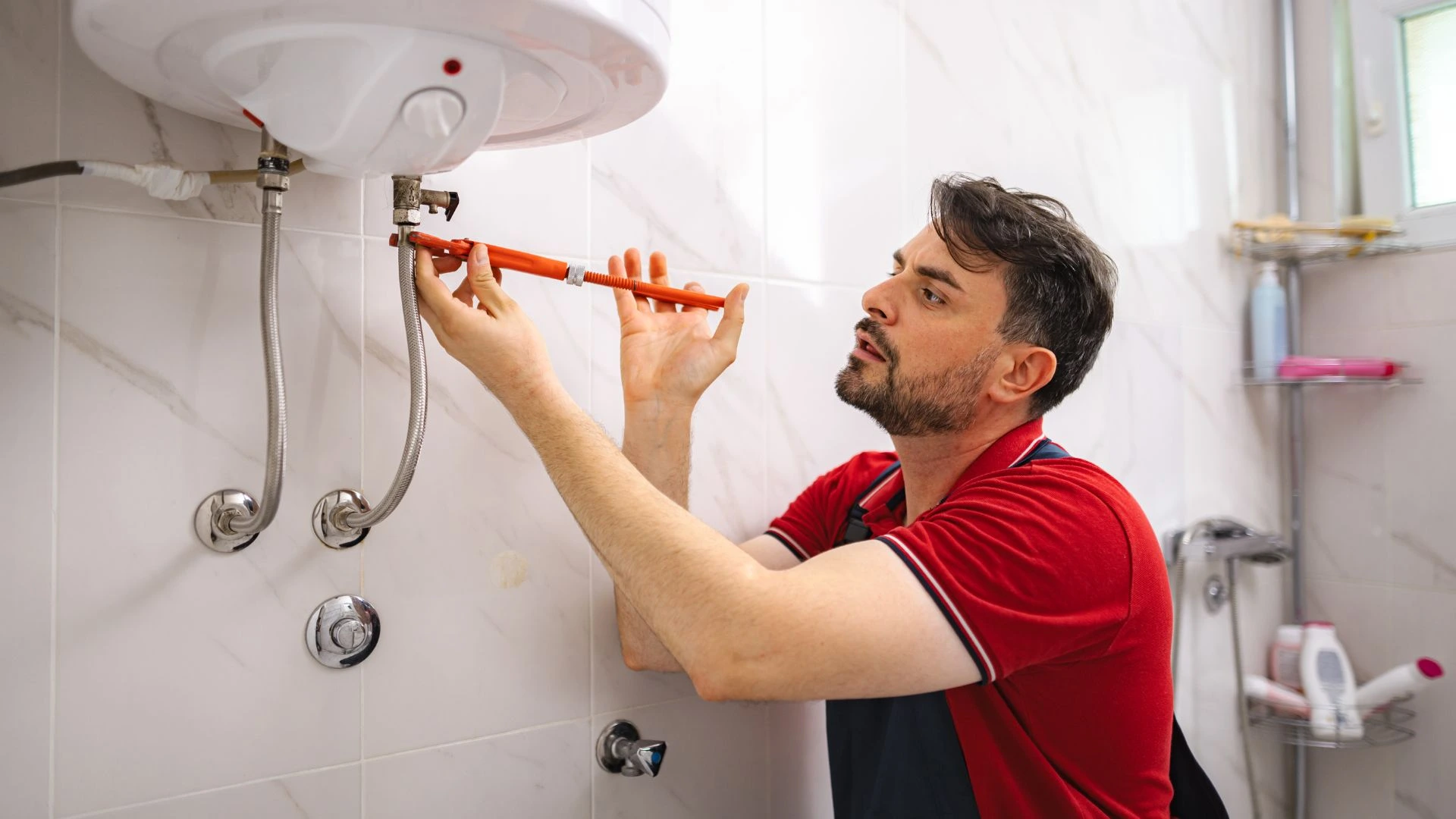
Legally, often yes. California’s owner-builder provision under Business and Professions Code section 7044 lets a property owner do work on their own property themselves, or with their own employees paid wages as their sole compensation, rather than hiring a licensed contractor.
Three conditions people miss:
You still need the permit. The owner-builder route is an exemption from the contractor licensing requirement. It is not an exemption from permitting or inspection.
There’s a resale restriction attached. The owner-builder declaration on a California permit application includes an acknowledgement that a structure built as an owner-builder, not constructed in its entirety by licensed contractors, cannot legally be sold within one year of completion of the improvements. That’s a genuine constraint worth understanding before signing.
It only covers you. The exemption is for the owner doing the work or their own paid employees. Getting a friend who “does plumbing” to help for cash is neither owner-builder work nor licensed work.
Now the part that isn’t legal advice, just experience. The water connections are the easy half. The gas connection, the venting and the combustion air are where mistakes are dangerous rather than inconvenient — an improperly seated vent or a back-drafting appliance produces carbon monoxide, which doesn’t announce itself. If you’re confident with gas and venting, the legal path exists. If you’re not, this is not the appliance to learn on.
Do you need a permit to change a water heater?
Yes. In California a water heater replacement requires a permit, including a straightforward like-for-like swap in the same location. In San Mateo that goes through the City of San Mateo’s building division, and the current requirements are worth confirming with them directly, since fees and process change.
Worth knowing: the 2025 California Plumbing Code took effect on 1 January 2026 and applies to permit applications filed from that date, so work permitted now is being inspected against a newer edition than a changeout done a couple of years ago.
What the inspection actually checks. The permit isn’t a formality — the inspection verifies the life-safety items:
- Seismic strapping
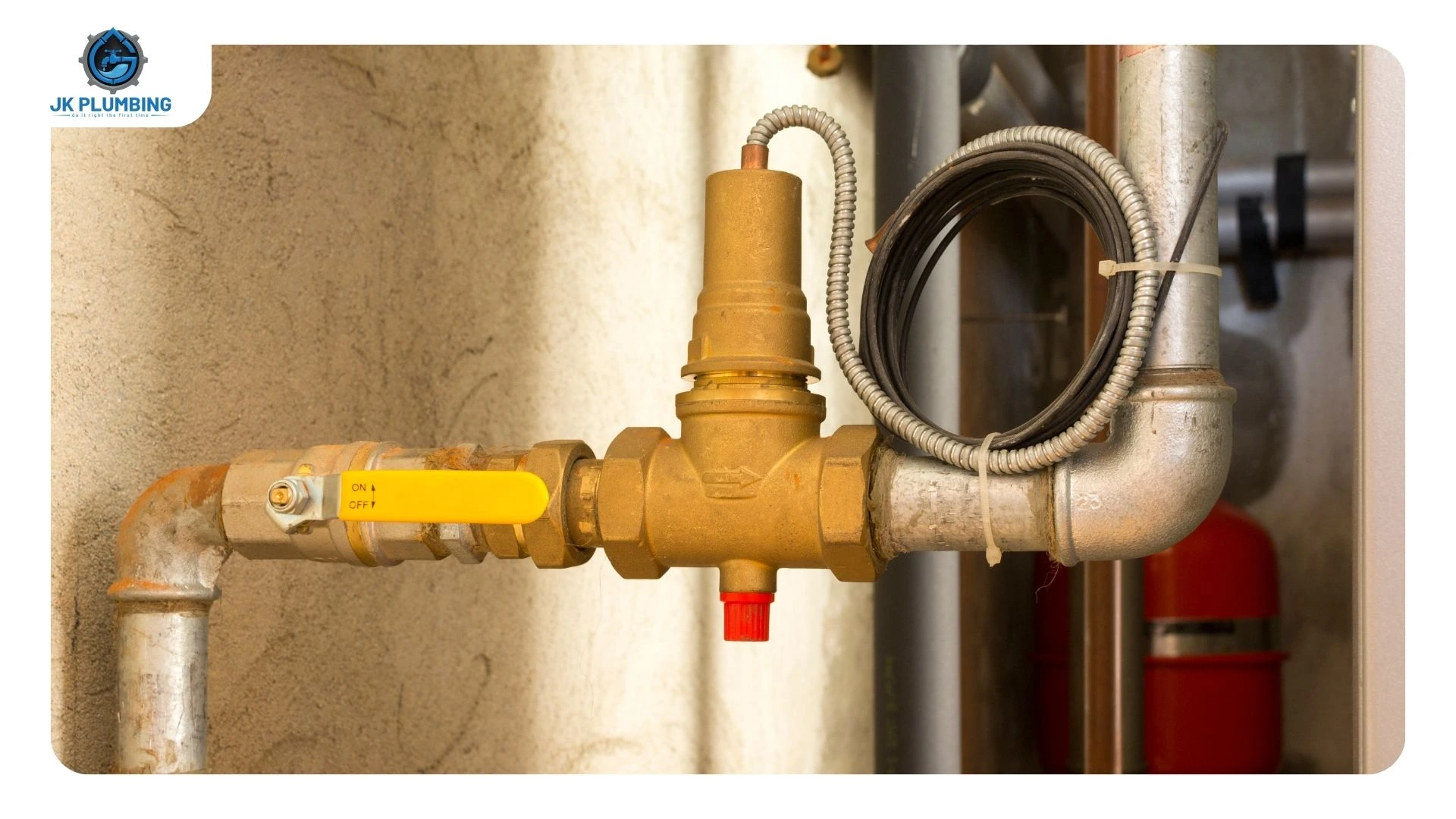
- The temperature and pressure relief valve and its discharge piping
- The gas connection, or the electrical connection on an electric unit
- Venting and combustion air
- The drain pan and its discharge, where required
- An expansion tank where a pressure regulator has created a closed system
Every one of those protects against something specific: explosion, fire, flooding or carbon monoxide. That’s the reason the permit exists rather than being revenue collection.
What happens if there’s no permit. Unpermitted work stays invisible until you sell. Home inspectors flag it routinely, and at that point you’re either retroactively permitting — which can mean corrections at the worst possible moment — or negotiating a credit against it. There’s also an insurance dimension: if an unpermitted installation causes damage, a carrier has grounds to question whether the work met code.
The strapping law, and the form you sign when you sell
This is the part most homeowners have never heard of, and it’s specific to California.
Health and Safety Code section 19211 requires all new and replacement water heaters, and all existing residential water heaters, to be braced, anchored or strapped to resist falling or horizontal displacement. Statewide. There’s no seismic-zone exception — it applies in San Mateo the same as everywhere else in the state. The statute defines a water heater for this purpose as a standard unit of not more than 120 gallons for which a pre-engineered strapping kit is readily available.
Section 19211 also has a point-of-sale requirement. The seller of any real property containing a water heater must certify in writing to the buyer that the bracing requirement has been complied with. In practice that certification shows up in the transfer disclosure statement or on a standard form used in California transactions.
So the chain is: you change the heater, the strapping either meets code or it doesn’t, and at some point you sign a document saying it does. That’s a reasonable argument for having the work permitted and inspected rather than taking your own word for it years later.
A related detail if you’re buying: ask for the certification, then look at the tank yourself. A signed certification and a correctly restrained water heater are not always the same thing.
How long will my water be shut off?
Less time than people expect, and usually not the whole house.
If the heater has isolation valves — a shutoff on the cold inlet and ideally the hot outlet — we close those and the rest of the house keeps running water throughout. You lose hot water, not water.
If it doesn’t, the main goes off while we work on the connections, which is typically a short window rather than the whole job. Adding isolation valves during the changeout is cheap and makes every future service call easier.
The full picture on timing: three to four hours on site for a like-for-like swap, then roughly 30 to 40 minutes after commissioning before a 50-gallon gas tank delivers usable hot water, and about an hour to full temperature. Electric is slower, closer to two hours. So a morning start generally means hot water by mid-afternoon.
What extends it: a heat pump conversion, missing code items that have to be put right, venting that doesn’t match, or an unusual unit needing a supplier run.
Can I switch from gas to electric during the change?
Yes, and a changeout is the natural moment to do it, because the old unit is coming out anyway.
What it adds: a 240V circuit, a condensate drain, and the panel capacity to carry it — which in San Mateo’s post-war housing is frequently the deciding factor rather than the plumbing. It also brings the electrical side into the permit.
What it gains: substantially lower energy use, and in San Mateo County the Peninsula Clean Energy rebates, which on a gas-to-heat-pump conversion often move the net cost more than the choice of unit does. Those programmes carry conditions about documentation and how the work is done, so establish eligibility before buying rather than afterwards. Our heat pump water heater page covers what those installs involve.
Do you haul away the old unit?
Yes — removal, haul-away and disposal are part of the job, and the tank goes for steel recycling rather than landfill. You also get decommissioning documentation, which you’ll need if you’re claiming a heat pump rebate. Worth asking any contractor whether they provide it, because losing a rebate over missing paperwork is an expensive way to find out.
Where we work
San Mateo — Baywood, San Mateo Park, Hillsdale, Shoreview, Sunnybrae and Bay Meadows — plus Burlingame, Millbrae, Foster City, San Carlos, Belmont and north through the Peninsula to South San Francisco and San Francisco.
Our water heater replacement page covers the service, and if you’re not yet sure the unit needs changing, what each symptom means separates the repairable faults from the terminal ones.
Frequently asked questions
Can I change my water heater myself in California?
Legally, often yes. Business and Professions Code section 7044 allows a property owner to do work on their own property rather than hiring a licensed contractor. But you still need a permit and an inspection, and the owner-builder declaration includes an acknowledgement that a structure not built entirely by licensed contractors cannot legally be sold within one year of completion. The gas connection, venting and combustion air are the parts where errors are dangerous rather than merely inconvenient.
Does a changeout require a permit and an inspection?
Yes, in California, including a like-for-like swap in the same spot. In San Mateo the permit goes through the city’s building division. The inspection verifies seismic strapping, the T&P valve and its discharge, the gas or electrical connection, venting and combustion air, the drain pan where required, and an expansion tank on a closed system.
How long will my water be shut off?
If the heater has isolation valves, the rest of the house keeps running water throughout — you lose hot water, not water. Without them, the main is off for a short window while the connections are made. The job itself is three to four hours for a like-for-like swap, plus 30 to 40 minutes before a 50-gallon gas tank gives usable hot water.
Do you haul away and dispose of the old unit?
Yes. Removal, haul-away and disposal are included, and the tank goes for steel recycling. You also receive decommissioning documentation, which is required when claiming a heat pump rebate through Peninsula Clean Energy.
Can I switch from gas to electric during the change?
Yes, and it’s the natural moment. It adds a 240V circuit, a condensate drain and the need for sufficient panel capacity, which is often the real constraint in older San Mateo housing. It also brings the electrical work into the permit. Peninsula Clean Energy rebates apply in San Mateo County, with conditions worth establishing before you buy.
Visit or Call Us
JK Plumbing
Adress:1008 Edwards Rd Burlingame, CA 94010
Phone: (415) 359-4588
Hours: Open 24 hours, seven days a week.
Serving San Francisco, South San Francisco, Daly City, Brisbane and the Peninsula.
CA License #1080266
RECENT POSTS
Water Heater Replacement in San Mateo: Do These in the Right Order
November 2, 2026
No Comments
Read More »