- Open 24 Hours Mon–Sat
- contact@jkplumbingsf.com
- +1 (415) 359-4588
- CA License #1080266
Lukewarm water everywhere, or hot water at one tap and not another, often has nothing to do with the heater. A worn shower cartridge or a failed mixing valve can mimic a dying unit closely enough that people replace a perfectly good tank. JK Plumbing diagnoses the whole system. Call (415) 359-4588.
By Alik, Owner & Master Plumber · Last updated October 2026
Start here: is it the heater, or everything after it?
One test sorts most of these, and you can do it yourself.
Run the hot tap closest to the water heater — usually a laundry sink, a garage tap, or whichever fixture sits nearest the unit. Let it run two minutes and feel the temperature.
- Properly hot there, disappointing elsewhere → the heater is fine. The problem is in the distribution: a mixing valve, a crossover, a fixture, or a long uninsulated run.
- Lukewarm there too → now the heater is a genuine suspect, along with a system-wide crossover.
- Hot at first, then cool within a couple of minutes → that’s a capacity or dip tube issue at the heater.
This takes three minutes and it decides which half of the system anyone should be looking at. Plumbers who skip it end up quoting replacements for fixture problems.
Why is the hot water only lukewarm?
Lukewarm everywhere, all the time, is different from running out. It usually means cold water is getting in somewhere, or heat is being lost before it arrives.
Crossover. Cold water entering the hot side through a failed valve somewhere in the house. The most common cause of persistent lukewarm water and the most commonly missed. Covered properly below.
A tempering or mixing valve. Many installations have a thermostatic mixing valve at the heater that blends cold into the outgoing hot to control delivery temperature. When one fails or drifts, you get lukewarm everywhere while the tank itself is perfectly hot.
Thermostat set low. Worth checking before anything else. Note that 120°F is the standard setting, and going much above it buys you scald risk rather than performance.
A failing gas control valve or a marginal element. On electric units, one failed element usually gives you “runs out fast” rather than lukewarm — but two weak elements, or a thermostat drifting, can produce genuinely tepid water.
Heat lost in the pipe run. More relevant in San Francisco than people expect. A deep, narrow Victorian or Edwardian floor plan can put the kitchen fifty feet from a basement heater, through uninsulated pipe in an unheated basement, in a city where the basement is cold most of the year. At low flow, water arrives noticeably cooler than it left.
Crossover: the fault that imitates a dying water heater
This deserves its own section because it’s the one we find after someone has already been quoted for a replacement.
A crossover is cold water leaking into the hot water system through a failed valve. The hot side is being continuously diluted, so you get lukewarm water, hot water that disappears quickly, and sometimes warm water coming out of a cold tap.
The usual culprits:
- A worn cartridge in a single-handle pressure-balance shower or tub valve. By far the most common.
- A failed thermostatic mixing valve at the heater.
- A tub spout diverter that no longer seals.
- A washing machine mixing valve, which fails quietly and is rarely suspected.
- A failed check valve on a recirculation loop.
How to find it yourself: close the cold water inlet valve on top of the water heater, then open a hot tap somewhere in the house. You should get a short run of water and then it should stop. If water keeps flowing indefinitely, cold is getting into the hot side somewhere — you have a crossover.
Narrowing it down from there means isolating fixtures one at a time, which is where it’s usually quicker to call someone. But knowing it’s a crossover rather than a failing heater changes the conversation entirely, and it’s generally a cartridge rather than a tank.
Why is hot water fine at one tap but not another?
If one fixture underperforms while the rest are fine, the fault is at that fixture or on its branch — not at the heater.
- The anti-scald limit stop. Single-handle shower valves have an adjustable rotational limit that caps how far toward hot the handle turns. They’re often set conservatively at installation, and they drift. This is the single most common reason one shower never gets properly hot while the rest of the house is fine.
- A worn cartridge at that fixture, which can also be the crossover point.
- A partially closed angle stop under a sink, sometimes nudged during cleaning or a previous repair.
- A clogged aerator or scaled cartridge restricting the hot side specifically, so the mix skews cold.
- Distance. The furthest fixture from the heater is the one that suffers first in a long run, particularly at low flow.
- Old galvanized branch pipe. In pre-war San Francisco homes, partial repiping is common — someone replaced the main runs and left a branch. A corroded galvanized branch restricts flow on the hot side at that fixture only.
Why does hot water run out faster than it used to?
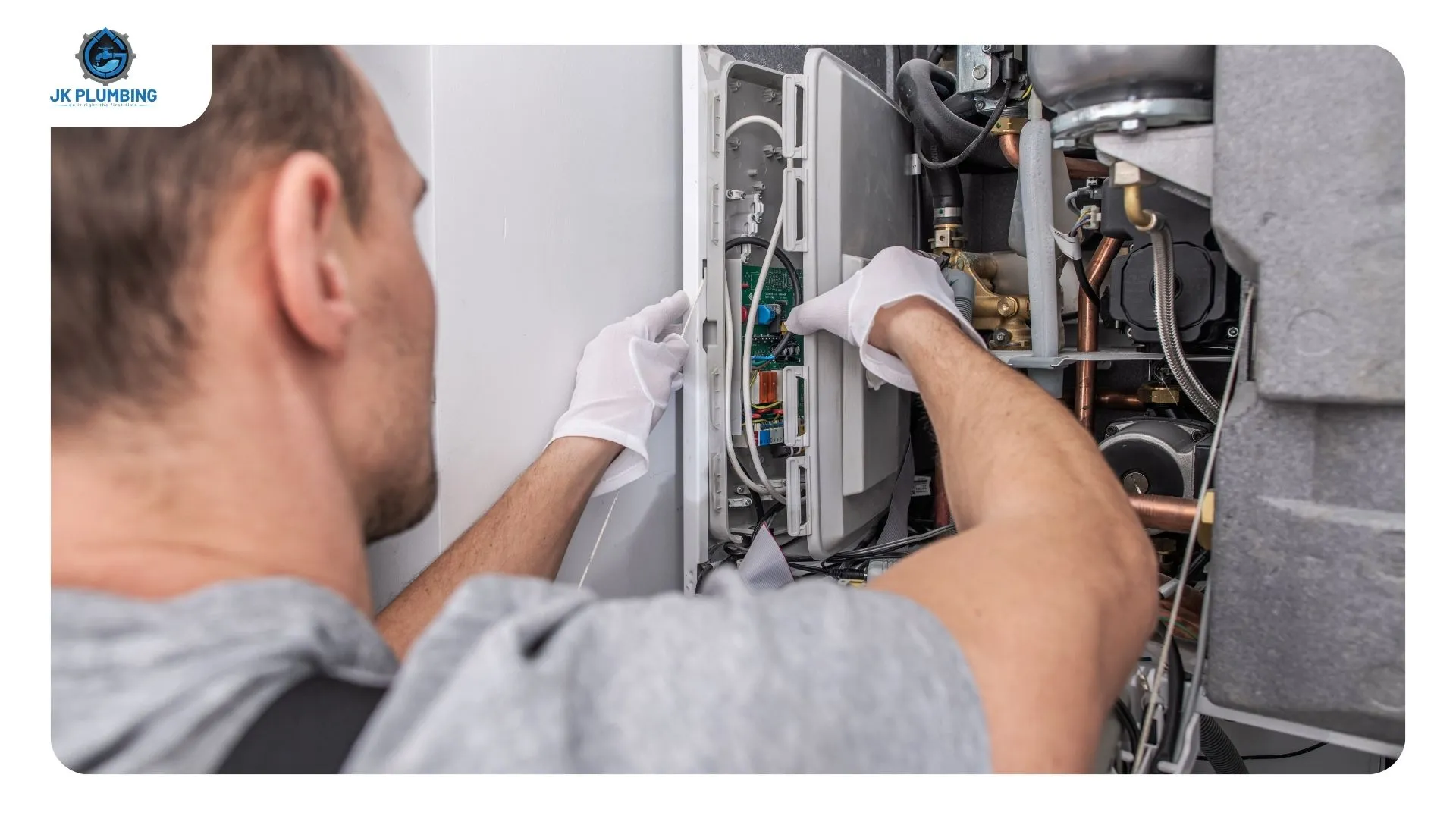
Three things cause most of this: a failed lower heating element on an electric unit, a cracked dip tube letting cold mix in at the top of the tank, or sediment occupying volume the tank no longer has. A crossover does it too.
That cluster of faults is covered in more depth in what each water heater symptom means in San Francisco, which walks through the heater-side diagnostics properly.
What you can check yourself before calling anyone
In order, and all of it safe to do.
- Check the breaker and the gas. On electric, confirm the breaker hasn’t tripped. On gas, confirm other gas appliances work — if the stove won’t light either, it isn’t the heater.
- Check the thermostat setting. 120°F is standard. If someone turned it down, that’s your answer. Don’t set it higher than 120 to compensate for another fault.
- Run the tap nearest the heater. The triage test above. It tells you which half of the system to suspect.
- Test for a crossover. Close the cold inlet at the heater, open a hot tap. If flow continues indefinitely, you have one.
- Compare fixtures. Note which are fine and which aren’t, and how far each is from the heater. A pattern by distance means pipe runs; a single outlier means that fixture.
- Check the aerator on any underperforming tap. Unscrew, rinse, refit. Costs nothing and fixes a surprising number of complaints.
- Look for the shower valve’s limit stop. Most single-handle valves have one behind the handle, and the manufacturer’s instructions show how to adjust it. If one shower is the only problem, check this before anything else.
- Look at the heater, don’t touch it. Note any error code, any water around the base, any rumbling. Write it down.
What not to do: don’t open gas valves, don’t dismantle the gas control, don’t work inside the electrical panel, and don’t drain the tank unless you know how to refill it without airlocking the system. If you smell gas, leave and call your utility before anyone else.
Where we work
San Francisco — the Sunset, the Richmond, Noe Valley, Bernal Heights, the Mission, Potrero Hill and Glen Park — plus Brisbane, Daly City, South San Francisco and down the Peninsula to Burlingame.
Our water heater repair page covers the service, and if the diagnosis does point at the unit, water heater replacement covers that route.
Frequently asked questions
Why is there suddenly no hot water at all?
On a gas unit, usually the pilot, thermocouple or gas control valve. On electric, a tripped high-limit reset, a failed upper element or a failed thermostat. Check the breaker and confirm other gas appliances work before calling — a tripped breaker is a common and free fix.
Why does the hot water run out faster than it used to?
Commonly a failed lower heating element, a cracked dip tube diluting the top of the tank, sediment taking up tank volume, or a crossover letting cold into the hot side. Household demand outgrowing the tank size is the other possibility, and no repair fixes that one.
Is the problem the unit itself or the pipes?
Run the hot tap nearest the heater for two minutes. Properly hot there but not elsewhere means the heater is fine and the problem is in distribution — a mixing valve, a crossover, a fixture or a long uninsulated run. Lukewarm even at the nearest tap puts the heater back in the frame.
Why is hot water fine at one tap but not another?
Almost always a fault at that fixture or on its branch. The anti-scald limit stop on a single-handle shower valve is the most common cause, followed by a worn cartridge, a partially closed angle stop, a clogged aerator, or an old galvanized branch left behind by a partial repipe. Distance from the heater matters too.
What can you check yourself before calling someone out?
The breaker and gas supply, the thermostat setting, the temperature at the tap nearest the heater, and a crossover test — close the cold inlet at the heater and open a hot tap; continued flow means cold is entering the hot side. Also check aerators and the shower valve limit stop. Avoid gas valves, the electrical panel, and draining the tank.
Visit or Call Us
JK Plumbing
Adress:1008 Edwards Rd Burlingame, CA 94010
Phone: (415) 359-4588
Hours: Open 24 hours, seven days a week.
Serving San Francisco, South San Francisco, Daly City, Brisbane and the Peninsula.
CA License #1080266
RECENT POSTS
Hot Water Heater Replacement in San Francisco: Tank, Tankless or Upgrade?
October 29, 2026
No Comments
Read More »
Water Heater Replacement Near Me: San Francisco and Pacifica
October 28, 2026
No Comments
Read More »