- Open 24 Hours Mon–Sat
- contact@jkplumbingsf.com
- +1 (415) 359-4588
- CA License #1080266
A tub to shower conversion in San Francisco typically runs from around $6,000 for a straightforward same-footprint swap to $20,000 or more for a curbless, accessible build in a pre-war home. The spread comes down to three things: the drain, the joists, and what the permit drags along with it. JK Plumbing quotes after measuring, not before.
By Alik, Owner & Master Plumber · Last updated September 2026
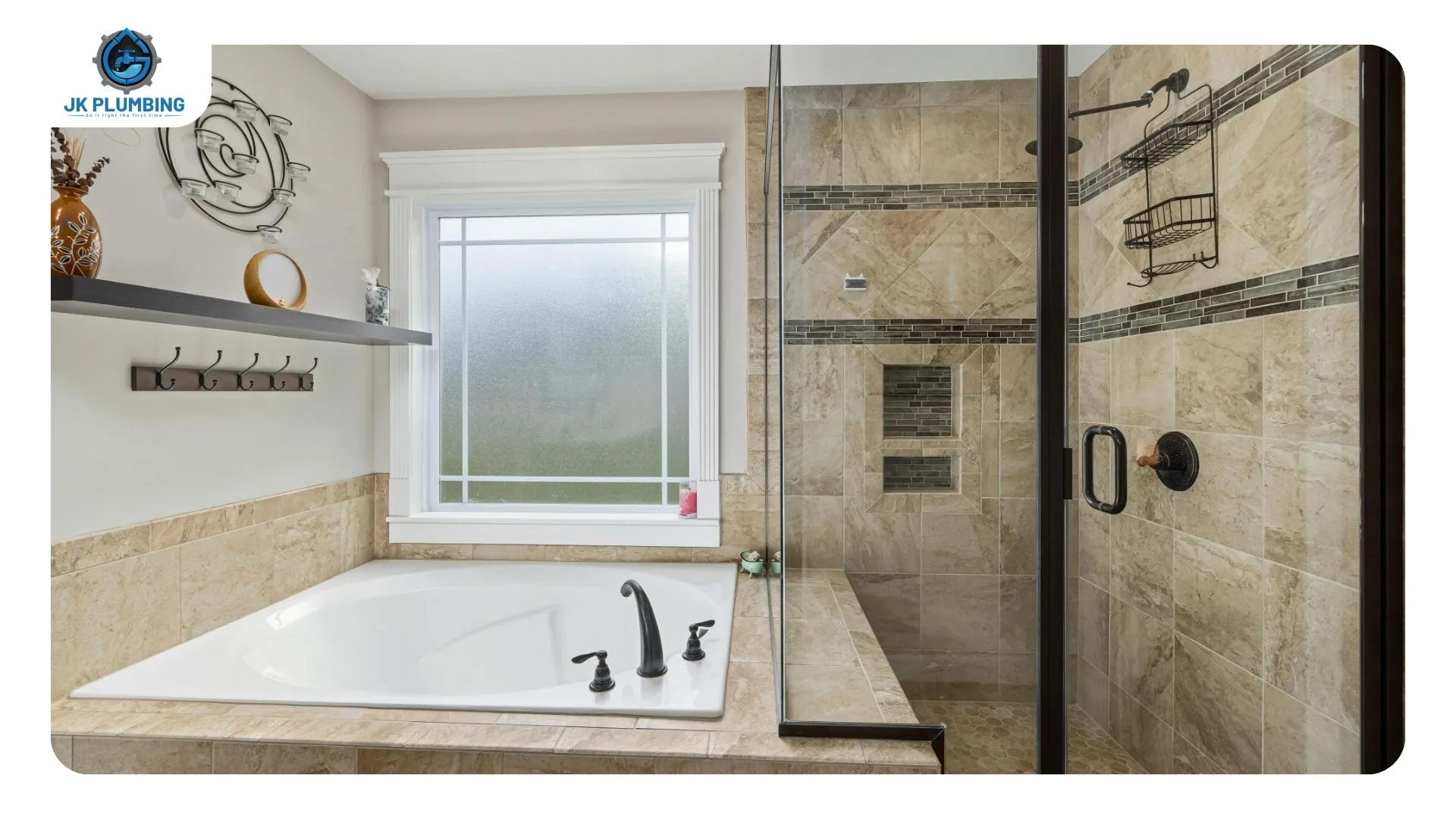
The drain is the part nobody mentions
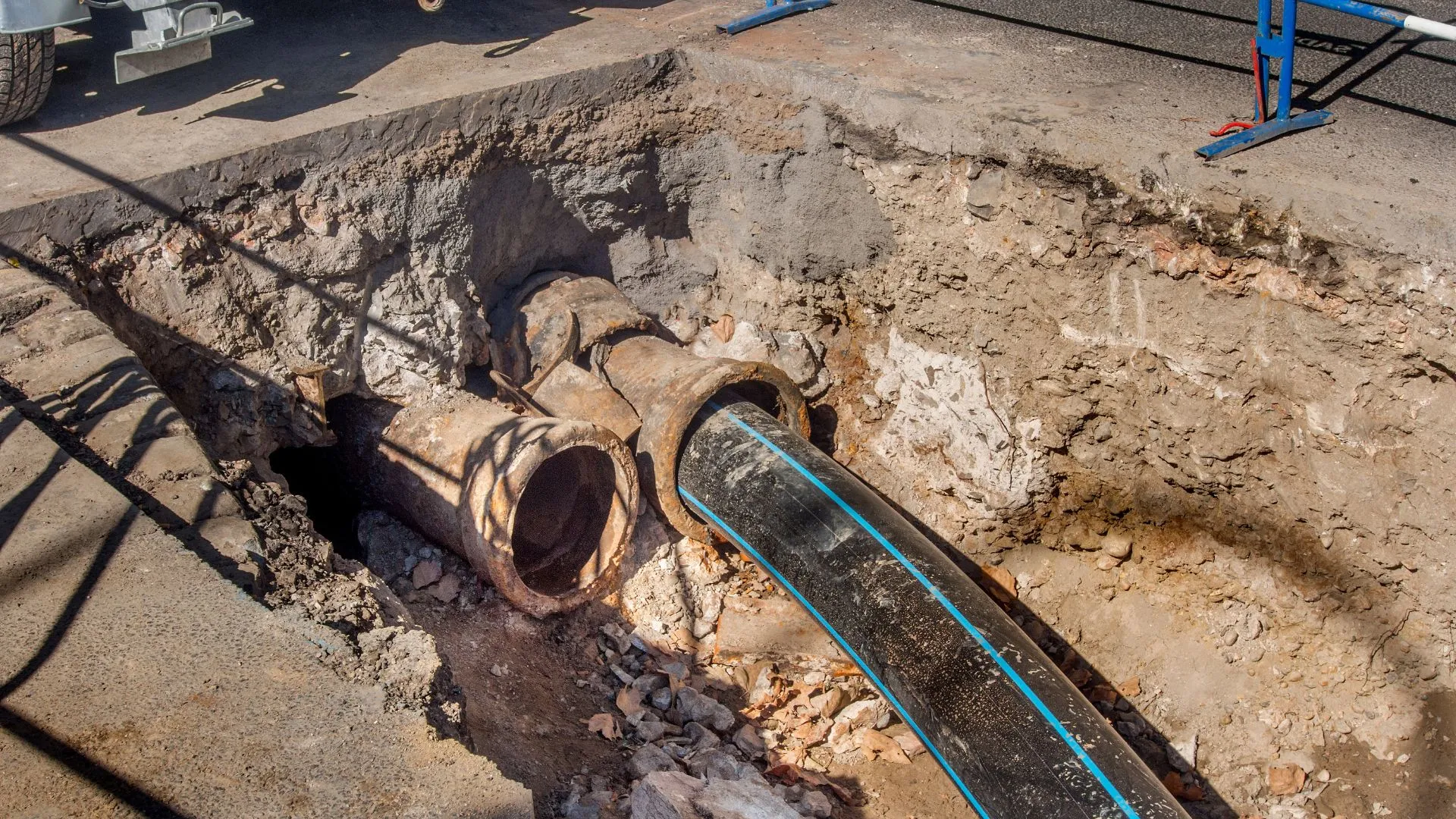
Here’s the thing that separates a real conversion quote from a one-day-install brochure. A bathtub drains through a 1½-inch waste line. Under the California Plumbing Code, a shower drain outlet has to be not less than 2 inches in diameter. So a tub to shower conversion is not a fixture swap. It’s a drain replacement with a fixture on top.
In a pre-war San Francisco home that means opening the floor, and often the ceiling below, to get at a cast iron waste line that’s been in place since the building went up. Whether your joists have the depth to accept a 2-inch trap and the fall it needs is the single biggest variable in the whole job — bigger than tile choice, bigger than glass.
It matters twice as much if you want curbless. A zero-threshold shower needs the pan recessed below the surrounding floor, or a linear drain set at the wall with the slope built into a shallower assembly. Both need room in the floor structure that a 1920s Edwardian in the Inner Richmond does not automatically have. Sometimes the answer is a low-profile threshold instead of a true curbless entry, and an honest contractor tells you that at the measuring stage rather than mid-demolition.
This is also why the national one-day-install franchises quote so fast and so cheap. Dropping an acrylic surround into an existing footprint over an existing 1½-inch drain avoids all of the above. It is a different product than a code-compliant shower, and in an older San Francisco building the difference shows up in a failed inspection or a ceiling stain downstairs.
Can you convert a tub in a small or older San Francisco bathroom?
Usually yes, and the code is more accommodating here than people expect.
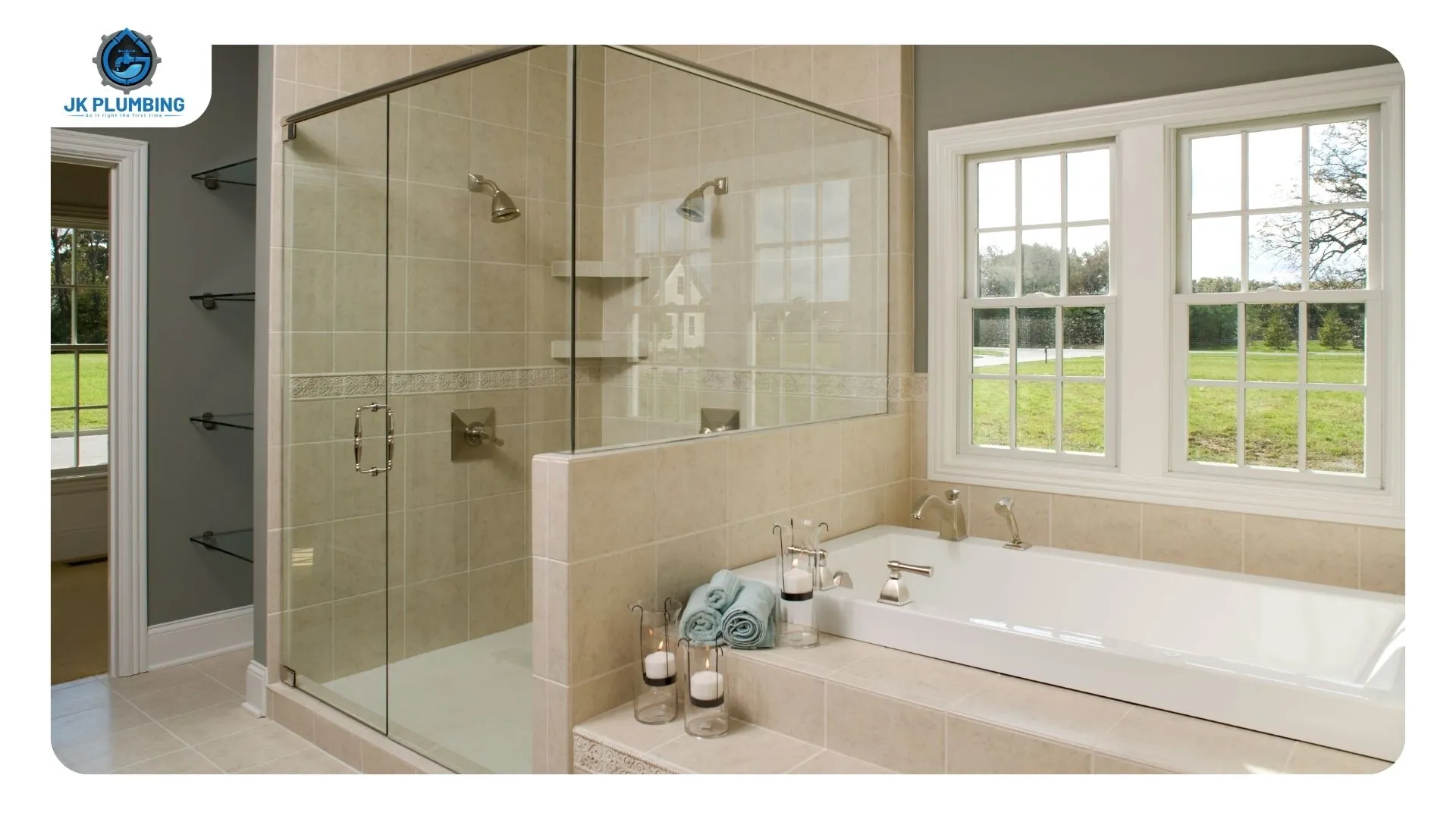
Under CPC 408.6, a shower compartment needs a minimum finished interior of 1,024 square inches and must be capable of encompassing a 30-inch circle, maintained up to 70 inches above the drain. That sounds tight for a small SF bathroom until you read the exception: the minimum area and dimension requirements don’t apply to a shower receptor measuring at least 30 inches by 60 inches.
A standard alcove bathtub is 30 by 60. So the footprint your tub already occupies is, by code, a legitimate shower footprint. That’s the good news, and it’s why same-footprint conversions are the most common job we do in this city.
Where it gets tighter is the door. CPC 408.5 requires a shower door to provide at least a 22-inch clear opening and to swing outward — which in a narrow San Francisco bathroom can put the door swing into the toilet clearance. Fixed glass panels or a door-free walk-in layout often solve it, and that’s a design decision worth making before anything gets demolished.
Walls also need a nonabsorbent surface to 72 inches above the floor, and any glazing within 60 inches of the shower needs to be tempered safety glass.
Building a curbless or accessible walk-in shower
This is the work worth doing properly, and it’s the reason most of our conversion clients call in the first place — someone in the house is finding it harder to step over a tub wall.
A few things we plan around:
Blocking goes in before the tile. Grab bars need solid backing in the wall, and the time to install it is while the studs are open. Adding it later means opening the wall again. We put blocking in even when the client isn’t ready for bars yet, because it costs almost nothing during the rough-in and a great deal afterwards.
Fold-down seats are allowed to protrude. CPC 408.6 specifically permits fold-down seats in accessible shower stalls to intrude into the required 30-inch circle. That’s a useful allowance in a small bathroom, and one a lot of contractors don’t know.
A curbless shower is a wet location. Without a threshold to contain water, the whole area is treated as a wet location under the building, residential, and electrical codes, which changes waterproofing extent and fixture selection. Ideally the waterproofing extends across the entire bathroom floor; at minimum it should run well past the threshold line.
DBI now handles accessibility review in-house. The Department of Building Inspection conducts disabled access review as part of its own plan review, so projects that aren’t managed by Public Works no longer route separately through the Mayor’s Office on Disability.
Converting a jetted or whirlpool “hot tub” style bathtub
A lot of Bay Area homes remodeled in the late eighties and nineties got an oversized jetted tub — the corner unit with the pump and the air jets that nobody has filled in a decade. Converting one of those to a walk-in shower is a different job than converting a standard alcove tub, and usually a better one.
You gain more space, because these tubs are typically far larger than a 30 by 60 footprint. But you’re also dealing with a pump, a dedicated electrical circuit, and the motor access panel the code requires — CPC 402.10 calls for a minimum 12 by 12 inch access to a whirlpool tub motor. All of that gets decommissioned and removed properly, not abandoned in the wall.
Worth being clear on terminology: an outdoor spa or hot tub on a deck is a separate job involving gas, electrical, and sometimes a dedicated water line. That’s a removal, not a conversion. If that’s what you have, call and we’ll scope it as its own project.
Permits, and the SB 407 trigger nobody warns you about
Two things catch San Francisco homeowners out.
First, the permit and who can pull it. San Francisco requires a permit before renovating or replacing bath fixtures, with exemptions listed in SF Building Code Section 106a.2 — and to apply for a kitchen or bath permit online, the contractor must hold a B license and be registered with the City of San Francisco. Plumbing and electrical trade permits are separate and are pulled by the registered licensed subcontractors, applied for in person, or handled as part of an over-the-counter interior remodel permit. Ask any contractor bidding your job which permits they are pulling and under which license. It’s a fair question and the answer tells you a lot.
Second, SB 407. Under California Civil Code sections 1101.1 through 1101.8, any residential property built and available for use on or before January 1, 1994 must have its non-compliant plumbing fixtures replaced with water-conserving fixtures when the property undergoes alterations or improvements. Read that again with San Francisco’s housing stock in mind — the overwhelming majority of homes in this city predate 1994. A bathroom conversion can therefore trigger fixture compliance beyond the bathroom you’re actually remodeling. It is not usually expensive. It is extremely annoying to discover at final inspection.
While we’re on water: California caps showerheads at 1.8 gallons per minute at 80 psi, and where multiple heads serve one compartment the combined flow can’t exceed that unless the shower is designed so only one outlet runs at a time. If you’re picturing a rain head plus a handheld running together, that’s the constraint to design around. Bathroom remodels also require an exhaust fan of at least 50 CFM ducted to the exterior, switched separately from the lighting.
Is it worth converting a tub to a shower?
For most households, yes — and the resale worry is usually overstated, with one real exception.
Removing your only bathtub in a two-or-more-bedroom family home is the case where agents genuinely push back, because a slice of buyers with small children screen for a tub. If you have a second full bathroom with a tub, that objection largely disappears. In a one-bathroom flat or a condo aimed at professionals or downsizers, a well-built walk-in shower frequently shows better than a tired tub surround.
The stronger argument is the one that isn’t about resale at all. Stepping over a 15-inch tub wall onto a wet surface is how a large share of household bathroom injuries happen, and an accessible shower with proper blocking and a slip-resistant floor lets someone stay in their home considerably longer. Weigh that against a hypothetical future buyer’s preference.
If you’re undecided, get the measurement done first. Whether a true curbless build is even feasible in your floor structure often settles the question on its own.
Where we work in San Francisco and on the Peninsula
We run bathroom and shower work San Francisco-wide, including Noe Valley, the Inner and Outer Richmond, the Sunset, Bernal Heights, Glen Park, Pacific Heights, the Marina, West Portal, and the Excelsior, plus Daly City and down the Peninsula through Burlingame and San Mateo.
Related reading on the plumbing side of a bathroom project: our shower and bathroom plumbing services page covers valve replacements and rough-ins, and if slow drainage is part of why you’re remodeling, drain cleaning is worth ruling out first.
Tub to shower conversion FAQ
How much does a tub to shower conversion cost in San Francisco?
As of September 2026, a same-footprint conversion typically starts around $6,000, while a curbless or fully accessible build in an older home can reach $20,000 or more. The biggest cost drivers are upsizing the 1½-inch tub drain to the 2-inch shower drain the code requires, whether your floor structure can accept a recessed or linear drain, and what the permit brings with it. We quote in writing after an on-site measurement.
Do you offer free conversion estimates?
Yes. We come out, measure the space, check the floor structure and the existing waste line, and give you a written scope and price with no obligation. For a conversion there’s no useful way to quote over the phone — what’s under the floor decides too much of the job.
Can you build a curbless or accessible walk-in shower?
Yes, where the floor structure allows it. A true zero-threshold entry needs the pan recessed below the surrounding floor or a linear drain assembly, which requires depth in the joists. Where that depth isn’t available we build a low-profile threshold instead. We install grab bar blocking during rough-in as standard, and CPC 408.6 permits fold-down seats to protrude into the required 30-inch circle in accessible stalls.
Will removing the only bathtub affect resale value?
It can, in a family-sized home where it leaves no tub at all, because some buyers with young children screen for one. If a second bathroom has a tub, the concern mostly goes away. In one-bathroom flats and condos, a well-built walk-in shower often presents better than a dated tub surround. An agent who knows your specific micro-market is the right person to weigh this.
Can you convert a tub in a small or older San Francisco bathroom?
Usually yes. CPC 408.6 requires a shower compartment of at least 1,024 square inches encompassing a 30-inch circle, but exempts receptors measuring at least 30 by 60 inches — the footprint a standard alcove tub already occupies. The tighter constraint in small SF bathrooms is the door, which must give a 22-inch clear opening and swing outward. A fixed panel or a walk-in layout usually solves it.
Visit or Call Us
JK Plumbing 1008 Edwards Rd Burlingame, CA 94010 Phone: (415) 359-4588 Hours: Monday–Saturday: Open 24 hours · Sunday: Closed CA License #1080266
Serving San Francisco and surrounding areas including Noe Valley, the Richmond, the Sunset, Bernal Heights, Glen Park, and West Portal, plus Daly City, Burlingame, and San Mateo.
Where we work in San Francisco and on the Peninsula
We run water heater repair San Francisco-wide, including the Sunset, Inner and Outer Richmond, Noe Valley, Bernal Heights, the Mission, Potrero Hill, Glen Park, the Excelsior, Pacific Heights, the Marina, and SoMa, plus Daly City.
From the same Burlingame dispatch we cover the Peninsula corridor. If you’re south of the county line, our South San Francisco water heater repair visit guide walks through what a service call looks like, water heater repair in Palo Alto covers the hard-water side of the peninsula, and how often you need a water heater flush in San Mateo is the maintenance answer for everything south of Burlingame.
Water heater repair FAQ
How much does water heater repair cost in San Francisco?
Most component repairs run roughly $180 to $600 as of September 2026. A standard 50-gallon tank replacement is typically $2,800 to $4,500 installed; tankless and heat pump units cost more. Permit fees and code-required parts such as expansion tanks are quoted separately, in writing, before work starts.
Do you offer same-day water heater repair?
Yes. We answer 24 hours a day Monday through Saturday and dispatch same day for no hot water, leaking tanks, and gas-smell calls. Closed Sundays for non-emergency work. Non-emergency jobs get a two-hour arrival window with a text when the truck is en route.
Should I repair or replace my water heater?
Repair a component failure on a unit under about eight years old. Replace if the tank is leaking, the unit is past ten to twelve years, or the repair quote approaches half the cost of a new install. In San Francisco, add one question: does a current-spec tank still fit the original closet? That answer sometimes decides it for you.
Do you check seismic strapping when servicing a water heater?
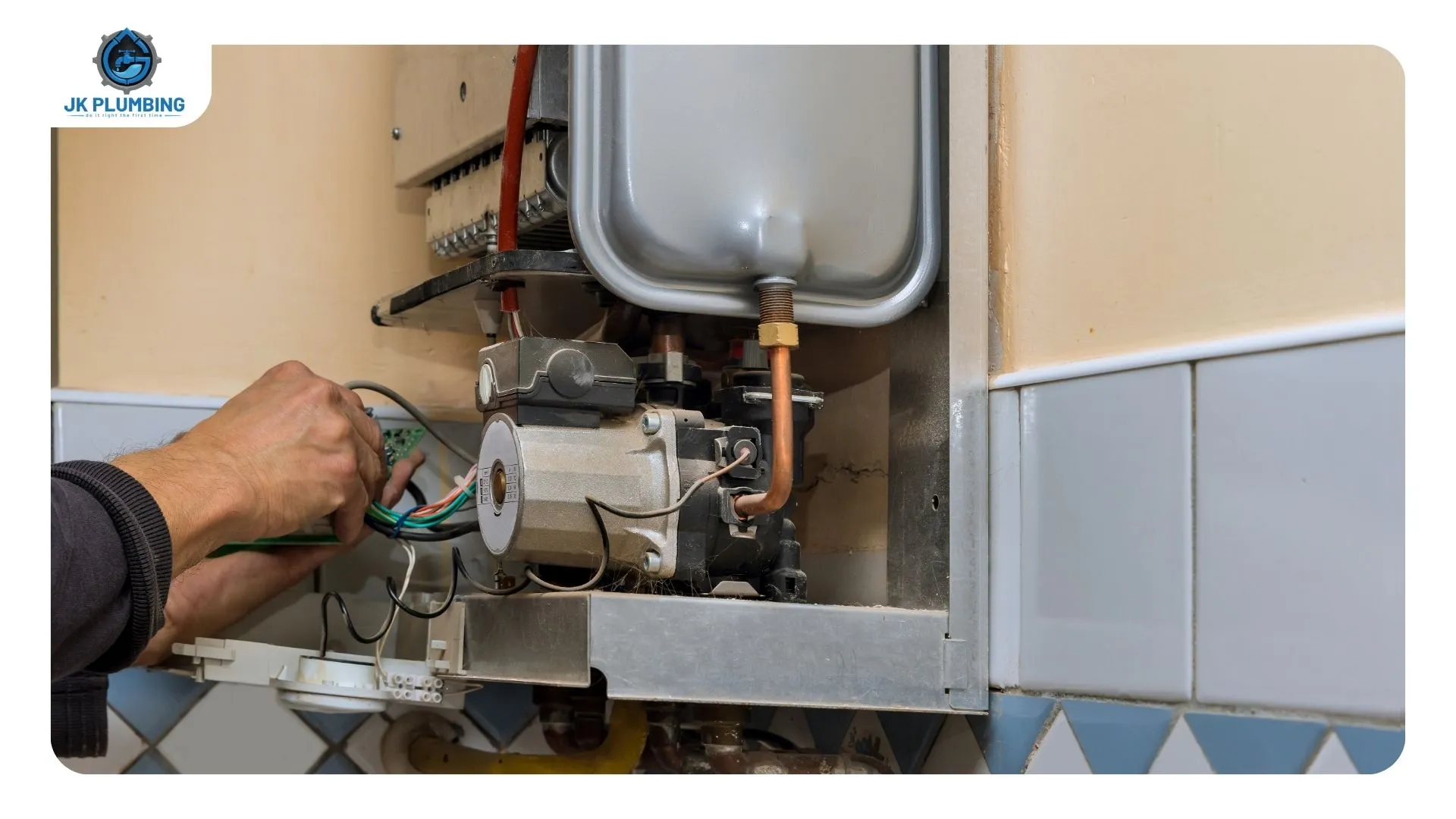
Yes, on every visit — it’s the first thing a San Francisco inspector looks at on a replacement. California requires two straps on a tank water heater, one in the upper third and one in the lower third, with the lower strap positioned above the controls and anchored into framing. Drywall anchors fail inspection every time. If we find a unit strapped incorrectly, we tell you, whether or not you hired us for that.
Are you a bonded and insured plumbing contractor?
Yes. JK Plumbing holds CA Contractor’s License #1080266, active continuously since 2007, with the contractor’s bond California requires plus general liability and workers’ compensation. California requires a licensed contractor for plumbing work over $500. Certificates of insurance are available on request for HOAs and property managers, and you can verify the license yourself on the CSLB site before we start.
Visit or Call Us
JK Plumbing
Adress:1008 Edwards Rd Burlingame, CA 94010
Phone: (415) 359-4588
Hours: Monday–Saturday: Open 24 hours · Sunday:
Closed CA License #1080266
Serving San Francisco and surrounding areas including the Sunset, Richmond, Noe Valley, Bernal Heights, the Mission, and Potrero Hill, plus Daly City, Burlingame, San Mateo, and Palo Alto.
RECENT POSTS
How Much Does a Tub to Shower Conversion Cost in San Francisco?
September 21, 2026
No Comments
Read More »