- Open 24 Hours Mon–Sat
- contact@jkplumbingsf.com
- +1 (415) 359-4588
- CA License #1080266

For a standard single-fixture clog a bathroom sink, kitchen sink, tub, or shower cleared with a cable JK Plumbing quotes a flat rate over the phone before we arrive. Main line work and hydro jetting are priced separately because they need different equipment and a diagnosis first. What changes the number most in San Francisco is whether the clog is even in your line.
By Alik, Owner & Master Plumber · Last updated September 2026
What actually drives the price
Three things, in order of how much they move the number.
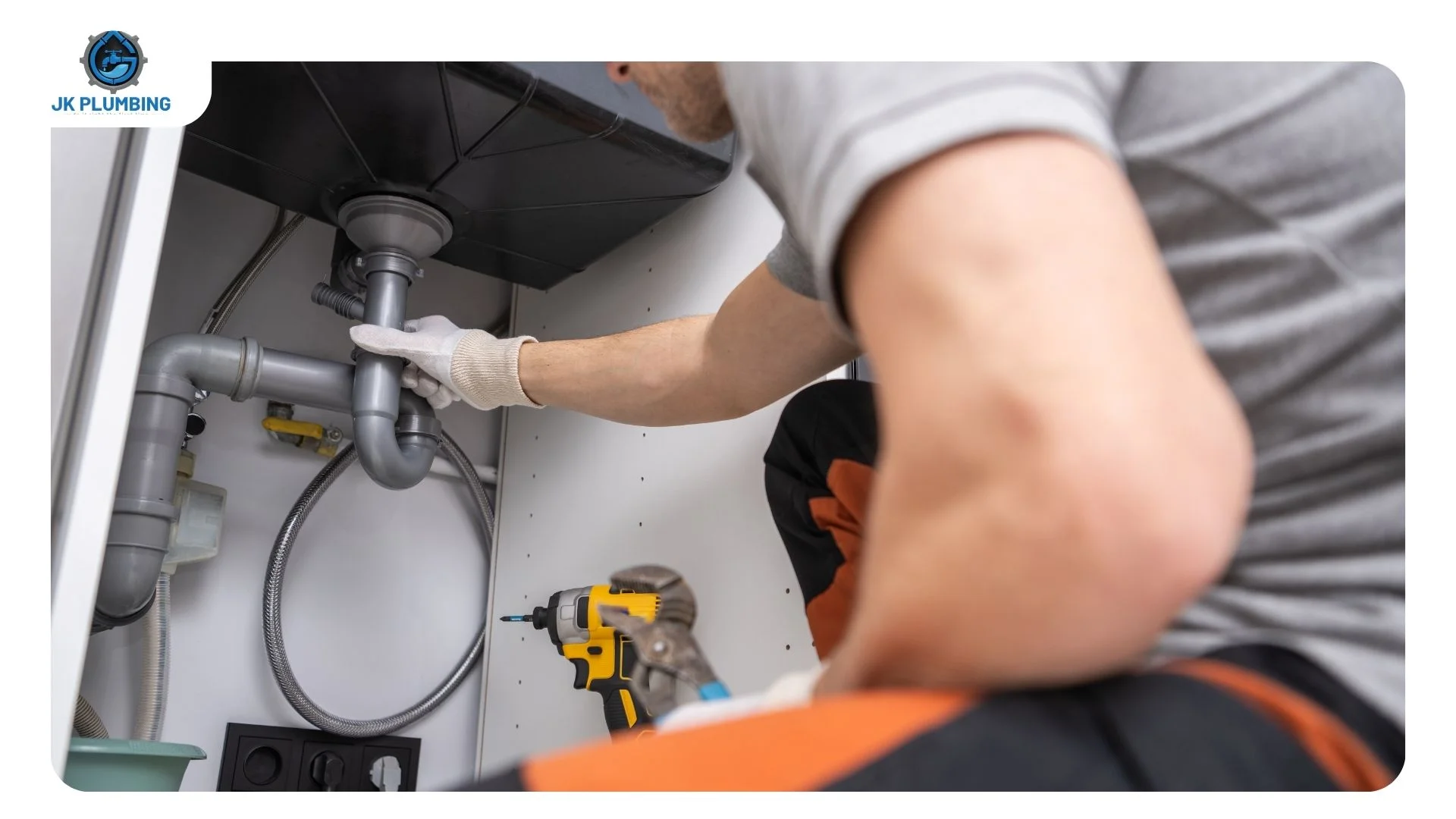
Which line it is. A single fixture with a local obstruction is a defined job with a flat rate. A branch line serving several fixtures is bigger. A main line blockage is bigger again, and may need a camera before anyone commits to a method.
How the line is accessed. A kitchen trap under a cabinet is easy. A main line on a property with no usable cleanout means going through a pulled toilet or a roof vent — slower, and it costs more every time. Our post on sewer cleanout installation covers why that surcharge is worth removing permanently.
Cable or jetter. Cabling clears the obstruction. Jetting scours the pipe wall. Different equipment, different price, and the right choice depends on what’s actually in there.
Our drain cleaning service page explains how we build a quote and what we ask on the phone. Call (415) 359-4588 and describe the symptoms.
When is a clog a main line problem rather than a single drain?
The rule is simple and you can apply it before anyone arrives: count the fixtures, and find the lowest one.
A single slow sink is a local clog, usually within a few feet of the trap. But if two or more fixtures are affected, and the lowest drain in the building is the one flooding, the blockage is downstream of where those lines join — a branch or the main.
Watch for cross-talk, which is the clearest signal of all. Flushing a toilet makes the tub gurgle. Running the washing machine pushes water up through a floor drain. That’s air being displaced past a restriction, and it means the problem is shared between fixtures rather than sitting in one of them.
There’s one San Francisco-specific exception worth knowing: several bathroom fixtures draining slowly at once, with no backup and no smell, often points at the vent stack rather than a clog. A blocked vent starves the drains of air and everything slows down together. It looks like a main line problem and isn’t one. We check the vent before assuming the worst.
For the full diagnostic picture, see our guide to main sewer line cleaning in San Francisco.
Shared stacks: when the clog isn’t in your unit
This is the situation the generic advice never covers, and in San Francisco it’s everywhere. This city’s housing stock is dominated by flats, duplexes, triplexes, and small apartment buildings, most of them built before the war with shared waste stacks — one vertical pipe collecting the kitchen or bathroom drains of every unit above it.
When a shared stack blocks, water backs up into the lowest connected fixture, which means:
- The unit that floods is rarely the unit that caused it. A ground-floor tenant gets sewage in the shower because of what went down a drain two floors up.
- The flooding fixture tells you where the blockage is. It sits just below the lowest fixture that’s backing up. That’s a free, precise diagnostic before anyone opens anything.
- Clearing the lowest unit’s trap does nothing. The obstruction is in the stack, not the fixture. If a clog returns within days of being cleared, and the fixture is on a lower floor of a multi-unit building, a shared stack is the first thing to rule out.
Getting this right early matters, because the first instinct in a flat is to treat it as the affected unit’s problem. If it’s the stack, that’s a building repair — and diagnosing it as a unit problem wastes a service call and delays the actual fix.
We do a significant share of our work for property managers and multi-unit owners across San Francisco, and the pattern is consistent: buildings that get their stacks jetted on a schedule stop having emergencies at 11pm on holiday weekends.
Who pays in a San Francisco flat or apartment building?
The honest answer is that a plumber determines the cause, and the cause is what decides who pays. Here’s the framework both sides are working from.
If you own or manage the building: California Civil Code sections 1941 and 1941.1 require plumbing facilities to conform to the law in effect when installed and to be maintained in good working order, and require the landlord to repair dilapidations during a tenancy. A backed-up drain that won’t clear falls inside that. A shared stack blocked by grease accumulated across multiple units, by roots, or by scale in old cast iron is a building system problem — it isn’t attributable to one tenant, and it’s the owner’s to fix. Hiring a management company doesn’t shift that responsibility.
If you rent: Civil Code 1941.2 requires tenants to operate plumbing fixtures properly and keep them clean and sanitary. A clog caused by what a specific tenant put down a specific drain can fall to that tenant, and most leases say so explicitly for blockages not caused by defective plumbing or roots. Where it isn’t your fixture and isn’t your doing — which a stack blockage generally isn’t — it’s a repair request, not a bill.
In practice the dispute is almost always about cause, which is exactly what a camera settles. We document what we find and where, so both sides are working from the same evidence rather than from assumptions. What we don’t do is adjudicate the lease — for that, San Francisco tenants and owners can go to the Rent Board or a tenant counselling service, and nothing here is legal advice.
Why does my drain keep clogging after it’s been cleared?
Because clearing a blockage and cleaning a pipe are different things. A cable bores a hole through the obstruction and restores flow. Everything coating the pipe wall stays, so the line closes up again on a timeline set by whatever is feeding it.
Four causes, and each has a different answer:
Grease. The classic kitchen recurrence. It cools and coats horizontally, right where the line leaves the cabinet and turns. Cabling opens a channel through it; jetting removes it.
Scale in cast iron. Pre-1980 San Francisco buildings are full of cast iron drains that have thinned and scaled internally over sixty years. The effective diameter is a fraction of the original. Nothing short of descaling changes that.
Roots. Only in the main line, not in a fixture drain. Jetting removes the mass but doesn’t close the clay joint or corrosion failure they entered through, so growth returns.
Wipes and what goes down the toilet. San Francisco runs a combined sewer system, and so-called flushable wipes don’t break down anywhere along it. In a shared stack they’re a recurring cause, because it only takes one unit’s habits to affect everyone below.
If a line has been cleared twice in a year, the third visit shouldn’t be another clearing. Get a camera in it.
Cabling, hydro jetting, and camera work
Yes, we use both, and we’ll tell you which one your line needs rather than defaulting to the more expensive option.
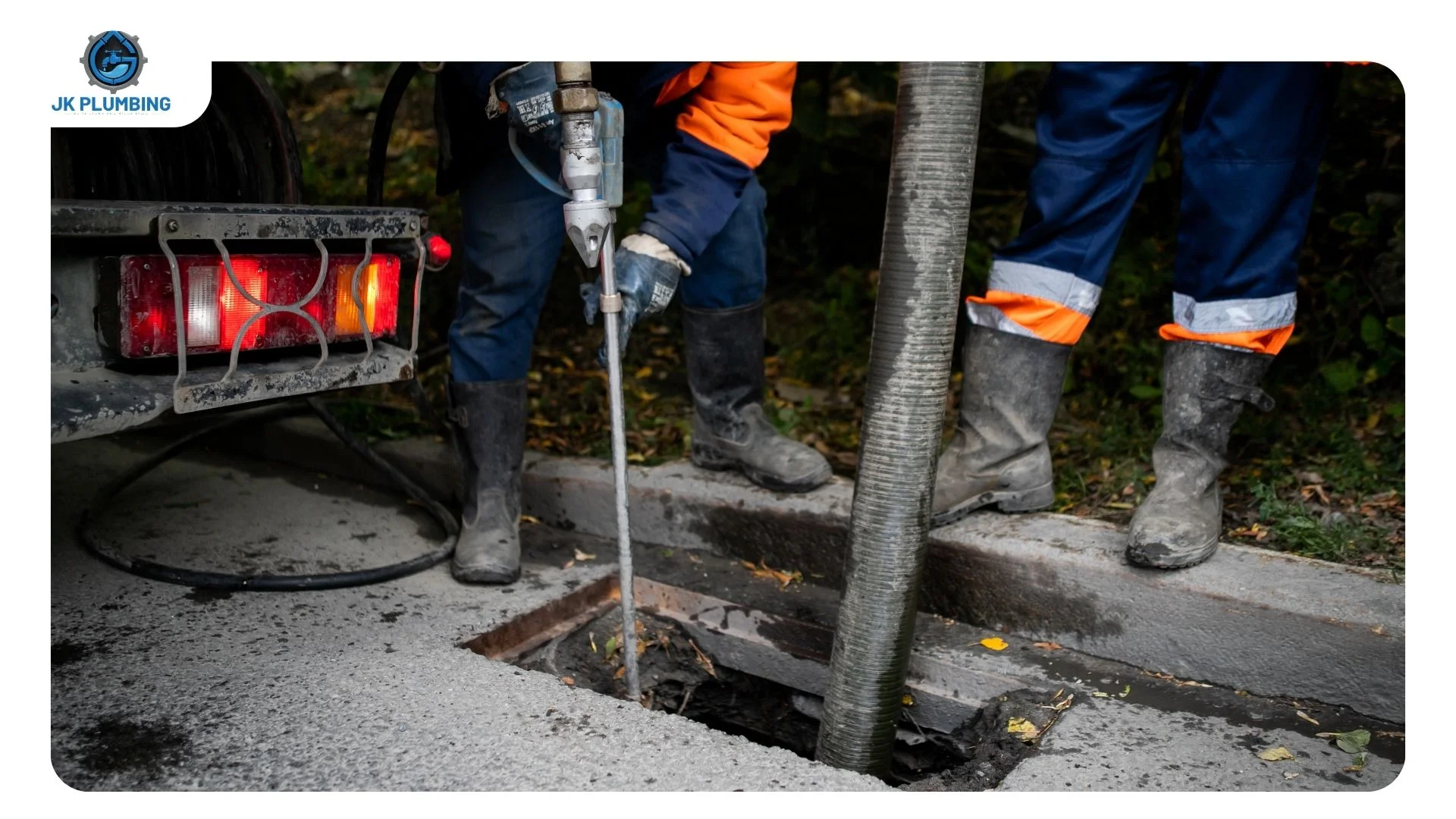
Cabling is right for a discrete obstruction in an otherwise sound line. Hydro jetting is right when the pipe wall itself is the problem — grease coating, scale, root mass, or a line that keeps closing after being cabled. It’s also the standard approach for restaurant and commercial kitchen grease lines and for shared residential stacks on a maintenance schedule.
A camera makes the choice honest. On a first-time clog in a known-good line it’s often unnecessary. On a recurrence, it’s the difference between fixing the problem and selling you the same visit repeatedly.
Same-day drain cleaning across San Francisco
We answer 24 hours a day Monday through Saturday and dispatch same day, closed Sundays for non-emergency work. Active backups get priority; routine calls get a two-hour arrival window and a text when the truck is on the way.
We work across San Francisco — the Mission, Noe Valley, the Inner and Outer Richmond, the Sunset, Bernal Heights, Potrero Hill, Pacific Heights, Nob Hill, SoMa, and the Excelsior — plus Daly City, South San Francisco, Burlingame, and San Mateo. Property managers with multiple buildings can call the same number and we’ll coordinate across sites.
Drain cleaning FAQ
How much does drain cleaning cost in San Francisco?
For a standard single-fixture clog cleared with a cable, we quote a flat rate over the phone before arriving. Main line work and hydro jetting are priced separately because they require different equipment and usually a diagnosis first. The biggest cost variables are which line is blocked, how it can be accessed, and whether the property has a usable cleanout.
Do you offer same-day drain cleaning?
Yes. We answer 24 hours a day Monday through Saturday and dispatch same day, with priority given to active backups. Closed Sundays for non-emergency work. Routine calls get a two-hour arrival window with a text when the truck is en route.
Several fixtures are backing up at once — is that a main line issue?
Usually yes, particularly if the lowest drain in the building is the one flooding and you’re seeing cross-talk between fixtures. One exception: several bathroom fixtures draining slowly together, with no backup and no smell, often points at a blocked vent stack rather than a clog. In a flat or apartment building, a third possibility is a shared waste stack, where the blockage sits just below the lowest fixture that’s backing up and may have nothing to do with your unit.
Do you use hydro jetting as well as cabling?
Both. Cabling suits a discrete obstruction in a sound line. Hydro jetting suits grease coating, scale in old cast iron, root mass, shared stacks on a maintenance schedule, and commercial kitchen grease lines. We recommend based on what the line shows, not on which service costs more.
Why does my drain keep clogging after being cleared?
Because cabling opens a channel through a blockage without removing what’s coating the pipe wall. Grease, cast iron scale, and root growth all rebuild on their own timeline. In a multi-unit building, a fast recurrence in a lower-floor fixture often means the problem is in a shared stack rather than your line. After a second clearing in twelve months, the next step should be a camera survey rather than a third clearing.
Visit or Call Us
JK Plumbing
Adress: 1008 Edwards Rd Burlingame, CA 94010
Phone: (415) 359-4588
Hours: Monday–Saturday: Open 24 hours · Sunday: Closed
CA License #1080266
Serving San Francisco and surrounding areas including the Mission, Noe Valley, the Richmond, the Sunset, Bernal Heights, Potrero Hill, and SoMa, plus Daly City, South San Francisco, Burlingame, and San Mateo.
RECENT POSTS