- Open 24 Hours Mon–Sat
- contact@jkplumbingsf.com
- +1 (415) 359-4588
- CA License #1080266

Replacing the sewer lateral means replacing the pipe that carries waste from your building to the city sewer main under the street. In San Francisco that pipe comes in two segments with two different payers, and most homeowners are quoted for both. JK Plumbing has been sorting out which is which since 2007.
By Alik, Owner & Master Plumber · Last updated 4th August 2026
That two-segment split is the single most expensive thing San Francisco property owners don’t know about their sewer. Establishing it is the first move on any lateral sewer line replacement in San Francisco, CA. Get it wrong, and you pay for work the city would have done for free.
Who Owns Your Sewer Lateral in San Francisco — and Who Pays?
What is a sewer lateral? It’s the one pipe connecting your toilets, sinks, and showers to the main in the street. But the SFPUC divides it into two segments, and the distinction decides who writes the check.
Two segments make up that pipe. The upper lateral runs from the building to the curb; the lower lateral runs from the curb to the sewer main. It also includes a sewer vent — sometimes called a fresh air inlet — that runs vertically to the sidewalk. A trap sits at the bottom of that vent. All of it belongs to the property owner. Ownership and repair liability, though, are not the same thing here:
Segment | Runs from | Who repairs or replaces it |
Upper lateral (plus vent and trap) | Building to curb | Property owner, via a licensed plumber |
Lower lateral | Curb to sewer main in street | SFPUC, under most circumstances, at no extra cost |
If an inspection finds a lower-lateral problem maintenance can’t fix, you submit a service request through 3-1-1 or sf311.org. SFPUC’s Sewer Operations team dispatches a crew. If they determine replacement is necessary, they complete it at no extra cost to you under most circumstances — read SFPUC’s own guidance on sewer laterals directly.
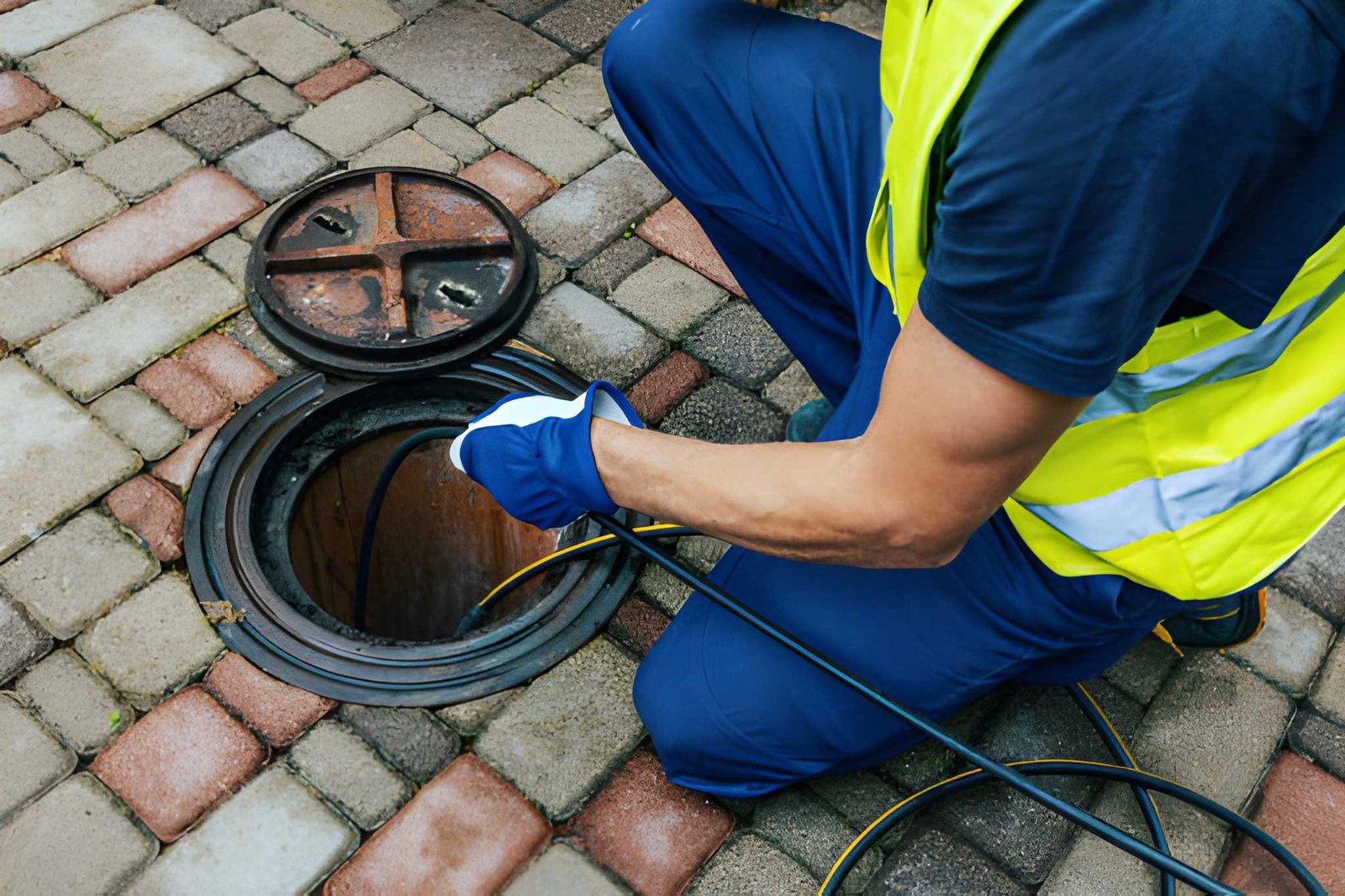
This is why our camera goes down the line before anyone quotes a number. Half the value of the inspection is establishing where the defect sits relative to the curb.
What San Francisco Actually Requires Before You Replace a Lateral
There’s a persistent myth that San Francisco has a point-of-sale sewer lateral compliance ordinance — a certificate you must produce before closing. It doesn’t. That confusion traces to real ordinances in other jurisdictions. EBMUD runs a private sewer lateral program in the East Bay, and South San Francisco has a separate lateral chapter — a different city entirely.
What San Francisco actually requires is permits and inspections:
- Upper lateral work: Contact the Department of Building Inspection to confirm whether you need a permit — (415) 558-6570.
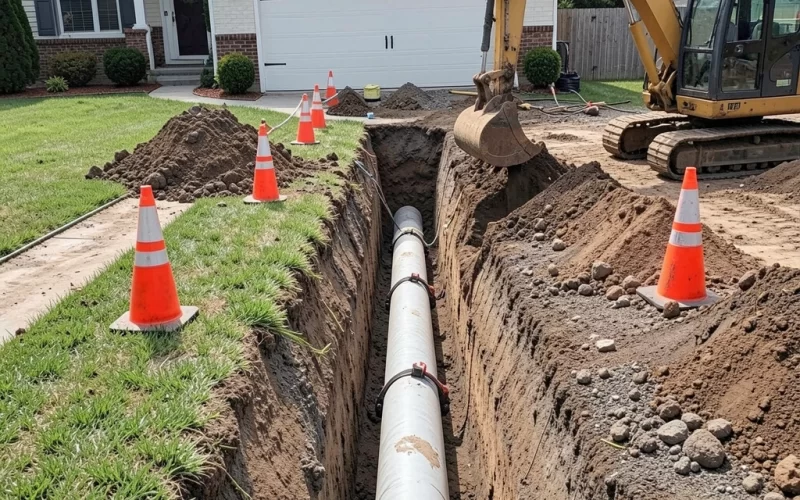
- Anything in the public right-of-way: a Side Sewer permit from San Francisco Public Works. Permittees must file and maintain a Street Excavation Bond of at least $25,000 to guarantee the trench and roadway pavement for three years after backfill and paving. The inspection also has to be scheduled at least 10 days before work begins.
- Restoration: All sidewalk and pavement cutting, excavation, backfill, and restoration must be performed by a licensed paving contractor.
- Oversized laterals: New laterals above the standard six-inch diameter may require a written referral to the SFPUC before the permit application moves forward.
That $25,000 bond and 10-day notice are why a San Francisco street-cut job can’t be scheduled for next Tuesday. We hold the Side Sewer permit
process ourselves, so the clock starts the day you approve the quote, not the day you find a paving sub.
Do I need a sewer lateral inspection in SF? SFPUC’s guidance is to have a licensed plumber inspect the lateral at least once every five years, even with no symptoms.
Why San Francisco Laterals Fail Sooner Than Peninsula Laterals
We run the same service across Burlingame, Millbrae, and San Mateo. San Francisco laterals, though, are a different animal for three reasons.
The housing stock is older. Victorians and Edwardians across the Mission, Noe Valley, and the Richmond were plumbed with clay and lead-jointed cast iron. Much of it dates from the 1920s–1950s or earlier. Clay joints separate; cast iron scales shut from the inside. Seventy-plus years is past service life.
The soil moves, too. Outer Sunset laterals sit in dune sand that shifts and lets joints pull apart, and Marina District fill behaves differently again. On the Peninsula, by contrast, we’re mostly working stable mid-century subgrade, where a bellied pipe is usually a grading mistake rather than the ground itself.
And the vent-and-trap configuration is San Francisco’s own. The upper lateral includes a vertical vent to the sidewalk and a building trap at its base, which means there are two extra failure points to rebuild to code that a Burlingame job doesn’t have. Contractors who mostly work south of the county line quote San Francisco laterals as if that vent isn’t there.
Trenchless Sewer Repair vs. Open-Cut on a San Francisco Lateral
“Trenchless sewer replacement San Francisco California” is one of the most common searches we see, and it’s the right instinct: nobody wants their sidewalk opened. Trenchless sewer repair San Francisco jobs come in two forms. Pipe bursting pulls a new HDPE line through the old one and fractures the old pipe outward. CIPP lining, by comparison, cures a resin-saturated liner in place inside the existing pipe.
Neither works everywhere. A fully collapsed pipe can’t be lined or burst through. A severe belly needs the bed re-graded, which means open-cut. And the building trap often has to be addressed conventionally even when the run itself is lined. On tight SF lots, the access pit placement is its own puzzle. Between the vent, the trap, the water service, and a street tree, there isn’t always room.
The camera decides, not the sales pitch. We’ll tell you when lining solves it for less, and we’ll tell you when it won’t hold.
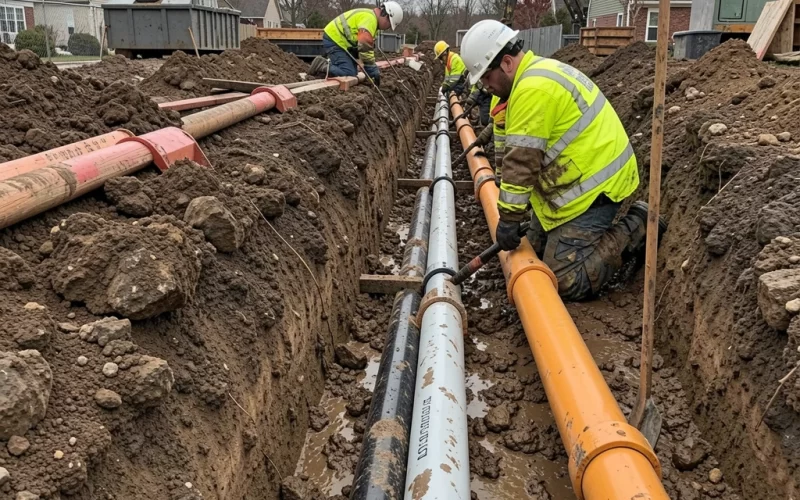
Cost of Lateral Sewer Line Replacement in San Francisco, CA
How much does sewer lateral replacement cost in San Francisco? Not quotable over the phone. A handful of variables move the number most:
- Length from building to curb, and depth
- Whether the work crosses the sidewalk into the right-of-way
- The condition of the vent and trap
- Whether the defect is upper or lower lateral
That last one swings the total more than the method does. A homeowner quoted for a full run when the failure sits past the curb is being quoted for SFPUC’s work. Sidewalk restoration, the excavation bond, permit fees, and traffic control are all real San Francisco line items that never appear on a suburban quote. That’s why no honest sewer line replacement San Francisco CA estimate arrives before the camera does.
Searches like “best sewer lateral contractor near me San Francisco CA” and “sewer line replacement near me San Francisco” spike right after a first backup. Whoever you call, though, ask where the defect sits relative to the curb — that answer is worth more than the estimate.
The San Francisco Neighborhoods We Serve
We dispatch from Burlingame and run sewer lateral replacement San Francisco calls across the Sunset and Outer Sunset, the Richmond, Noe Valley, Bernal Heights, and the Mission. We also cover Glen Park, Potrero Hill, the Excelsior, Portola, Cole Valley, and the Marina, plus Daly City immediately south, where the point-of-sale compliance rules genuinely do apply.
If you’re outside the city line, start at our lateral sewer line replacement service page for Palo Alto, San Mateo, and the wider Peninsula, or browse all our plumbing services.
Frequently Asked Questions
How much does sewer lateral replacement cost in San Francisco, CA?
It depends on length, depth, whether the work enters the public right-of-way, and the condition of the vent and trap. Most of all, it depends on whether the failure is upper or lower lateral. A defect past the curb is usually SFPUC’s to replace. We run a camera, identify the segment, and put a written number in front of you before any work starts.
What is San Francisco’s sewer lateral compliance requirement?
San Francisco has no point-of-sale lateral compliance certificate. Instead, it has a permit regime: DBI for upper-lateral work, and a Side Sewer permit from San Francisco Public Works for anything in the public right-of-way. That permit carries a minimum $25,000 street excavation bond and a 10-day inspection notice. SFPUC also advises a licensed inspection every five years. The point-of-sale ordinances you may have read about belong to other jurisdictions, including Daly City and the East Bay.
What is trenchless sewer replacement?
Replacing or rehabilitating the lateral without digging a continuous trench. Pipe bursting pulls a new HDPE pipe through the old one while fracturing the old pipe outward. CIPP lining, meanwhile, cures a resin liner inside the existing pipe. Both need only small access pits. Neither works on a fully collapsed pipe or a severe belly.
How long does sewer lateral replacement take?
The work itself is usually short. CIPP lining often finishes within a day, a trenchless pull-through in about a day, and open-cut takes a few days depending on depth and length. In San Francisco, though, the schedule is driven by permitting, not digging. The Side Sewer permit requires the inspection to be booked at least 10 days ahead, so plan the calendar around that.
Who is responsible for the sewer lateral in SF?
You own the entire lateral, including the vent and trap. But you’re responsible for repairing and replacing the upper lateral from your building to the curb. SFPUC, meanwhile, will repair or replace the lower lateral from the curb to the main under most circumstances, at no extra cost. That’s why identifying the failing segment is the first job on every call.
Every lateral sewer line replacement in San Francisco, CA should start by identifying which segment is actually failing. Book a camera inspection or call the number below.
Visit or Call Us
JK Plumbing 1008 Edwards Rd Burlingame, CA 94010 Phone: (415) 359-4588 CA License #1080266
Serving San Francisco and the Peninsula, including the Sunset, Richmond, Noe Valley, Bernal Heights, Mission, Glen Park, Potrero Hill, Excelsior, and Daly City.
RECENT POSTS