
- Open 24 Hours Mon–Sat
- contact@jkplumbingsf.com
- +1 (415) 359-4588
- CA License #1080266

In San Francisco you own the entire sewer lateral, but you don’t pay for all of it. The upper section, from your building to the curb, is yours to repair or replace. The lower section, from the curb to the sewer main, is usually replaced by the SFPUC at no extra cost. JK Plumbing camera-surveys the whole run first so you know which half you’re actually paying for.
By Alik, Owner & Master Plumber · Last updated September 2026
Upper lateral or lower lateral — which half is yours?
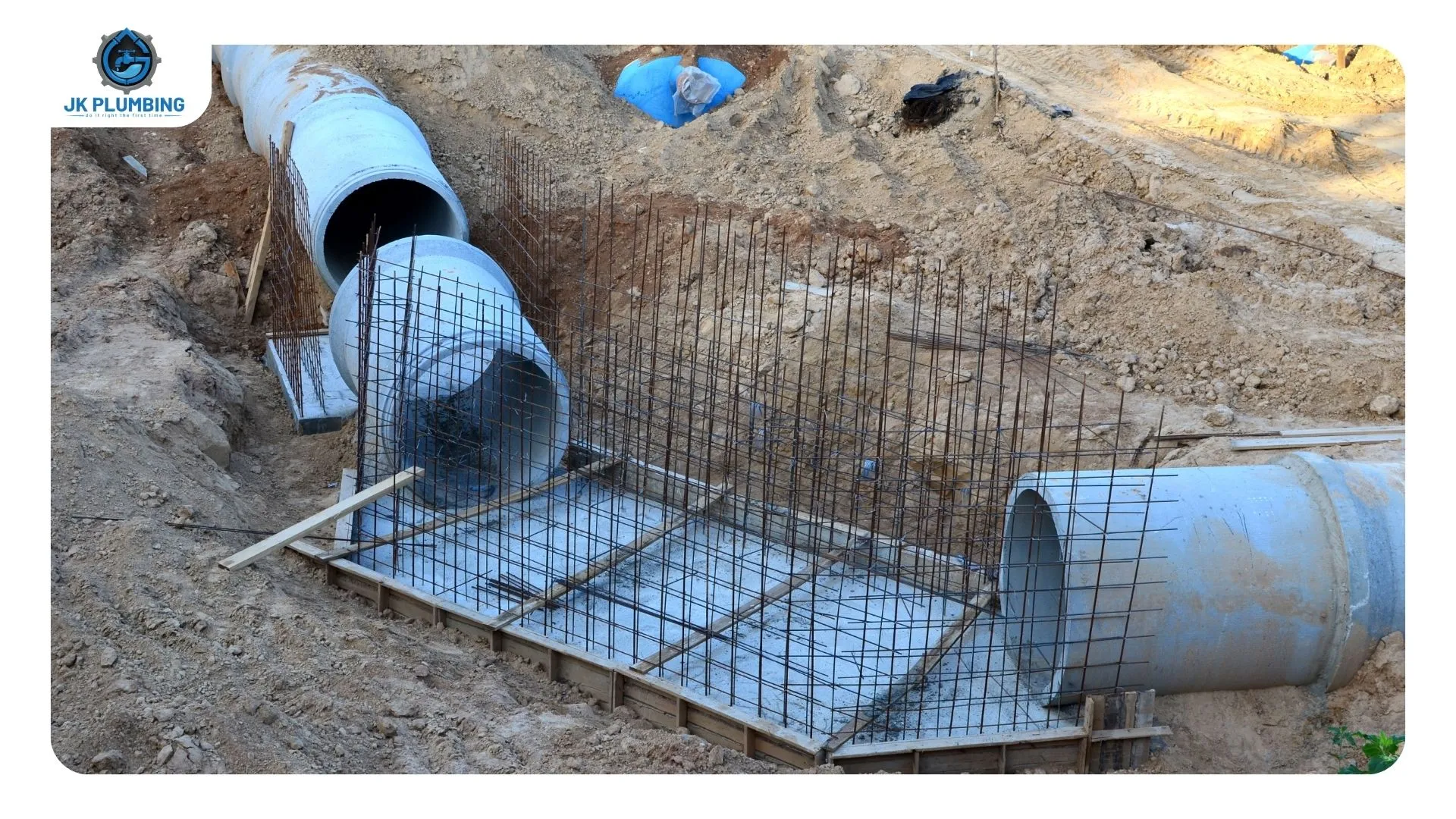
Your lateral is one pipe in two segments. The upper lateral runs from the building to the curb and includes the sewer vent and the building trap. The lower lateral runs from the curb out to the main under the street.
You own all of it. But the money splits at the curb.
The SFPUC’s own guidance is explicit: property owners must hire a licensed contractor to repair or replace the upper lateral, while under most circumstances the SFPUC will repair or replace the lower section. You report a suspected lower-lateral problem through 311, the SFPUC dispatches a crew to inspect, and if they determine replacement is necessary they complete that work at no extra cost to you.
This is the single most expensive thing homeowners in this city don’t know. The lower lateral is the part under the street — the part that needs traffic control, pavement restoration, and the most excavation. If your failure is out there, a good chunk of the job may not be yours to fund at all.
It also explains why we camera the full run before quoting anything. A survey that stops at the property line can’t tell you which side of the curb the break is on, and that one fact can swing the number by five figures. SFPUC recommends a proactive inspection at least once every five years regardless of symptoms, which is advice almost nobody in San Francisco follows until something backs up.
How much does sewer lateral replacement cost in San Francisco?
As of September 2026, upper lateral work in San Francisco starts around $6,000 for a short trenchless lining or pipe-bursting job and can pass $20,000 for full open-cut replacement with sidewalk restoration and permit fees. Those are real ranges for the portion you pay for, and the spread is that wide for reasons specific to this city.
Four things drive it:
Where the failure sits. Upper lateral, lower lateral, or both. See above — this is the first question, not a detail.
Whether the street gets opened. Work past the trap toward the main is a different permit, a different bond, and a different restoration standard than work on your own property.
Length and depth of the run. A Sunset house set close to the sidewalk is not a Pacific Heights property with a long front setback, and neither is a Bernal Heights lot where the lateral drops down a grade.
What we find when the camera goes in. Root intrusion in a joint is a repair. A collapsed section under a mature street tree is not.
Our lateral sewer line replacement service page covers the methods in detail. For a number on your specific property, call (415) 359-4588 — a licensed plumber picks up.
Does San Francisco require a sewer lateral certificate when you sell?
No. San Francisco has no point-of-sale sewer lateral compliance certificate. If you’ve been told otherwise, the person telling you is describing a different jurisdiction.
The program people are thinking of belongs to EBMUD, across the bay. In much of the East Bay, a private sewer lateral compliance certificate genuinely is required at sale or transfer. That requirement does not extend to San Francisco, and no SF neighborhood has its own version of it. Some Peninsula cities have their own separate triggers tied to remodel valuation — those are city-specific and none of them are SF.
What San Francisco does have is a construction requirement, not a sale requirement. If your work extends past the trap toward the main, the contractor needs a Side Sewer permit from San Francisco Public Works. You need it whether you’re selling, buying, or just fixing a pipe that’s been on the list for three years.
So when a lateral does come up during an SF transaction, it’s almost always because a buyer’s inspector ran a camera and found something — not because a rule forced it. That’s a negotiation, not a compliance deadline, and the two get handled very differently. We do the camera survey, document the condition on video, and give you a written scope you can hand to an agent or a buyer.
Trenchless or open-cut, and what the street permit really dictates
Method gets chosen by the pipe and the ground, not by preference. Pipe bursting and CIPP lining both need a viable host pipe, workable soil, and enough grade. Where those hold, trenchless means an access pit instead of a trench down your frontage. Where they don’t — a collapsed line, a badly offset joint, a belly that needs re-grading — open-cut is the honest answer.
But in San Francisco the permit often sets the schedule more than the method does. Reading Public Works’ Side Sewer requirements tells you why a street-side lateral job is never a call-today-dig-tomorrow proposition:
- Street-side work requires a contractor holding a Class A, or C-36 paired with C-12, or a C-42 license. Work from the property to the trap is a separate permit with a separate DBI plumbing inspection.
- The permittee files and maintains a $25,000 street excavation bond under Article 2.4 of the Public Works Code, guaranteeing the trench and roadway pavement for three years after backfill and paving.
- Inspection must be scheduled at least 10 days before work begins.
- Sidewalk and pavement restoration has to be done by a licensed paving contractor to the city’s standard.
- Tow-away signs get registered through SFMTA, and Underground Service Alert gets called 72 hours ahead.
- Laterals larger than the standard 6-inch diameter get referred to SFPUC for written approval.
That list is worth reading before you hire anyone. Ask which of those three license combinations a contractor actually holds and whether their excavation bond is on file with Public Works. If they can’t answer, they’re subbing the street-side work out, and you want to know that before the quote, not after.
Clay, cast iron, Orangeburg — how old SF laterals fail and how long they last
A cast iron or vitrified clay lateral installed before about 1960 has typically been in the ground 65 to 100 years here. Clay doesn’t corrode, but it’s rigid and jointed, so it fails at the joints — root intrusion first, then offsets as the ground moves. Cast iron fails from the inside out, scaling and thinning until the bottom of the pipe channels through. Orangeburg, the tar-impregnated wood fiber pipe used in a narrow post-war window, deforms into an oval and collapses; when we find it, the conversation is always replacement.
San Francisco ground makes this worse in specific places. Sunset and Richmond sand shifts differently than Bernal and Potrero rock. Marina and SoMa fill settles. On the flat blocks, mature street trees do most of the damage — a lateral running past a decades-old ficus root system is on borrowed time regardless of material.
A modern PVC or HDPE lateral, properly bedded, should run 50 to 100 years. The practical answer for most SF homes is simpler: if your house predates 1960 and nobody has put a camera down the line, you don’t know what you have. If backups are recurring, a hydro jet cleaning with a camera afterward will tell you whether you’re looking at roots, grease, or a structural failure before you spend money twice.
Where we work in San Francisco and on the Peninsula
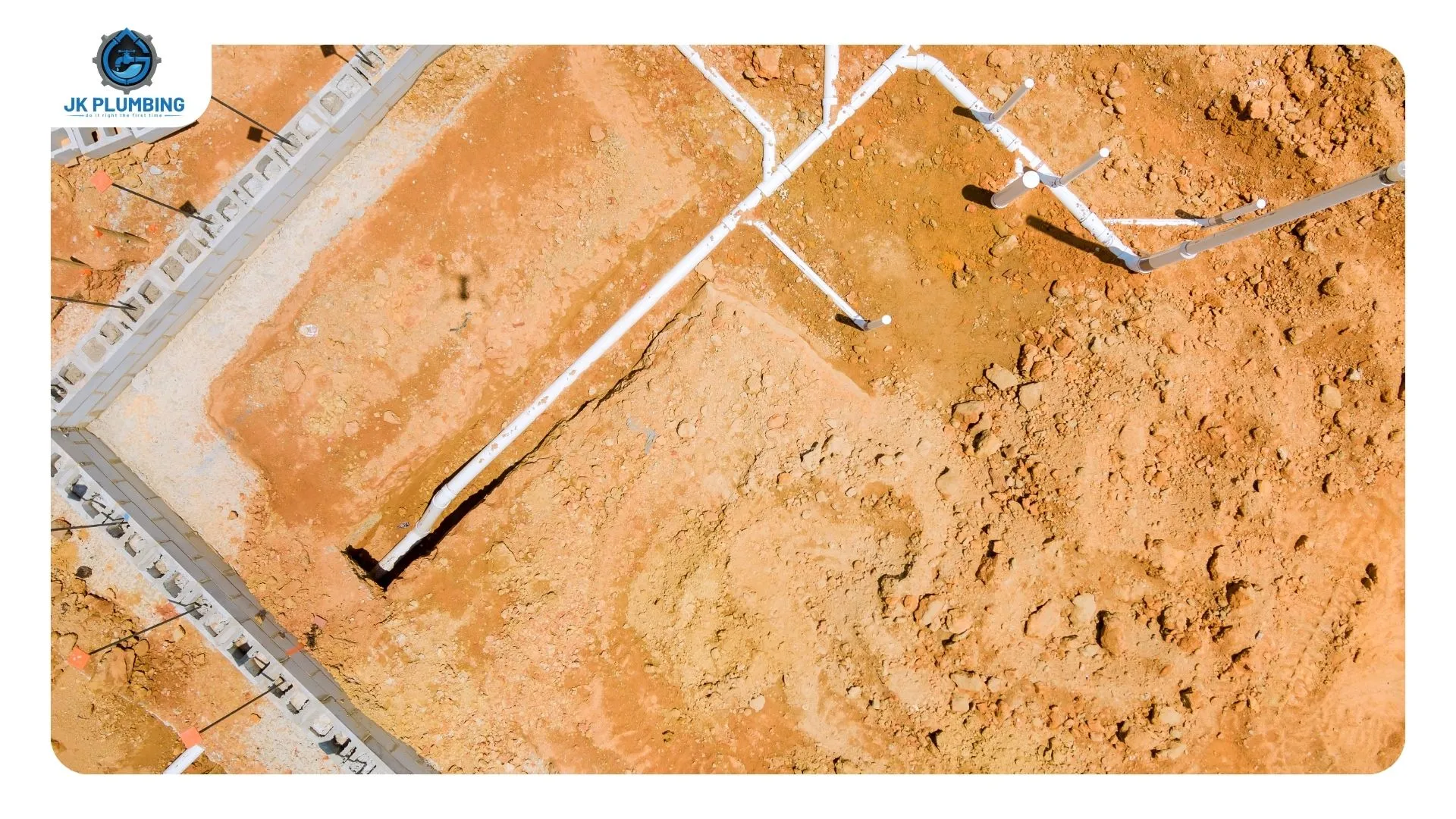
We dispatch from Burlingame and run sewer lateral work San Francisco-wide, including Bernal Heights, Noe Valley, the Sunset, Inner and Outer Richmond, the Mission, Potrero Hill, Glen Park, the Excelsior, Pacific Heights, the Marina, and SoMa.
South of the county line the rules change city by city, which is why we cover those separately: sewer line repair costs in South San Francisco, who pays for lateral replacement in Palo Alto, and sewer line repair in San Mateo. Do not assume an SF answer applies in San Mateo County. It frequently doesn’t.
Sewer lateral FAQ
How much does sewer lateral replacement cost in San Francisco?
As of September 2026, expect roughly $6,000 for a short trenchless job up to $20,000 or more for full open-cut replacement with sidewalk restoration and permits. That covers the upper lateral, the portion you’re responsible for. If the failure is in the lower lateral beyond the curb, the SFPUC handles that work at no extra cost in most cases, which can remove a large share of the cost entirely.
Do you offer camera surveys of the sewer lateral?
Yes, and we run the full lateral rather than stopping at the property line. The recording shows pipe material, joint condition, root intrusion, bellies, and the distance to any defect, so you can see exactly where a problem sits relative to the curb. That distance determines who pays. The SFPUC recommends a proactive inspection at least once every five years even with no symptoms.
Can the lateral be replaced trenchless without excavating the street frontage?
Often, yes. Pipe bursting and CIPP lining need a viable host pipe, suitable soil, and adequate grade, and where those conditions hold we work from an access pit instead of trenching the frontage. A fully collapsed line, a severe offset, or a section needing re-grading still requires open-cut. The camera survey answers this before you commit to a method.
Do you handle sewer lateral requirements that come up during a property sale?
Yes, though the premise is worth correcting: San Francisco has no point-of-sale lateral compliance certificate. That’s an EBMUD requirement in the East Bay. In SF, laterals surface during a sale because a buyer’s inspection found something. We camera the line, document it on video, and give you a written scope and quote you can use in negotiation.
Do you replace shared or party laterals between neighbouring buildings?
Yes. Shared laterals are common in San Francisco, particularly in adjacent Victorians and flats built as a pair, where one line serves two buildings before reaching the main. The first step is always a camera survey to establish how the pipe is actually routed, because assumptions about shared runs are wrong surprisingly often. How costs get divided depends on the deeds and any recorded easement between the properties, which is a legal question rather than a plumbing one. We give both owners the same footage and the same written scope so the conversation starts from the same facts.
Visit or Call Us
JK Plumbing
Adress:1008 Edwards Rd Burlingame, CA 94010
Phone: (415) 359-4588
Hours: Monday–Saturday: Open 24 hours · Sunday: Closed CA License #1080266
Serving San Francisco and surrounding areas including Bernal Heights, Noe Valley, the Sunset, the Richmond, the Mission, and Potrero Hill, plus Daly City, South San Francisco, Burlingame, and San Mateo.
Book a plumber online or call (415) 359-4588 — a licensed plumber picks up, not a call center.
Where we work in San Francisco and on the Peninsula
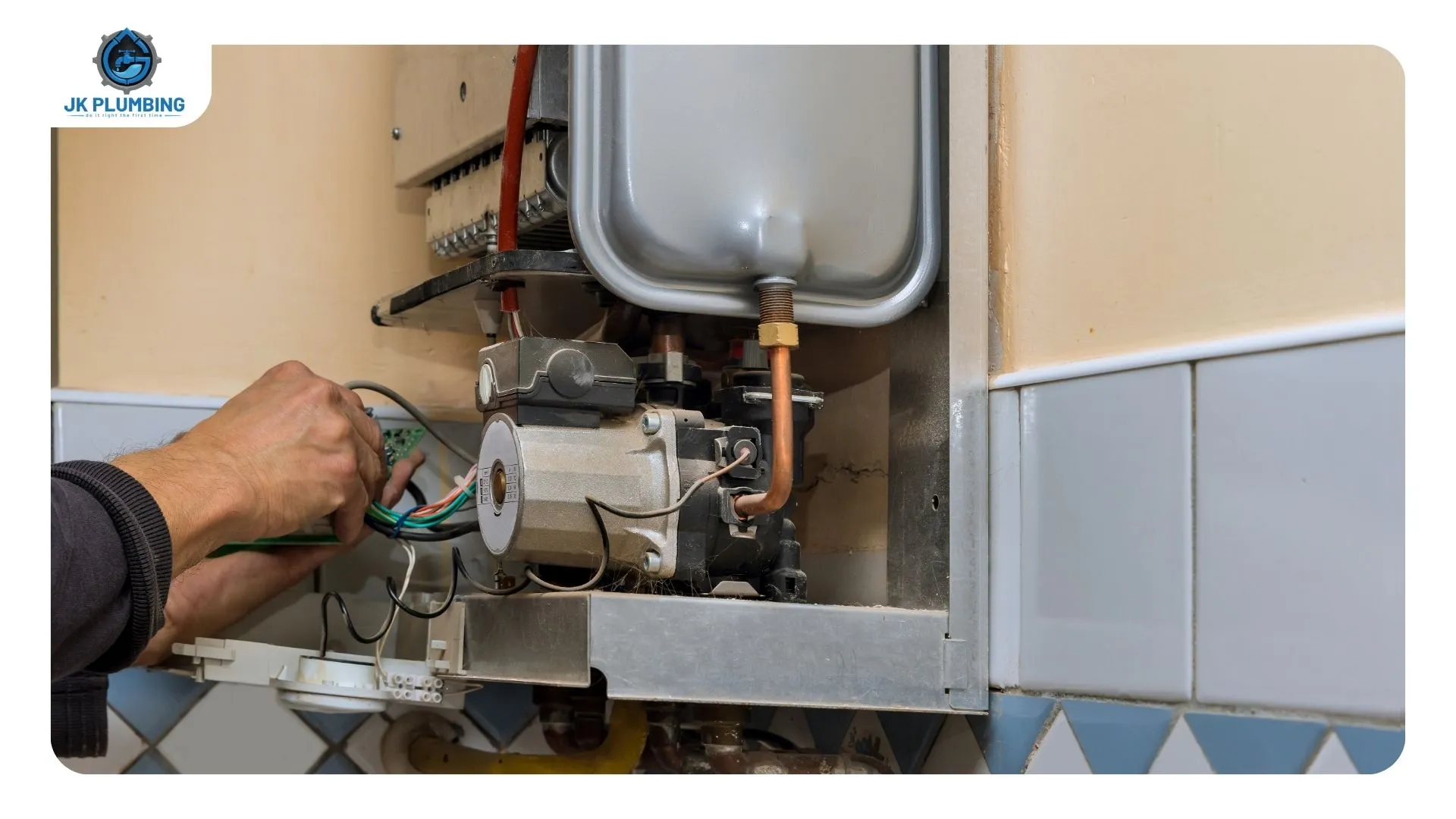
We run water heater repair San Francisco-wide, including the Sunset, Inner and Outer Richmond, Noe Valley, Bernal Heights, the Mission, Potrero Hill, Glen Park, the Excelsior, Pacific Heights, the Marina, and SoMa, plus Daly City.
From the same Burlingame dispatch we cover the Peninsula corridor. If you’re south of the county line, our South San Francisco water heater repair visit guide walks through what a service call looks like, water heater repair in Palo Alto covers the hard-water side of the peninsula, and how often you need a water heater flush in San Mateo is the maintenance answer for everything south of Burlingame.
Water heater repair FAQ
How much does water heater repair cost in San Francisco?
Most component repairs run roughly $180 to $600 as of September 2026. A standard 50-gallon tank replacement is typically $2,800 to $4,500 installed; tankless and heat pump units cost more. Permit fees and code-required parts such as expansion tanks are quoted separately, in writing, before work starts.
Do you offer same-day water heater repair?
Yes. We answer 24 hours a day Monday through Saturday and dispatch same day for no hot water, leaking tanks, and gas-smell calls. Closed Sundays for non-emergency work. Non-emergency jobs get a two-hour arrival window with a text when the truck is en route.
Should I repair or replace my water heater?
Repair a component failure on a unit under about eight years old. Replace if the tank is leaking, the unit is past ten to twelve years, or the repair quote approaches half the cost of a new install. In San Francisco, add one question: does a current-spec tank still fit the original closet? That answer sometimes decides it for you.
Do you check seismic strapping when servicing a water heater?
Yes, on every visit — it’s the first thing a San Francisco inspector looks at on a replacement. California requires two straps on a tank water heater, one in the upper third and one in the lower third, with the lower strap positioned above the controls and anchored into framing. Drywall anchors fail inspection every time. If we find a unit strapped incorrectly, we tell you, whether or not you hired us for that.
Are you a bonded and insured plumbing contractor?
Yes. JK Plumbing holds CA Contractor’s License #1080266, active continuously since 2007, with the contractor’s bond California requires plus general liability and workers’ compensation. California requires a licensed contractor for plumbing work over $500. Certificates of insurance are available on request for HOAs and property managers, and you can verify the license yourself on the CSLB site before we start.
Visit or Call Us
JK Plumbing
Adress:1008 Edwards Rd Burlingame, CA 94010
Phone: (415) 359-4588
Hours: Monday–Saturday: Open 24 hours · Sunday:
Closed CA License #1080266
Serving San Francisco and surrounding areas including the Sunset, Richmond, Noe Valley, Bernal Heights, the Mission, and Potrero Hill, plus Daly City, Burlingame, San Mateo, and Palo Alto.
RECENT POSTS
Where to Install a Water Heater in a South San Francisco Home: What’s Allowed?
October 12, 2026
No Comments
Read More »
Who Can Change a Water Heater Quickly in South San Francisco?
October 9, 2026
No Comments
Read More »