- Open 24 Hours Mon–Sat
- contact@jkplumbingsf.com
- +1 (415) 359-4588
- CA License #1080266
Most San Francisco conversions land in the mid four figures to low five figures. The number swings on three things: whether the drain has to move, what condition the framing behind the tub is in, and which permits your building triggers. JK Plumbing quotes after seeing the wall open, not before.
By Alik, Owner & Master Plumber · Last updated 5th August 2026
A tub to shower conversion in San Francisco, CA is rarely just a fixture swap. Two separate permits, a citywide fixture-retrofit ordinance, and a housing stock full of 1920s framing all attach to a job that looks simple on paper.
What a Tub to Shower Conversion Involves in an SF Bathroom
Pulling a standard alcove tub is the easy hour. What comes after is the job.
The tub drain sits at one end of the footprint; a shower drain sits near the centre. In most SF homes, that means opening the floor, cutting into the drain line, and re-plumbing the trap and tailpiece. Behind the tub you’ll usually find original 1920s–1950s framing. In the Sunset and Richmond, especially, it’s often damp from decades of a failed surround. Rot repair is the most common change order we write.
Then comes the waterproofing. A tub is a waterproof vessel, but a shower is a membrane you build: pan liner, sloped mortar bed, and a nonabsorbent wall surface to 72 inches. That assembly gets inspected, and it’s where corner-cutting shows up two years later as a stain on the ceiling below.
Most tub to shower conversion San Francisco projects also surface something unrelated. Open a Victorian bathroom floor, and you frequently find a cast-iron drain stack that’s scaled shut or cracked. If that’s the situation, read up on sewer and drain line replacement before committing to a tile date.
Do You Need a Permit for a Tub to Shower Conversion in SF?
Yes — and you likely need two. “Do I need a permit for a tub to shower conversion in SF?” is the question we get most. The honest answer, though, has a wrinkle most homeowners don’t expect.
San Francisco requires a permit before renovating or replacing bath fixtures, with exemptions listed in Building Code Section 106A.2. But the kitchen and bath permit
and the plumbing permit are separate filings. The building permit is pulled by a licensed B general contractor registered with the City. The plumbing permit, on the other hand, is a separate trade permit — a registered plumbing sub can pull it online, or you file in person at DBI.
Three gates decide whether the permit can be issued instantly online or has to go through plan review:
- The work must not require plans
- The building must be R-3 residential and not historical
- The building must have no active complaints
That middle condition catches a lot of San Francisco. A designated-historical building, or one inside a district triggering review, can’t use the instant online path. Likewise, neither can a property with an unresolved complaint on file. You also need your job card in hand before construction starts.
We hold the plumbing permit and the inspections. We’re a C-36 plumbing contractor, not a B general. So on a full bath remodel, we coordinate with your general rather than pulling your building permit.
The Water Conservation Rule Nobody Warns You About
This is the one that blindsides people. San Francisco’s Residential Water Conservation Ordinance — Chapter 12A of the Housing Code — attaches when you sell, remodel, or do improvement work requiring a building permit. Importantly, it does not stop at the bathroom you’re renovating.
Under the ordinance, noncompliant fixtures across the property must be brought up to standard. That means toilets at 1.28 gallons per flush or lower, showerheads at 1.8 gallons per minute or lower, faucets and aerators at 1.8 gpm or lower, and any plumbing leaks repaired. Compliance is verified by DBI Housing Inspection Services or a DBI-certified private inspector. So a one-bathroom conversion can obligate you to swap the toilet in the other bathroom and the kitchen aerator too. That’s usually a few hundred dollars handled during the job, but it’s an inspection failure if it isn’t.
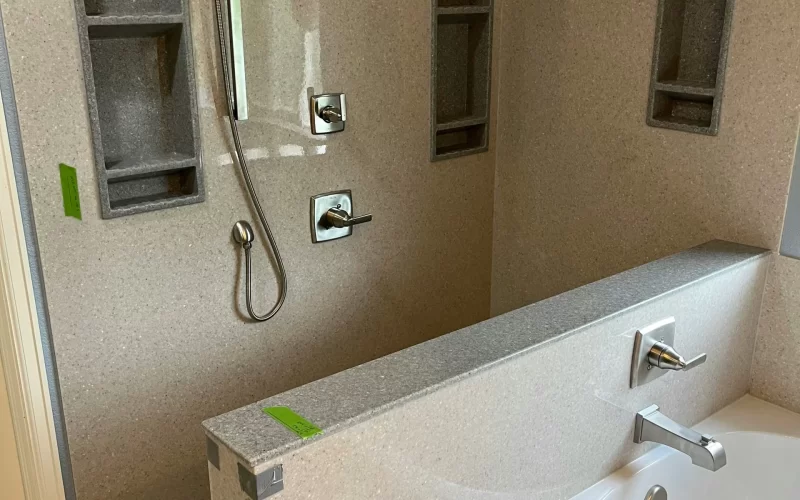
There’s a second trap for anyone planning a spa-style shower. The ordinance allows no more than one showerhead per valve, and it counts rain heads, rain tiles, and handhelds as showerheads. Statewide code reinforces this: multiple outlets on one valve must total 1.8 gpm combined, or the shower must be built so only one runs at a time. In short, a rain head plus a handheld both flowing off one valve is not code-compliant in San Francisco, whatever the showroom rendering looked like.
Walk In Shower Conversion Options for Small San Francisco Bathrooms
Victorian and Edwardian bathrooms in Noe Valley, the Mission, and Bernal Heights are frequently under 40 square feet. Homeowners often assume they’re too small, but usually they aren’t.
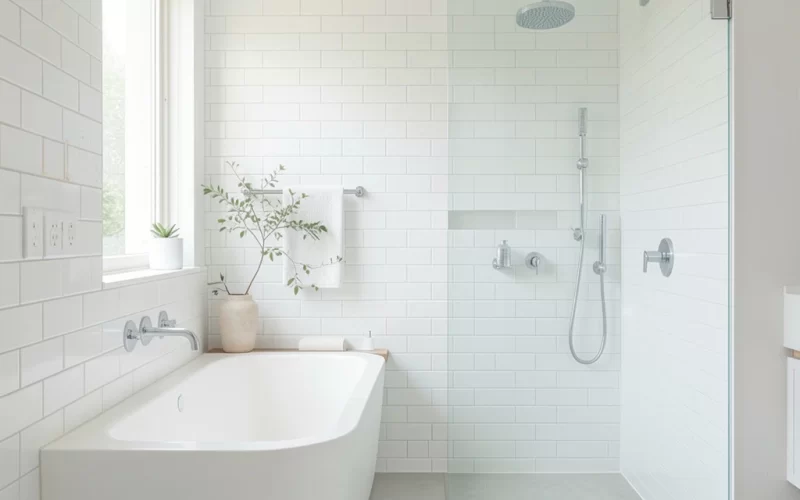
California Plumbing Code 408.6 requires a shower compartment to hold at least 1,024 square inches and encompass a 30-inch circle. The exception, however, is what matters here: it doesn’t apply to a receptor measuring at least 30 by 60 inches. A standard alcove tub footprint is 30 by 60. That means a walk in shower conversion San Francisco bathrooms can accommodate is usually available by definition, inside the existing footprint.
Practical notes from tight SF baths: curbless works, but it needs joist-bay depth to recess the pan, which isn’t always available in a flat over an occupied unit. Doors need a 22-inch unobstructed opening and swing outward, so in a narrow room a fixed panel or slider beats a swing door. Keep the valve reachable from outside the spray, and remember that a fixed bench eats the 30-inch circle unless it folds down.
Requirement | Standard | Source |
Shower floor area | 1,024 sq in min., encompassing a 30″ circle | CPC 408.6 |
Footprint exception | Not required for a receptor 30″ × 60″ or larger | CPC 408.6 |
Door opening | 22″ minimum, unobstructed | CPC 408.5 |
Showerhead flow | 1.8 gpm max.; one showerhead per valve in SF | SF Housing Code Ch. 12A |
Scald protection | Pressure-balance or thermostatic mixing valve | CPC 408.9 |
Wall surface | Nonabsorbent to 72″ above floor | CRC R307.2 |
What a Tub to Shower Conversion in San Francisco, CA Costs
How much does a tub to shower conversion cost in San Francisco? The plumbing scope is actually the smaller half of the number. A handful of factors move it instead:
- Whether the drain relocates to centre-footprint, which means opening the floor — and in a multi-unit building, arranging access to the ceiling below
- What’s behind the tub, since rot or galvanized supply lines due for replacement change the figure
- Curbed versus curbless, because recessing a pan into the joist bay is structural work
- Two permit filings, plus whole-property Chapter 12A compliance
- Glass, which is frequently the largest single line item and the longest lead time
That range is why no honest bathtub to shower conversion San Francisco CA quote arrives before someone has looked behind the tile. Searches like “best tub to shower conversion near me San Francisco CA” and “bathtub to shower conversion near me San Francisco” turn up plenty of one-day-install promises. Still, ask any of them who pulls the plumbing permit and who handles Chapter 12A compliance — the answers narrow the field fast.
How long does a tub to shower conversion take? Rough-in is typically one to two days, then inspection, then tile and glass. All told, two to four weeks door to door is realistic, since glass fabrication and inspection scheduling — not the plumbing — usually set the pace.
The San Francisco Neighborhoods We Serve
We dispatch from Burlingame and run “walk in shower conversion San Francisco California” jobs across the Sunset and Outer Sunset, the Richmond, Noe Valley, Bernal Heights, and the Mission. We also cover Glen Park, Potrero Hill, the Excelsior, Portola, Cole Valley, and the Marina, plus Daly City and the northern Peninsula. See all our plumbing services for the wider service area.
Frequently Asked Questions
How much does a tub to shower conversion cost in San Francisco, CA?
Cost is driven by whether the drain relocates, the condition of the framing behind the tub, curbed versus curbless construction, glass, and two permit filings plus Chapter 12A fixture compliance across the property. Even so, the plumbing is the smaller half of the budget. We quote after seeing the wall open.
How long does a tub to shower conversion take?
Rough-in runs one to two days. Allowing for inspection, tile, and glass fabrication, two to four weeks start to finish is realistic. Usually, glass lead time and inspection scheduling set the timeline, not the plumbing.
Do I need a permit for a tub-to-shower conversion in SF?
Yes, and usually two: a kitchen and bath building permit, plus a separate plumbing trade permit. Exemptions are listed in San Francisco Building Code Section 106A.2. The instant online path is only available under three conditions. The work needs no plans, the building is R-3 and not historical, and there are no active complaints on the property.
Does removing a tub lower home value?
It depends on what’s left. In San Francisco’s family neighborhoods, a home with no bathtub anywhere can narrow the buyer pool, since buyers with small children generally want at least one. That said, if you have a second full bath with a tub, converting the primary to a walk-in shower is typically neutral to positive. Accessibility features are increasingly a selling point. In a one-bathroom flat, think harder. We’re plumbers, not appraisers, so it’s worth a conversation with a local agent before you commit.
What is the best walk-in shower for a small SF bathroom?
Usually a curbed or low-curb shower built inside the existing 30-by-60-inch tub footprint. Favor a fixed glass panel or slider rather than a swing door, a recessed niche instead of protruding shelves, and a single wall-mounted or handheld head on one valve. That configuration satisfies CPC 408.6 through the 30-by-60 exception, keeps the 22-inch opening clear, and avoids the one-showerhead-per-valve problem. Curbless is achievable, too, if the joist bay allows the pan to be recessed.
Planning a tub to shower conversion in San Francisco, CA? Book a site visit and we’ll tell you what’s behind the wall before you commit to a budget.
Visit or Call Us
JK Plumbing 1008 Edwards Rd, Burlingame, CA 94010 Phone: (415) 359-4588 Hours: Monday–Saturday, Open 24 Hours · Sunday, Closed; CA License #1080266
Serving San Francisco and the Peninsula, including the Sunset, Richmond, Noe Valley, Bernal Heights, Mission, Glen Park, Potrero Hill, Excelsior, and Daly City.
RECENT POSTS