
- Open 24 Hours Mon–Sat
- contact@jkplumbingsf.com
- +1 (415) 359-4588
- CA License #1080266

A new gas tank in place of an old gas tank saves less than most people expect. The large efficiency gain comes from changing fuel, not from a newer tank — and whether that lowers your bill depends on your utility. JK Plumbing replaces water heaters across Palo Alto, Stanford and East Palo Alto. Call (415) 359-4588.
By Alik, Owner & Master Plumber · Last updated October 2026
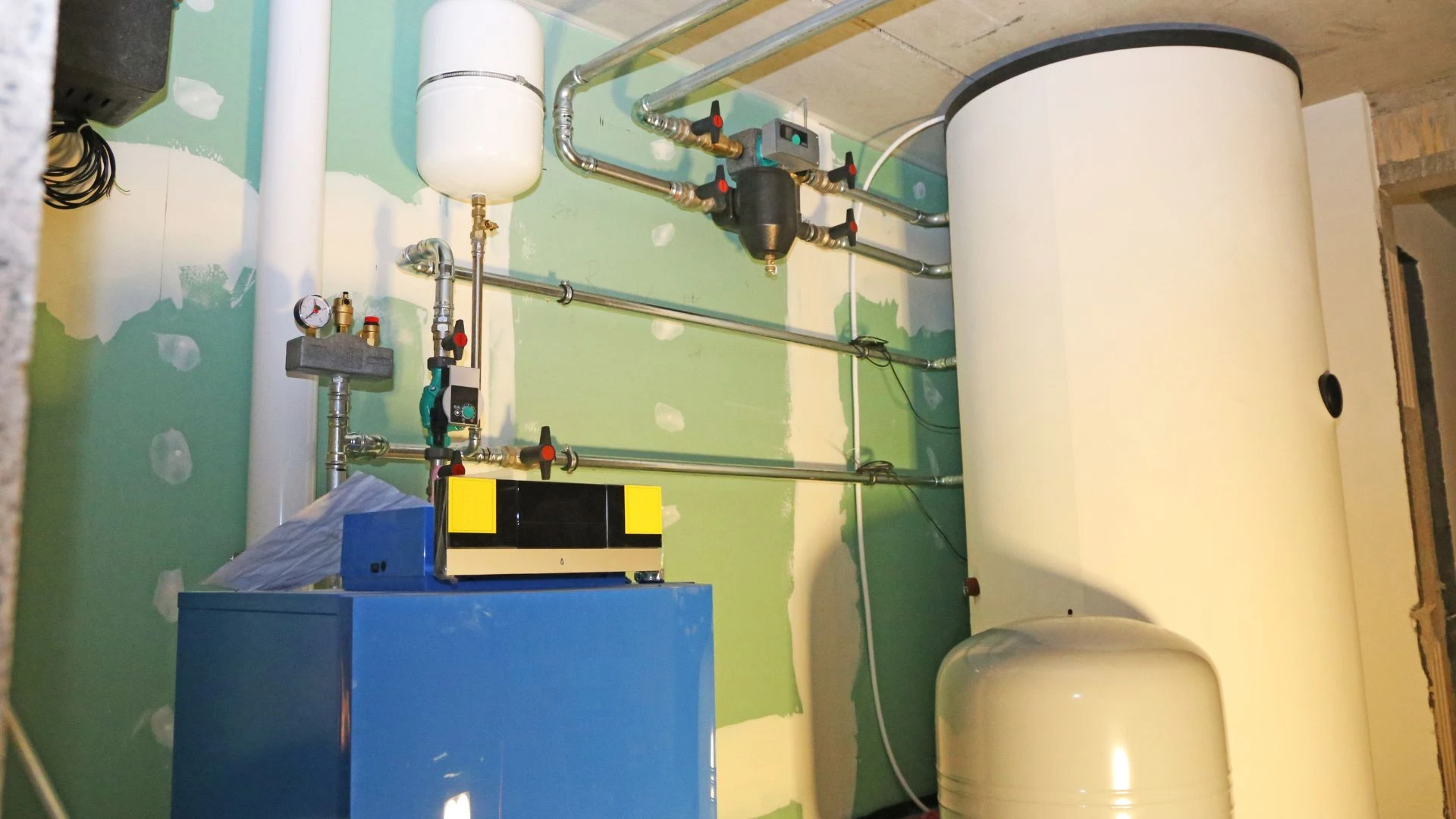
Does replacing an ageing unit actually lower energy bills?
This is the question we get asked most and the one most often answered dishonestly, so here it is properly.
Like-for-like gas replacement: modest savings. Storage tank efficiency hasn’t moved much. A standard gas tank converts somewhere around 58 to 70 percent of its fuel into hot water in your taps, and that was broadly true a decade ago too. Replacing a working-but-old gas tank with a new gas tank is mostly buying reliability, not savings.
Two caveats that push the other way:
- If your unit predates April 2015, it was installed under the previous federal efficiency minimums, which were raised at that point. A pre-2015 tank replaced with a current one does gain something real, mostly through better insulation and reduced standby loss.
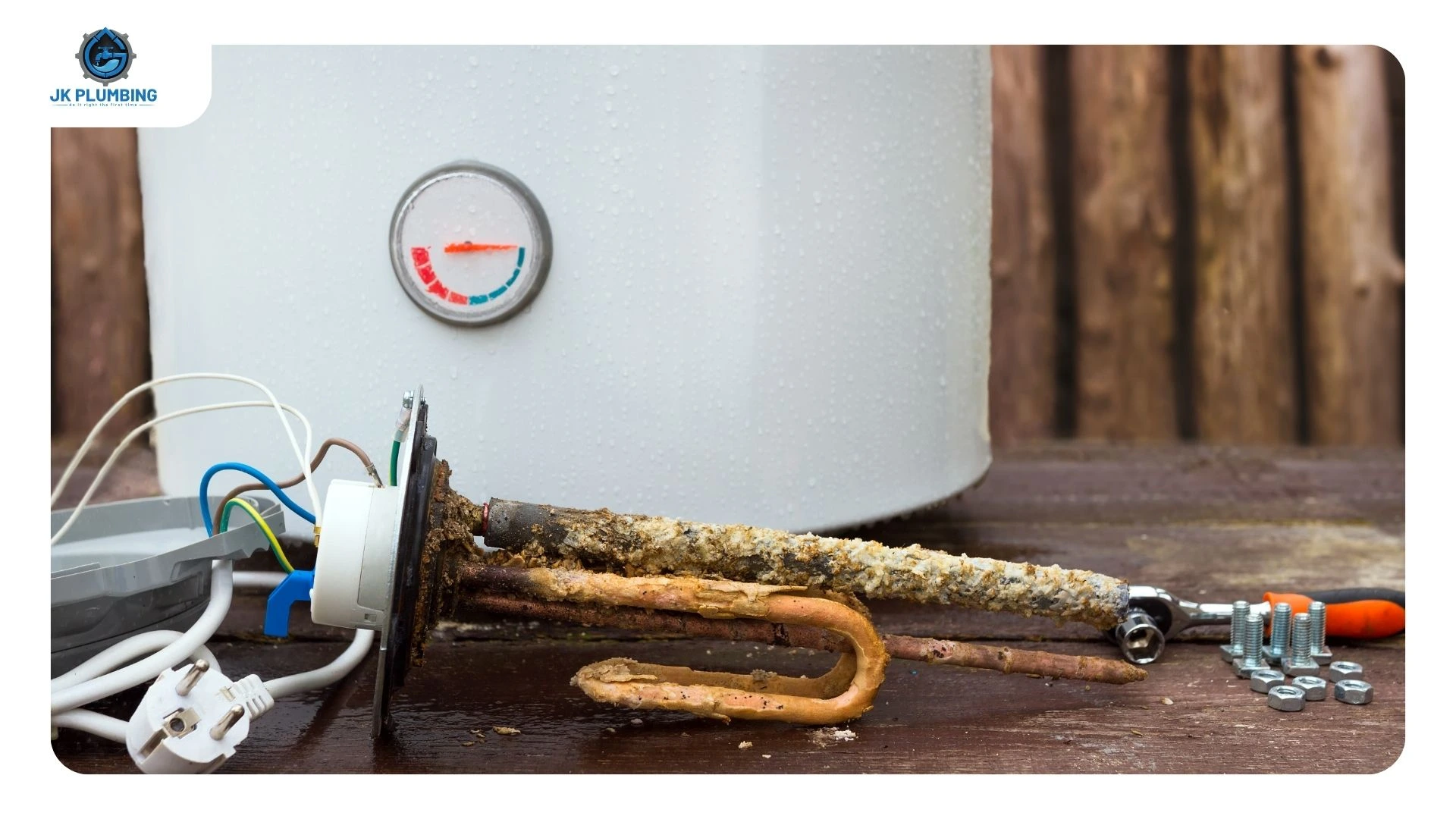
- If the tank has heavy sediment, it’s been burning fuel to heat a layer of deposit before it heats your water. That’s a genuine efficiency loss, though flushing addresses it more cheaply than replacement.
Fuel switching: large savings in energy, variable savings on the bill. A heat pump water heater doesn’t generate heat, it moves heat from the surrounding air into the tank. That lets it deliver roughly three to four units of heat for every unit of electricity it consumes, where a gas burner never exceeds one. In raw energy terms it’s not a close contest.
Whether that shows up as a smaller bill is a different calculation, and it comes down to what you pay per unit of each fuel. One therm of gas contains about 29.3 kilowatt-hours of energy. Take your gas rate per therm, divide by roughly 0.65 for burner efficiency, and compare it against your electricity rate per kilowatt-hour divided by about 3.5 for the heat pump. Whichever is lower is the cheaper fuel for you.
That ratio is not the same across this service area. Palo Alto residents are on City of Palo Alto Utilities rates. East Palo Alto and Menlo Park are on PG&E. The same appliance can produce a different answer on either side of the boundary, which is why we’d rather run the numbers against your actual bill than quote you a national average.
Our heat pump water heater page covers that route, including the rebates, which usually matter more to the overall economics than the monthly difference does.
At what age should a water heater be replaced?
Eight to twelve years for a standard tank, twelve to fifteen for a heat pump unit, fifteen to twenty for well-maintained tankless.
Age alone isn’t the trigger, though. Rust-coloured hot water, water at the tank seam, or a repair that costs a meaningful share of a replacement on a unit past ten — those are triggers. A fifteen-year-old tank running cleanly in a garage with a floor drain is a planning problem, not an emergency.
When to choose water heater replacement in Palo Alto works through that decision in full, and how often a water heater should be replaced covers reading the manufacture date off your own unit.
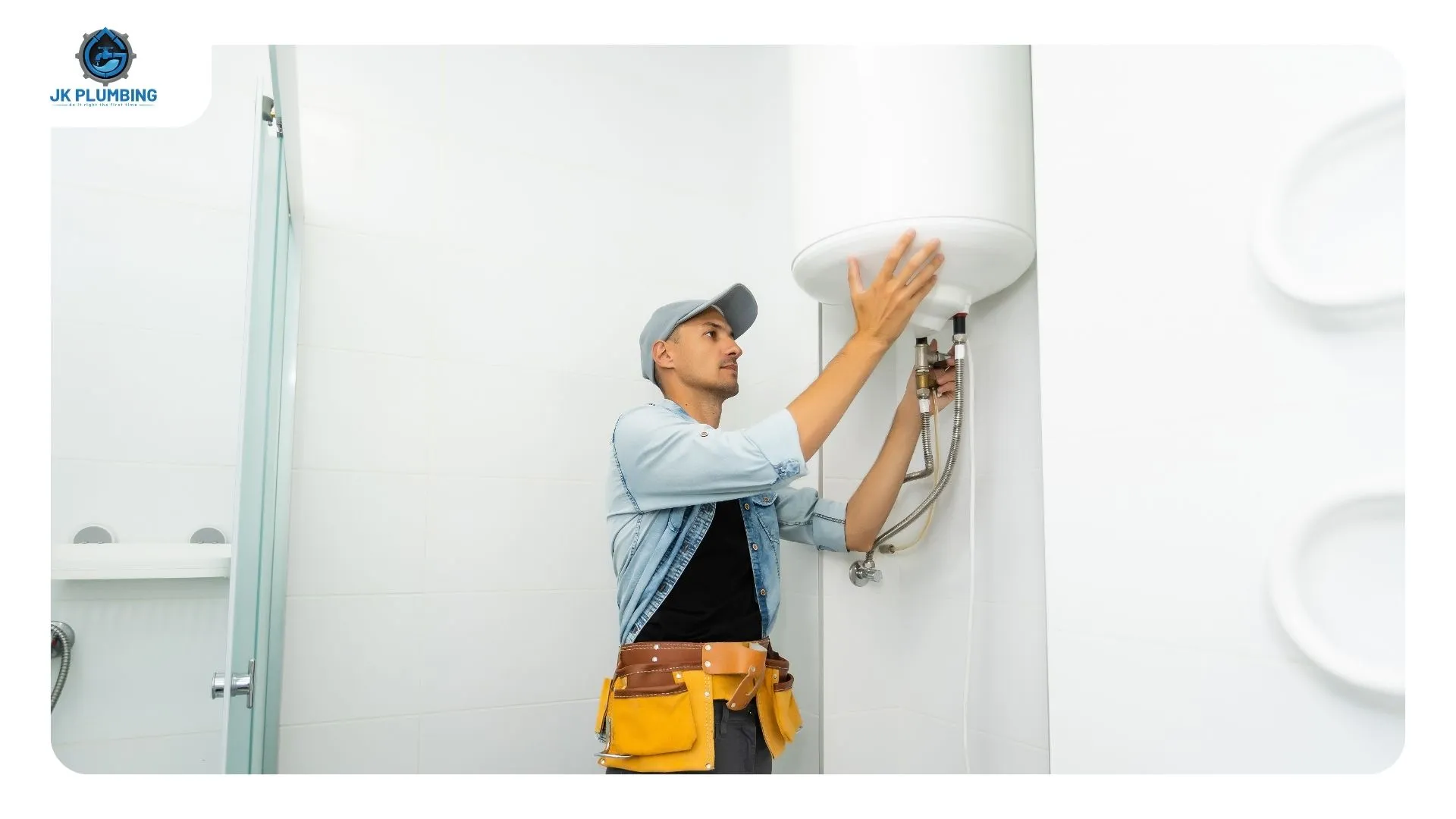
Can a replacement be finished in a single visit?
Usually, for a like-for-like swap.
Gas tank for gas tank: three to four hours on site, same day. We carry common sizes.
Electric tank for electric tank: similar, assuming the existing circuit is sound.
Gas to heat pump: not a single visit in most cases. You’re adding a 240V circuit and a condensate drain, and if the panel needs upgrading that gets scheduled first rather than leaving you without hot water in between.
What else turns one visit into two: an unusual tank size or specific model needing a supplier run, venting that doesn’t match between old and new units, code items the existing installation is missing, and occasionally inspection scheduling. We tell you which of these applies before we start, not halfway through.
What happens to the old unit after it’s pulled out?
More than people assume, and some of it matters to you.
The tank is recycled. A water heater is mostly steel, and it goes for scrap rather than landfill. The old unit leaves with us — removal, haul-away and disposal are part of the job, not an extra.
Heat pump units need refrigerant recovery. A heat pump water heater contains refrigerant that has to be recovered properly before the unit can be scrapped. That isn’t something to hand to a general scrap yard, and it’s one reason “I’ll get rid of it myself” is a worse idea than it sounds.
You need the paperwork. This is the part that catches people out. Both City of Palo Alto Utilities and Peninsula Clean Energy require documentation that the old unit was decommissioned when you claim a heat pump rebate. If a contractor hauls your old tank away without giving you that record, you can lose a rebate worth more than the haul-away. We provide it as standard, and it’s worth asking any contractor whether they do.
Don’t leave it at the kerb. A water heater isn’t bulky household waste in most collection schemes here, and an abandoned tank on the verge becomes your problem rather than the collector’s.
What drives replacement cost in Palo Alto
We quote in writing on site rather than over the phone, because the same nominal job varies more than people expect. What moves the number:
- The unit itself — type, capacity and whether you’re staying with the same fuel.
- Code items the existing installation lacks. Seismic strapping, an expansion tank where a pressure regulator has created a closed system, a drain pan with proper discharge, an earthquake-rated gas connector. Older installations are frequently short on at least one.
- Electrical work, on any heat pump conversion — circuit, and panel upgrade if the service can’t carry it.
- Venting changes, where the new unit doesn’t match the existing flue.
- The permit, and which authority issues it, which is not the same everywhere in this service area.
- Access. A tank in a tight utility closet, down stairs, or in a slab-on-grade home with no crawlspace takes longer to get out than one standing in an open garage.
Rebates frequently change the net figure more than any of the above, particularly on a heat pump conversion, so they’re worth establishing before you choose the unit rather than after.
Stanford land and East Palo Alto are not Palo Alto
Worth knowing before anyone quotes you, because the paperwork differs.
Stanford. The core campus and the Faculty Subdivision sit in unincorporated Santa Clara County — Stanford is its own census-designated place, not part of the City of Palo Alto, and the city has no land-use jurisdiction there. Permits go through Santa Clara County rather than Palo Alto. The homes in the Faculty Subdivision are also held under Stanford’s residential ground lease programme, so the land is the university’s even where the house is owned, and it’s worth checking whether your lease or the housing office has anything to say before work starts. Rebate eligibility is also worth confirming rather than assuming, since City of Palo Alto Utilities programmes are for its own utility customers. Note that the Medical Center, Stanford Shopping Center and Stanford Research Park are inside Palo Alto city limits — the boundary is less intuitive than it looks.
East Palo Alto. Different county entirely. East Palo Alto is in San Mateo County, on PG&E, and its heat pump rebates run through Peninsula Clean Energy rather than CPAU. Same appliance, different application, and you cannot apply to the wrong one.
Where we work
Palo Alto, Stanford, East Palo Alto, Menlo Park, Atherton, Los Altos, Mountain View and Redwood City, and north through the Peninsula to Burlingame and San Francisco.
Our water heater replacement page covers the service itself.
Frequently asked questions
At what age should a water heater be replaced?
Eight to twelve years for a standard tank, twelve to fifteen for a heat pump unit, fifteen to twenty for a well-maintained tankless. Age alone isn’t the trigger — rust-coloured hot water, water at the tank seam, or an expensive repair on a unit past ten years are. A clean fifteen-year-old tank in a garage with a drain is something to plan for rather than rush.
What does water heater replacement cost in Palo Alto?
It depends on the unit, what code items the existing installation is missing, whether electrical work is needed for a heat pump conversion, venting changes, the permit, and access to where the tank sits. We give a written price on site rather than over the phone. Rebates often move the net figure more than any single line item, so establish those before choosing the unit.
What happens to the old unit after it is pulled out?
It leaves with us and goes for steel recycling rather than landfill — removal and disposal are part of the job. Heat pump units need their refrigerant recovered properly first. Importantly, you should receive decommissioning documentation, because both City of Palo Alto Utilities and Peninsula Clean Energy require it when claiming a heat pump rebate.
Can a replacement be finished in a single visit?
A like-for-like tank swap, yes — three to four hours on site, same day. A gas-to-heat-pump conversion usually isn’t, because of the electrical and condensate work, and any panel upgrade gets scheduled first. Unusual sizes, mismatched venting and missing code items are the other things that turn one visit into two.
Does replacing an ageing unit actually lower energy bills?
A new gas tank in place of an old one saves modestly — storage efficiency hasn’t changed much, though a pre-2015 unit does gain something from current standards. The large saving comes from switching to a heat pump, which delivers roughly three to four units of heat per unit of electricity. Whether that lowers your bill depends on your electricity rate relative to your gas rate, and Palo Alto’s CPAU rates differ from PG&E’s in East Palo Alto and Menlo Park.
Visit or Call Us
JK Plumbing
Adress:1008 Edwards Rd Burlingame, CA 94010
Phone: (415) 359-4588
Hours: Open 24 hours, seven days a week.
Serving Palo Alto, Stanford, East Palo Alto, Menlo Park, Los Altos, Mountain View and the Peninsula. CA License #1080266
RECENT POSTS
Hot Water Heater Replacement in San Francisco: Tank, Tankless or Upgrade?
October 29, 2026
No Comments
Read More »
Water Heater Replacement Near Me: San Francisco and Pacifica
October 28, 2026
No Comments
Read More »