- Open 24 Hours Mon–Sat
- contact@jkplumbingsf.com
- +1 (415) 359-4588
- CA License #1080266
Drain clogs in commercial properties follow a different pattern than residential blockages. Consider a restaurant kitchen on University Avenue, pushing grease through aging pipes. Or a multi-tenant office building with shared stack lines. Or a food service operation in the California Avenue corridor. Any of these can overwhelm a drain in ways that household interventions don’t resolve. The cause of the blockage determines the right fix. Misdiagnosing it, therefore, means paying to clear a drain that backs up again within weeks.
By Alik Yonatanov, Owner & Master Plumber · Last updated 19th August 2026
What Causes Clogged Drains in Palo Alto Commercial Properties?
Commercial drains in Palo Alto fail for reasons that are distinct from single-family residential plumbing. The most common causes on the commercial properties JK Plumbing services across Palo Alto:
Grease accumulation in restaurant drain lines. Palo Alto’s University Avenue and California Avenue commercial corridors are dense with food service businesses. The City of Palo Alto’s FOG (Fats, Oils, and Grease) compliance program requires grease interceptors. Even so, kitchen drain lines still need professional cleaning every three to six months in a fully occupied restaurant. The FOG program governs interceptor maintenance; the lateral running from the interceptor to the stack is the property owner’s responsibility. A clogged drain repair on a Palo Alto restaurant line is almost always a grease problem, not a structural one. Confirming that, though, requires a camera look before quoting.
Tree root intrusion in older pipe runs. Downtown Palo Alto and the commercial blocks along Ramona Street, Hamilton Avenue, and Lytton Avenue have mature street trees. Their root systems infiltrate cast-iron and clay drain laterals in buildings built before the 1980s. Root intrusion is the leading cause of recurring main line backups in that zone. A clog that won’t stay cleared after snaking is rooted until proven otherwise.
High-volume stack loading in multi-unit buildings. Apartment buildings and office complexes with shared vertical stacks see accelerated buildup from concentrated use patterns. These jobs need commercial-grade equipment, not the consumer cable tools a property manager can rent from a hardware store.
How Do Plumbers Clear a Clogged Drain?
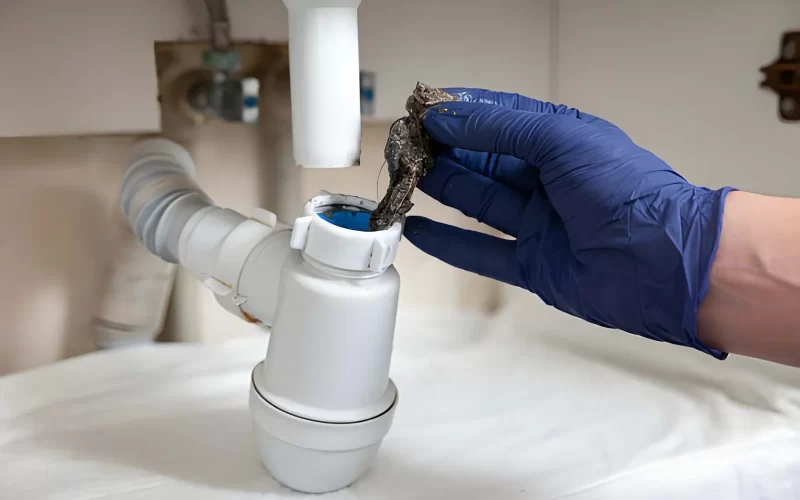
How do plumbers clear a clogged drain on a commercial property? The sequence matters as much as the tool. JK Plumbing starts with a camera inspection for any commercial drain that’s recurring or suspected to have a structural cause. That’s because roots, pipe belly, or scale buildup each require a different intervention. For straightforward organic clogs, drain snaking (mechanical cable augering) clears the immediate obstruction. For grease-lined pipes or confirmed scale, hydro jetting is the right method.
“How to clear a clogged drain without a service call” is a common search for property managers avoiding dispatch costs. For light, slow drains — partial debris accumulation near the drain cover — a plunger or enzymatic cleaner can work. For recurring commercial blockages, neither addresses the underlying cause. The best way to unclog a drain in a commercial kitchen or building stack is consistent. Camera first, then match the clearing method to what the camera reveals. Clearing without inspecting is what produces the callback two weeks later.
Drain Snaking vs. Hydro Jetting for Palo Alto Commercial Properties
Commercial property managers searching for a drain snaking service near me
are typically facing one of two scenarios. Either a single fixture is backed up, or the building has a recurring, wider issue. The right method is different for each.
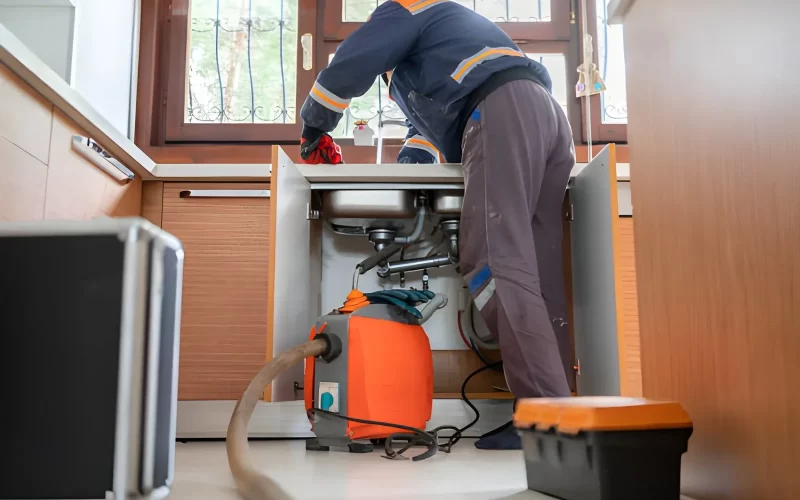
Drain snaking — mechanical cable augering — handles straightforward organic blockages and debris accumulation near drain assemblies. It also works as first-pass clearing when the blockage source is unknown. It’s faster and less expensive than hydro jetting, and for most single-fixture commercial clogs, it holds.
Hydro jetting is the right method for grease-lined kitchen drain lines and scale-encrusted pipes. It also works on root fragments left after mechanical cutting, or any commercial main line that keeps clogging after snaking. Kitchen drain cleaning in Palo Alto restaurants typically requires hydro jetting. That’s because snaking creates a hole through grease buildup, without removing it from pipe walls, so the restriction reforms quickly. For restaurants in the University Avenue and California Avenue districts, JK Plumbing recommends hydro jetting every three to six months. That’s a proactive maintenance cadence, and it keeps the City of Palo Alto’s FOG compliance inspection from surfacing a problem the operator didn’t know existed.
For cost and method comparison detail, see the SF Bay Area hydro jet service price guide. For a residential-side comparison, check the drain cleaning service in San Mateo post instead.
How Much Does Drain Cleaning Cost in Palo Alto?
How much does drain cleaning cost for a commercial property in Palo Alto? It depends on the method selected, the drain line size, and the access configuration. JK Plumbing’s commercial price ranges for Palo Alto projects:
- Single-fixture drain snaking: $150–$350. Most commercial single-drain clogs — a floor sink backup, a restroom lavatory that won’t clear — land in this range.
- Main line snaking (shared building stack): $350–$600. Multi-unit buildings and larger office properties with shared laterals.
- Commercial hydro jetting (kitchen drain line or main line): $500–$1,500, depending on length, grease level, and access.
- Camera inspection (commercial lateral): $300–$500. Required before quoting on any recurring or structurally suspected blockage.
The best drain cleaning service in Palo Alto quotes the camera inspection separately from the clearing. Bundled quotes that skip the camera step, however, typically miss the root cause and produce callbacks. JK Plumbing provides written quotes before any work begins. For property managers comparing who unclogs drains in Palo Alto, verify CSLB licensure before signing anything. A licensed contractor must perform all commercial drain work. JK Plumbing holds CA License #1080266.
Frequently Asked Questions
How often should drains be cleaned?
How often should drains be cleaned on a commercial property depends on the business type and daily drain volume. Restaurant and food service kitchens: hydro jetting every three to six months for proactive grease management, more frequently if interceptor inspection records show heavy loading. Office building main lines and multi-unit residential buildings: every 18–24 months under normal use. Any property with a history of recurring backups should move to a preventive maintenance schedule rather than waiting for the next emergency call.
Are chemical drain cleaners safe?
Are chemical drain cleaners safe for commercial drain systems? Not as a primary maintenance method. Caustic and oxidizing drain cleaners accelerate corrosion in older cast-iron pipe, soften PVC fittings under repeated application, and create hazardous conditions when used in confined commercial spaces. Enzymatic cleaners are appropriate for light maintenance between professional cleanings. For commercial kitchens, grease interceptors, and shared main lines, mechanical clearing and hydro jetting are the correct tools — chemical products are not a substitute.
Why does my drain keep clogging?
Why does my drain keep clogging after it’s been cleared? Recurring clogs are a structural or buildup problem, not a maintenance failure. The most common causes: grease accumulation on pipe walls that snaking opens but doesn’t remove, tree root intrusion that regrows after cutting, a belly (sag) in the lateral where solids settle, or a partially collapsed pipe section. A camera inspection resolves the diagnosis. In most recurring cases, it’s the only way to know which of these is the actual problem — and each requires a different fix.
What causes a slow drain?
What causes a slow drain in a commercial property is typically one of four conditions: partial grease or scale buildup narrowing the flow channel, developing clog from solid debris accumulation, a venting problem restricting drainage rate, or early-stage root intrusion. A slow drain in a high-volume commercial setting is a backup in the making — the same partial restriction that inconveniences a single household will shut down a restaurant kitchen or a multi-tenant floor in days.
Can a plumber clear a main line clog?
Yes. Can a plumber clear a main line clog on a commercial property? JK Plumbing handles main line clearing on commercial laterals throughout Palo Alto, including multi-unit buildings, restaurant blocks, and office complexes. Main line clearing on a commercial property typically starts with camera inspection to locate and characterize the blockage, followed by mechanical snaking or hydro jetting depending on the cause. If the camera reveals structural damage — a collapsed segment or significant root intrusion — lateral repair or replacement may be the durable solution rather than repeated clearing.
Contact or Visit JK Plumbing
JK Plumbing 1008 Edwards Rd Burlingame, CA 94010 Phone: (415) 359-4588 Hours: Monday–Saturday: Open 24 Hours | Sunday: Closed
Serving commercial properties, restaurants, apartment buildings, and office complexes in Palo Alto, Menlo Park, Mountain View, Los Altos, Redwood City, and Burlingame.
RECENT POSTS

How Much Does a Tub to Shower Conversion Cost in San Francisco?
September 21, 2026
No Comments
Read More »