- Open 24 Hours Mon–Sat
- contact@jkplumbingsf.com
- +1 (415) 359-4588
- CA License #1080266

Sometimes — and it’s a calculation, not a guess. Capacity depends on the pipe’s size, the length of the run and the combined BTU rating of everything already on it. JK Plumbing handles gas installation service across Burlingame and Millbrae. Call (415) 359-4588.
By Alik, Owner & Master Plumber · Last updated November 2026
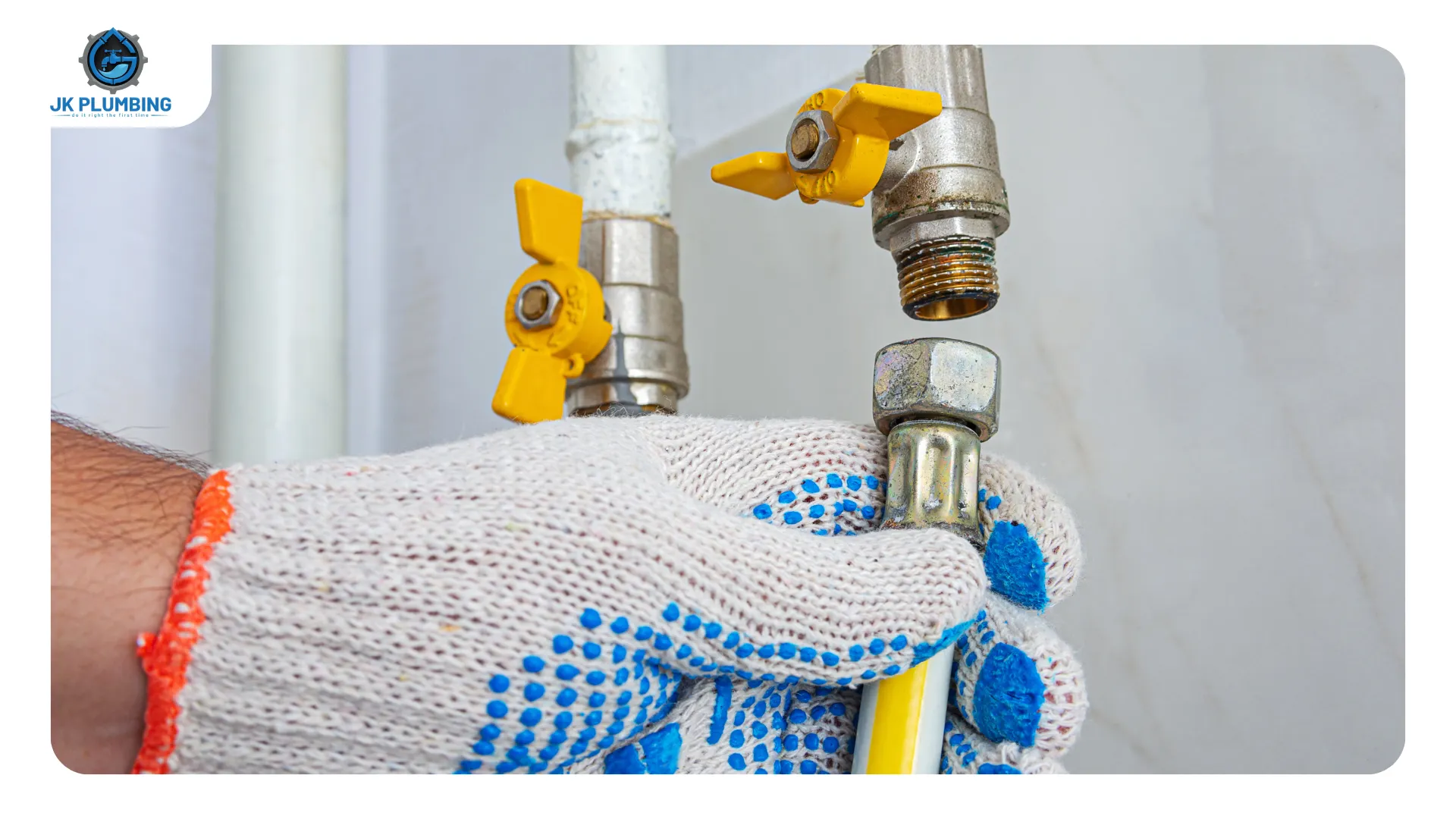
Can a line put in decades ago carry another appliance?
This is the question every one of these jobs starts with, and the answer is arithmetic rather than opinion.
Gas pipe capacity is set by two things: the diameter of the pipe and the developed length of the run from the meter to the appliance. A given pipe carries plenty over a short distance and far less over a long one. Add a second or third appliance and you’re not asking whether the pipe can feed the new one — you’re asking whether it can feed everything at once on the worst day of the year.
Which is why the symptom of an undersized line is rarely dramatic. Nothing fails. Instead the furnace runs while someone showers and the water heater can’t keep up, or the range burners drop off when the dryer kicks in. Starved appliances underperform quietly and get blamed individually, when the actual fault is shared supply.
Three things routinely tip an older Burlingame line over its limit:
A tankless water heater. The single most common cause. A tank unit draws around 40,000 BTU; a whole-house tankless unit can call for up to 199,000 at full fire. That one swap can exceed what the existing line was ever sized to deliver.
A commercial-style range. A six-burner range with a griddle and oven can draw several times what the original builder-grade range did.
An outdoor kitchen or patio heater added at the end of a long run, which is the worst position on the system for pressure.
How it gets proven: not by eye. When you extend or tap an existing gas line, sizing calculations are required to confirm the piping can serve all existing and new appliances. Contra Costa County’s residential gas piping requirements set out what that submittal looks like under CPC 1208.4 — a diagram showing pipe material, size, location and length of run for existing and proposed lines, plus the location and BTU rating of every appliance served. Peninsula jurisdictions work from the same code.
So when we quote, we’re counting BTUs and measuring run lengths. A contractor who eyeballs the pipe and says “that’ll be fine” is skipping the step the permit requires.
When PG&E has to get involved — and what that does to your timeline
Here’s the part that catches people, and it has nothing to do with the plumbing.
Your gas meter has a capacity too. If the new total connected load exceeds what the existing meter and service can deliver, the meter or the service has to be upgraded — and that’s PG&E’s work, on PG&E’s schedule.
The request goes through PG&E’s Your Projects portal, and before an additional or upgraded meter is installed, every existing and new gas appliance has to be inventoried and verified with its BTU value. The published timeline is worth knowing before you commit to a kitchen schedule: a PG&E job owner makes contact within five business days, documents are due within 35 calendar days, and the review itself should complete within roughly 66 calendar days of submission.
Two months of review, before anyone turns a wrench.
That is the single biggest reason to establish capacity at the start of a project rather than the middle. A kitchen remodel that discovers a meter upgrade is needed after demolition has a two-month hole in it. The same project, checked first, runs the PG&E application in parallel with everything else.
Most jobs don’t need it. Where the existing line simply needs upsizing between the meter and the appliance, the meter is untouched and this never comes up. But it’s the first thing worth ruling in or out.
What does running a new line to a kitchen or patio involve?
The material rules are stricter than most homeowners expect, and the outdoor ones are where cheap work shows.
Indoors, black steel, galvanized steel, galvanized wrought iron and corrugated stainless steel tubing are all permitted. CSST flexes around framing and speeds up long interior runs — and the installer must be certified by the manufacturer to install it, which is a fair question to ask whoever is quoting.
Outdoors above ground, black steel is not allowed. This is the most common defect we find on patio lines added by a previous owner or a handyman: black pipe run along an exterior wall to a BBQ, quietly rusting. Galvanized or CSST rated for exterior use is what belongs there.
Buried lines need a minimum of 12 inches of cover, or 18 inches where external damage could occur — a driveway, a parking area, anywhere vehicles or digging are plausible. The pipe has to be factory-coated and listed for underground gas use, with fittings field-wrapped in approved material. Non-metallic pipe needs a continuous tracer wire buried with it, minimum 14 AWG, with one end brought above ground so the line can be located later.
Under the building, piping must be sleeved and vented. Not run loose through the crawl space.
At every appliance, a shutoff valve is required within six feet and accessible from the same room as the appliance it serves. If your existing range has no reachable shutoff, that’s worth correcting whenever the line is opened anyway.
How is the route decided, and how much wall or floor comes up?
Less than people fear, usually — because the route is chosen to avoid finished surfaces, not to take the shortest line.
We look for a path through unfinished space first: the crawl space, the garage ceiling, the attic, an exterior wall run where the code allows it. A Burlingame home with a generous crawl space often takes a new kitchen line with one small opening at each end and nothing disturbed in between.
What forces openings: a slab floor with no underfloor route, a finished basement ceiling, a second-storey appliance with no chase, or a run that has to cross a finished room with no path around it.
The variables that decide it are the appliance’s position relative to the meter, whether there’s continuous unfinished space between the two, and whether the existing line can be upsized in place rather than replaced along a new path.
We walk the route before quoting and tell you where the openings go. A quote that doesn’t mention access is a quote that hasn’t looked.
How long is the gas off while the work is done?
Hours, not days, for most jobs — but the sequence matters more than the total.
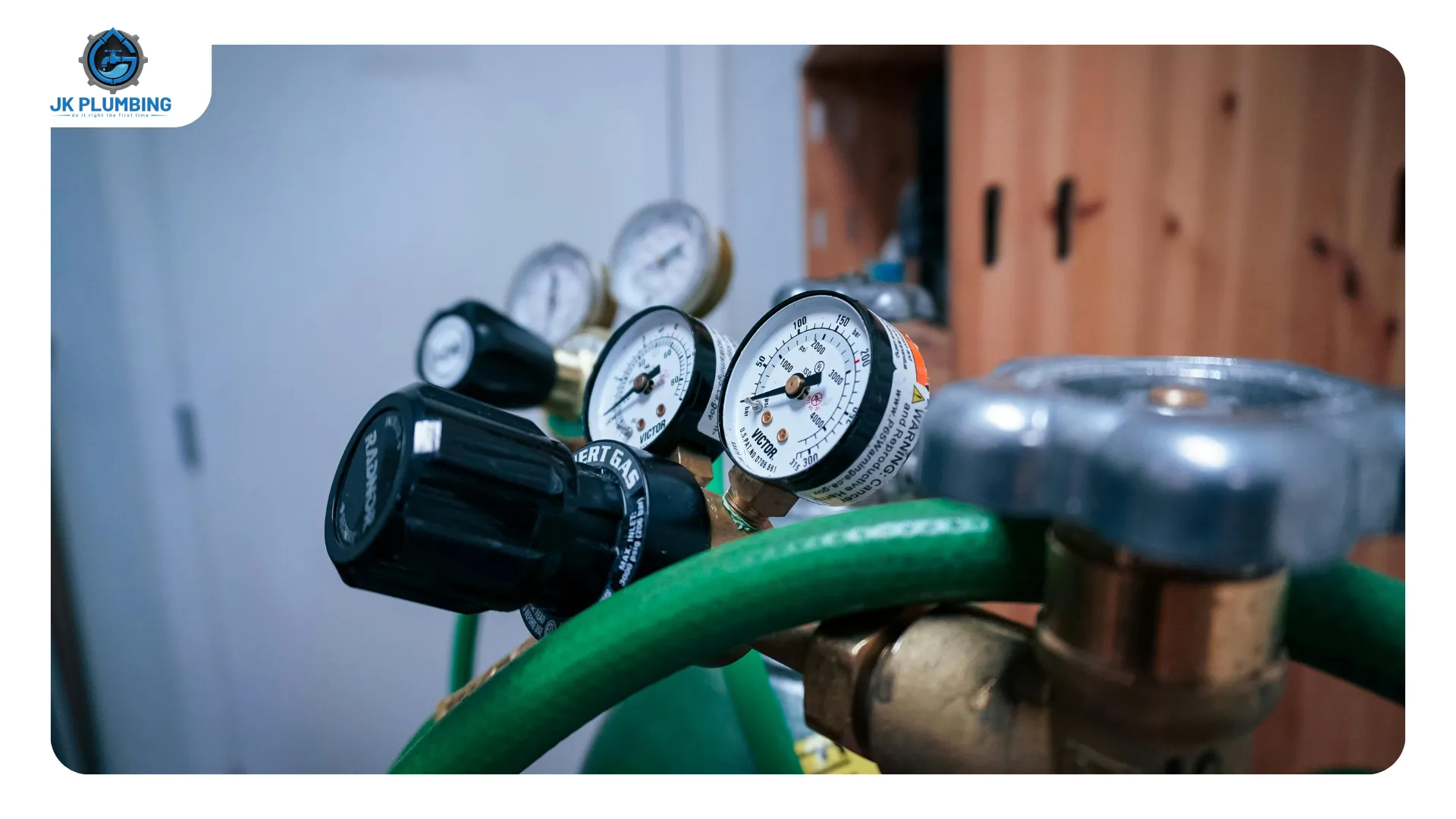
The gas comes off at the meter while the work is done, and it stays off until the new pipework passes its pressure test. That test isn’t negotiable: the system is pressurised to at least one and a half times the proposed working pressure, and no less than 10 psi, held for a minimum of 15 minutes, with a gauge appropriate to the test pressure. It happens at the rough inspection stage — after the new lines are in and before anything is covered or connected to the gas service.
There are two inspections on a typical gas job: rough, with the pressure test and walls still open, and final once everything is complete and connected.
So the realistic shape of a straightforward day: gas off in the morning, pipework, pressure test, inspection, gas back on. Where the inspection can’t be scheduled the same day, the gas stays off overnight — which matters in a house where the furnace and water heater are both on that system, and is worth planning around rather than discovering.
Jobs needing a meter upgrade work differently: the new pipework is installed and tested first, and the gas returns when PG&E completes its side.
Permits: what Burlingame expects
Gas piping is not exempt work. Burlingame’s exempted work list is narrow on gas — portable heating appliances, and replacing a minor part that doesn’t alter the equipment’s approval or make it unsafe. Installing, enlarging, altering or extending a gas system needs a permit before the work starts.
One provision worth knowing: where emergency gas work has to happen immediately, the permit application must be submitted by the next working business day. Emergency doesn’t mean exempt — it means the paperwork follows rather than precedes.
We pull the permit and meet the inspector. That matters beyond compliance: unpermitted gas work surfaces during a home sale, and a buyer’s inspector finding undocumented gas piping is a negotiation you don’t want to be having.
What makes one run far dearer than another?
We quote in writing after walking the route, because the spread is genuinely wide and a published figure would mislead most readers.
What moves it:
- Distance from the meter, which drives both material and pipe size.
- Whether the existing line can be upsized in place or a new run is needed.
- Route accessibility — continuous crawl space against a slab floor or finished ceilings that must be opened and repaired.
- Indoor against outdoor, since exterior and buried work brings coated pipe, trenching, tracer wire and backfill.
- Trenching length and surface, where a patio line crosses lawn rather than concrete.
- Whether PG&E has to upgrade the meter, which adds its own cost and its own timeline.
- Permit and two inspections.
Call (415) 359-4588 and we’ll count the load, measure the run and put the number in writing.
Where we work
Burlingame is where we’re based — 1008 Edwards Rd — so Burlingame, Burlingame Hills, the Easton Addition and Millbrae are close work for us, along with Hillsborough, San Mateo, San Bruno, Foster City and South San Francisco.
That matters on gas jobs more than most, because these are rarely one-visit projects: there’s a survey, the pipework, a rough inspection, and a final. Being ten minutes away is the difference between an inspection slot made easily and one that costs you another day without gas.
JK Plumbing holds California contractors’ licence #1080266, verifiable through the Contractors State License Board. If you’re planning a kitchen, a tankless conversion or an outdoor kitchen, the capacity question is the one to settle first — our guide to water heater replacement and gas sizing covers how run length limits what a line can deliver, and for broader work on an older Burlingame house, what it costs to replumb is a useful companion.
Frequently asked questions
Can a line put in decades ago carry another appliance? Sometimes, and it’s a calculation rather than a judgement. Capacity depends on pipe diameter and the developed length of the run, measured against the combined BTU rating of every appliance on the line. Code requires sizing calculations when extending or tapping an existing line, with a diagram showing pipe size, material and length plus the BTU rating of each appliance served. Tankless water heaters and commercial-style ranges are the most common causes of an older line falling short.
What does running a new line to a kitchen or patio involve? Indoors, black steel, galvanized steel or CSST are permitted, with CSST requiring a manufacturer-certified installer. Outdoors above ground, black steel is not allowed. Buried lines need at least 12 inches of cover, or 18 where damage is possible, in factory-coated pipe listed for underground use, with a tracer wire for non-metallic pipe. Every appliance needs an accessible shutoff within six feet.
How is the route decided, and how much wall or floor comes up? The route follows unfinished space wherever possible — crawl space, garage ceiling, attic or a permitted exterior run — rather than the shortest line. Many Burlingame homes with a good crawl space take a new kitchen line with one small opening at each end. Slab floors, finished ceilings and upper-storey appliances without a chase are what force openings in finished surfaces.
What does this cost, and what makes one run far dearer than another? We quote in writing after walking the route rather than publishing figures. The drivers are distance from the meter, whether the existing line can be upsized in place or needs replacing, how accessible the route is, indoor versus outdoor and buried work, trenching length and surface type, whether PG&E must upgrade the meter, and permit and inspection costs.
How long is the gas off while the work is done? Usually hours rather than days. The gas is off at the meter during the work and stays off until the new pipework passes its pressure test — at least one and a half times the working pressure and no less than 10 psi, held a minimum of 15 minutes, carried out at rough inspection before anything is covered or connected. If the inspection can’t be scheduled the same day, the gas stays off overnight, which matters when the furnace and water heater share the system.
Can one gas line supply several appliances? Yes — that is how most homes are built. The constraint is total simultaneous demand rather than the number of appliances. The line must deliver the combined BTU load of everything that could run at once, over its actual developed length. Problems appear as appliances underperforming together rather than as outright failure, which is why starved lines are often misdiagnosed as individual appliance faults.
Visit or Call Us
JK Plumbing
Adress:1008 Edwards Rd Burlingame, CA 94010
Phone: (415) 359-4588
Hours: Open 24 hours, seven days a week.
Serving San Francisco, South San Francisco, Daly City, Brisbane and the Peninsula.
CA License #1080266
RECENT POSTS